.svg)

.webp)
.jpeg)
Why Your Heating System Needs Quick Action When Problems Strike
Heating system troubleshooting can save you from a cold, uncomfortable night and potentially expensive emergency repairs. When your furnace or heat pump stops working properly, knowing the right steps to take makes all the difference between a quick fix and a costly service call.
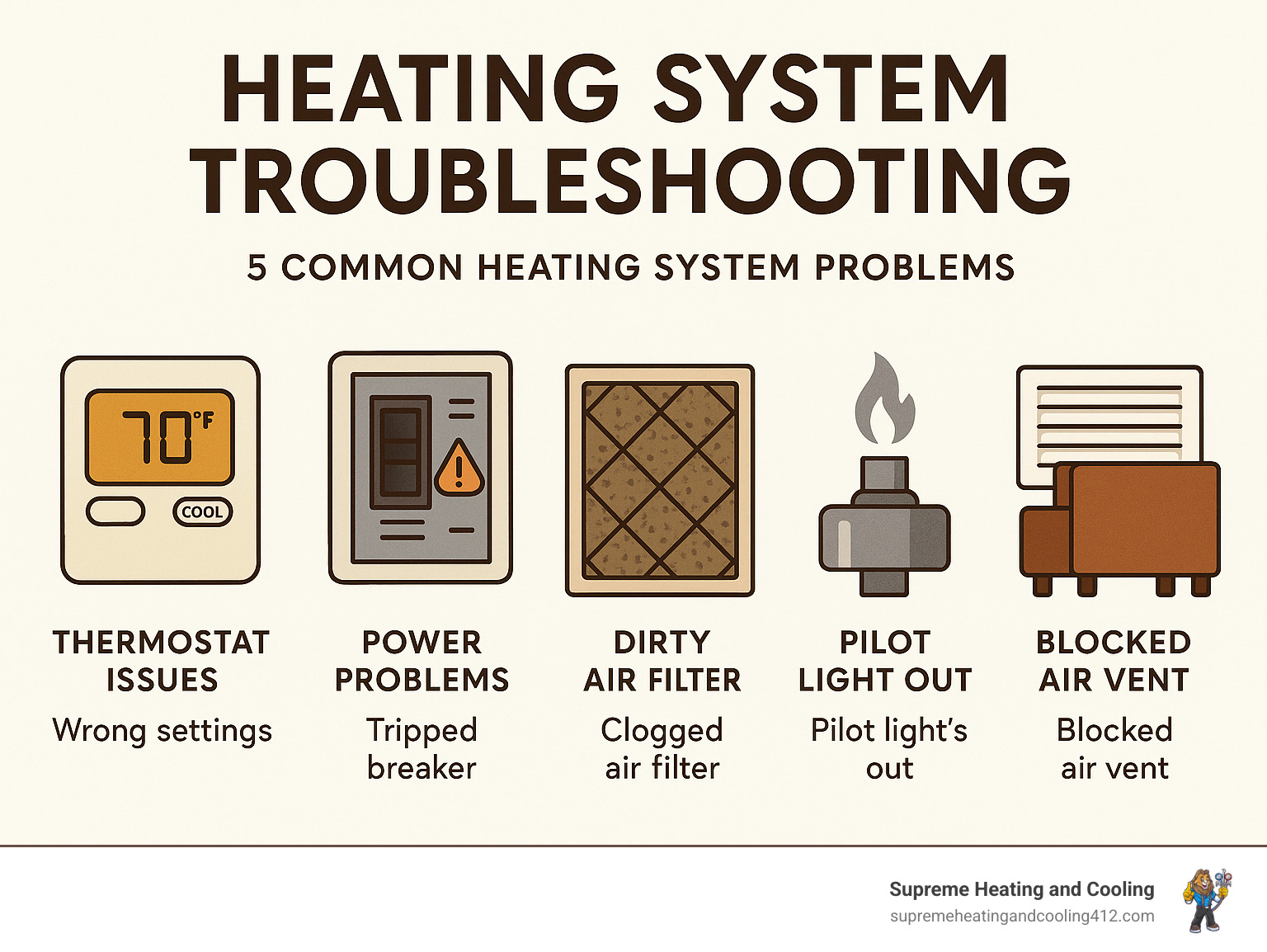
Here are the 5 most common heating problems you can check yourself:
- Thermostat Issues – Wrong setting, dead batteries, or incorrect temperature
- Power Problems – Tripped breaker, blown fuse, or switched-off furnace
- Dirty Air Filter – Blocked airflow causing overheating and shutdown
- Gas Supply Issues – Pilot light out or gas valve closed
- Blocked Vents – Furniture or debris restricting air circulation
As the weather shifts from mild fall temperatures to icy winter, you’ll depend on your heating system more than ever. Many heating problems seem scary but actually have simple solutions – like a thermostat accidentally left on “cool” instead of “heat” or a tripped circuit breaker that just needs resetting.
The key is knowing what you can safely check yourself versus when to call a professional. Basic troubleshooting can resolve about 70% of common heating issues without any special tools or technical knowledge.
This guide walks you through each step, from the simplest 30-second checks to more advanced diagnostics. You’ll learn to identify warning signs, understand what different sounds and smells mean, and most importantly – recognize when it’s time to stop and call an expert for safety reasons.
First Steps: Simple Checks Every Homeowner Can Do
Before you panic and imagine bundling up in every blanket you own, let’s start with the easiest and most common issues. Many heating system problems can be resolved with a few quick checks that don’t require any special tools or expertise. Think of these as your heating system’s “reboot” button!
Is Your Thermostat the Culprit?
Your thermostat is the brain of your heating system, so it’s often the first place we check when things go awry. A surprising number of “heater not working” calls are solved by a simple thermostat adjustment.
First, let’s make sure it’s set correctly and functioning properly:
- Check the Mode: Ensure your thermostat is set to “Heat” or “Auto.” If it’s accidentally left on “Cool” from the summer, or even just “Off,” your heating system won’t kick on.
- Temperature Setting: Is the desired temperature set higher than the current room temperature? For example, if your home is 65°F, set your thermostat to 70°F. Your system won’t activate if the desired temperature is already met or lower than the current temperature.
- Battery Check: For digital thermostats, a blank screen or unresponsive display often means dead batteries. Replace them, even if you think they might still have some juice left. It’s a quick, inexpensive fix!
- Smart Thermostat Reboot: If you have a smart thermostat and it’s acting quirky, try resetting it to its manufacturer settings or simply turning it off and on again. Sometimes, a software glitch is all it takes.
- Thermostat Location: Believe it or not, the location of your thermostat can cause false readings. Direct sunlight, lamps, ovens, space heaters, or any other heat source near the thermostat can make it think your home is warmer than it actually is, preventing your heating system from turning on. Ensure it’s in a neutral spot.
Checking Power and Electrical Connections
No power, no heat! It sounds obvious, but power-related issues are incredibly common. Here’s how to check if your heating system is getting the electricity it needs:
- Furnace Power Switch: Most furnaces have a dedicated power switch located on or near the unit, often resembling a regular light switch. Make sure it’s in the “On” position. Sometimes, it gets accidentally flipped off, especially if it’s in a utility closet or basement.
- Emergency Shut-off Switch: Some systems also have an emergency shut-off switch, sometimes located at the top of basement stairs or in another accessible area. Confirm this is also in the “On” position.
- Tripped Circuit Breaker: Head to your home’s main electrical panel. Look for any breakers that are in the “tripped” position – usually halfway between “On” and “Off.” If you find one labeled for your furnace or HVAC system, firmly flip it all the way “Off” first, then back “On.” You should hear a distinct click.
- Blown Fuse: If your home uses fuses instead of breakers, check the fuse for your heating system. If it’s blown (often indicated by a broken filament or darkened glass), replace it with a new one of the exact same size and type. Never use a fuse with a higher amperage rating than specified.
- Safety First: Always ensure your hands and feet are dry before touching any electrical components or your electrical panel. Safety is paramount!
The Importance of a Clean Air Filter
A dirty or clogged air filter is one of the most frequent — and easily preventable — culprits behind heating system performance issues. It’s like trying to breathe through a pillow!
- Impact on Performance: A dirty filter restricts airflow, forcing your heating system to work much harder to push warm air through your home. This increased strain can lead to overheating, causing the system to shut down prematurely (often called “short cycling”) or even fail entirely. It also reduces efficiency, driving up your energy bills.
- How to Check: Simply pull out your air filter. Hold it up to a light source. If light cannot pass through easily, it’s time for a change. You’ll likely see a thick layer of dust, dirt, and pet dander.
- Replacement Frequency: We recommend checking your air filter every 30 days, especially during peak heating season when your system is running frequently. Depending on usage and household factors (pets, allergies), you might need to replace it every one to three months.
- Filter Direction: When inserting a new filter, pay attention to the arrows on its frame. These arrows indicate the direction of airflow, which should always point towards the furnace or air handler.
Intermediate Heating System Troubleshooting: A Deeper Dive
If those simple checks didn’t quite do the trick, don’t worry! We’re just going to roll up our sleeves a little more and look at some slightly deeper issues. Think of it like moving from checking the car’s gas tank to popping the hood – still totally doable for the average homeowner, just with a bit more focus.
Diagnosing Airflow and Ductwork Issues
Even if your furnace is humming along and making warm air, if that warm air can’t get where it needs to go, you’ll still be chilly! Poor airflow is a common culprit for cold spots and high energy bills.
First, let’s play detective with your vents. Walk around your home and check every single one. Are any blocked by furniture, rugs, or those pesky curtains? Make sure they’re fully open and clear. It sounds simple, but a blocked vent is like trying to breathe through a pillow – it just doesn’t work well! This is a super common reason why some rooms never seem to warm up.
You might notice cold spots and uneven heating in different areas of your home. If one room feels like a freezer while another is a sauna, it could point to issues with your ductwork. And here’s a little secret: while it might seem smart to close vents in rooms you don’t use much, it’s actually not a good idea! It can mess with your heating system’s balance, reduce efficiency, and won’t save you money in the long run.
Then there’s leaky ductwork. Imagine trying to fill a bucket with a hole in the bottom – you’re losing water! The same goes for your warm air. According to ENERGY STAR, leaky ducts can lose up to 30% of your heat, meaning you’re paying to heat your walls or attic instead of your living room. You might notice less airflow from vents, higher energy bills, or even dust collecting around duct seams. While major duct sealing is a job for the pros at Supreme Heating and Cooling, you can certainly take a peek at accessible ducts for any obvious gaps or loose connections.
Gas Furnace Specifics: Flame and Ignition Checks
If you have a gas furnace, the heart of the operation is that little flame! If your furnace isn’t igniting or staying lit, these checks are super important for your heating system troubleshooting.
For our friends with older furnaces, you might have a pilot light. This is a small, constant flame. Take a look through the inspection window; if it’s out, that’s your problem! Your owner’s manual will have specific instructions for relighting it. Crucially, if you try to relight it, turn off the gas to the furnace for 10-15 minutes first. This allows any lingering gas to dissipate safely. If it goes out again right away, or won’t stay lit after a few tries, please call a professional. Safety first, always!
Newer furnaces typically use electronic ignition instead of a standing pilot light. If you hear your furnace clicking repeatedly but it just won’t ignite, the ignitor might be dirty, cracked, or simply worn out. Sometimes, sensors also get dirty and need a gentle cleaning or replacement.
Also, double-check that the gas control valve on your furnace is fully in the “On” position. This valve is usually a lever or knob. For gas to flow, it should be aligned with the gas pipe. If it’s perpendicular, it’s off.
And finally, let’s talk about the color of your furnace’s flame. It’s like a little health report!
Flame ColorWhat It MeansBlueGood! Indicates efficient burning and proper operation.Yellow/OrangeProblem! Could mean incomplete combustion, a dirty burner, or a ventilation issue. This can produce carbon monoxide, so call a pro right away!
Common Noises and Smells and What They Mean
Your heating system can be a bit of a chatterbox, and sometimes it even has something to say with its nose! Understanding these sounds and smells can help you with your heating system troubleshooting.
Let’s decode those noises:
- Banging or Popping Sounds: Often, this is just your ductwork expanding and contracting as it heats up or cools down – totally normal! Sometimes, it can be dust burning off the furnace heat exchanger, especially at the start of the heating season.
- Squealing or Screeching Noises: This usually points to a problem with your furnace’s blower motor, specifically a worn-out belt or bearings that need lubrication or replacement.
- Clicking: A clicking sound is normal when your furnace is trying to ignite. But if you hear continuous clicking without the furnace actually turning on, or if it keeps clicking after it’s running, it could signal an ignition problem.
And now for the smells:
- Burning Smell (Dust): When you first turn on your heating system for the season, it’s common to smell burning dust. This is usually just accumulated dust burning off the heat exchanger and should go away within a few hours.
- Burning Smell (Electrical): This is serious. If you smell anything like burning plastic or melting wire, immediately shut off your heating system at the circuit breaker and call Supreme Heating and Cooling right away.
- Rotten Egg or Gas Smell: STOP! If you ever smell a distinct rotten egg odor, which is natural gas with an added odorant, do not try to troubleshoot further. Get everyone out of the house immediately, do not use light switches or electronics, and call your gas company and 911 from a safe location.
- Musty Odors: A musty smell often means there’s a moisture issue or even mold or mildew in your ductwork or inside the unit itself.
Condensation Line and Drain Pan Problems
Modern, high-efficiency furnaces and heat pumps produce condensation (water!) as part of their normal operation. This water needs a clear path to drain away.
If this condensate line gets clogged or the drain pan gets full, it can cause your system to shut down. Why? Because most units have a safety switch that automatically turns off the system to prevent water damage. You might see water pooling around the base of your furnace or hear gurgling sounds.
If you suspect a clog, you can often clear it yourself. Find the PVC pipe that runs from your furnace to a drain. It might be clogged with algae or debris. You can try to clear it gently with a wet/dry shop-vac or by pouring a cup of distilled vinegar mixed with a cup of hot water down the line (if accessible) to dissolve any blockages. Just remember to turn off the power to your furnace first! If the problem persists, our friendly team at Supreme Heating and Cooling is ready to help.


.svg)
.webp)
.svg)
