.svg)

.webp)
When Your Furnace Fails in the Dead of a Pittsburgh Winter
Emergency furnace replacement in pittsburgh, pa becomes critical when your heating system fails during one of the city's brutal cold snaps. Pittsburgh winters are unforgiving, with temperatures regularly dropping below freezing and wind chills making conditions even harsher. When your furnace suddenly stops working, you're not just dealing with discomfort—you're facing a genuine safety risk for your family and your home.
If you need emergency furnace replacement in Pittsburgh, PA right now:
- Call a 24/7 HVAC company immediately if you have no heat and temperatures are below freezing
- Evacuate your home if you smell gas (rotten eggs) or your carbon monoxide detector goes off
- Check your thermostat and circuit breaker first—sometimes it's a simple fix
- Do not attempt DIY repairs on gas or electrical components
- Know that same-day or next-day replacement is often available for true emergencies
A furnace breakdown isn't just inconvenient—it can lead to frozen pipes, water damage, and dangerous carbon monoxide buildup. The good news is that professional emergency services are available around the clock to diagnose your problem and, if necessary, replace your system quickly and safely. For comprehensive heating services in the Pittsburgh area, Supreme Heating and Cooling provides expert installation and repair. If you're ready to restore warmth to your home, contact us for immediate assistance.
Is It a Real Emergency? Key Signs Your Furnace Needs Immediate Attention
When the chill of a Pittsburgh winter bites, a malfunctioning furnace isn't just an inconvenience; it's a potential crisis. Knowing the signs of an HVAC emergency can help you act quickly and protect your home and family. Delaying furnace repairs, especially in cold weather, carries significant risks, from discomfort to serious safety hazards. Our team is here to help homeowners in Glenshaw, Plum, Oakmont, New Kensington, Forest Hills, Wilkinsburg, Swissvale, Aspinwall, Turtle Creek, Edgewood, Pitcairn, Verona, Cheswick, Pittsburgh, Upper Saint Clair, Greensburg, Monroeville, Murrysville, Fox Chapel, Bethel Park, and Penn Hills steer these urgent situations.
Here are the common signs that indicate your furnace needs immediate attention, potentially leading to an emergency furnace replacement in Pittsburgh, PA:
- No Heat in Cold Weather: This is perhaps the most obvious and critical sign. If your furnace is running but not producing enough heat, or no heat at all, when outside temperatures are frigid, it constitutes an emergency. This situation can quickly lead to dangerously cold indoor conditions, especially for vulnerable individuals, and can cause pipes to freeze and burst.
- Strange Noises: While no furnace operates silently, unusual and loud noises are a clear indicator of a problem. Rattling noises might suggest a loose panel or component, while screeching sounds often point to motor bearing issues. Banging, clanking, or grinding sounds should never be ignored.
- Unusual Smells: Any strange odor emanating from your furnace warrants investigation. Musty smells could indicate mold or mildew in the ductwork, while burning smells might signify electrical issues or overheating components. These can be precursors to fire hazards.
- Gas or Rotten Egg Odor: This is a severe emergency. If you detect a smell like rotten eggs, it's a strong indicator of a natural gas leak. Natural gas is odorless, so utility companies add a sulfur-like scent for detection. If you smell gas, do not attempt to locate the leak. Leave the house or building right away without turning on or off any electrical switches, appliances, or lights, as this could create a spark. Once in a safe place, call your gas provider's emergency hotline and then us.
- Carbon Monoxide Detector Alerts: A sounding carbon monoxide (CO) detector is a life-threatening emergency. A malfunctioning furnace, particularly one with a cracked heat exchanger or poor ventilation, can produce this invisible, odorless, and deadly gas. Evacuate immediately and call emergency services.
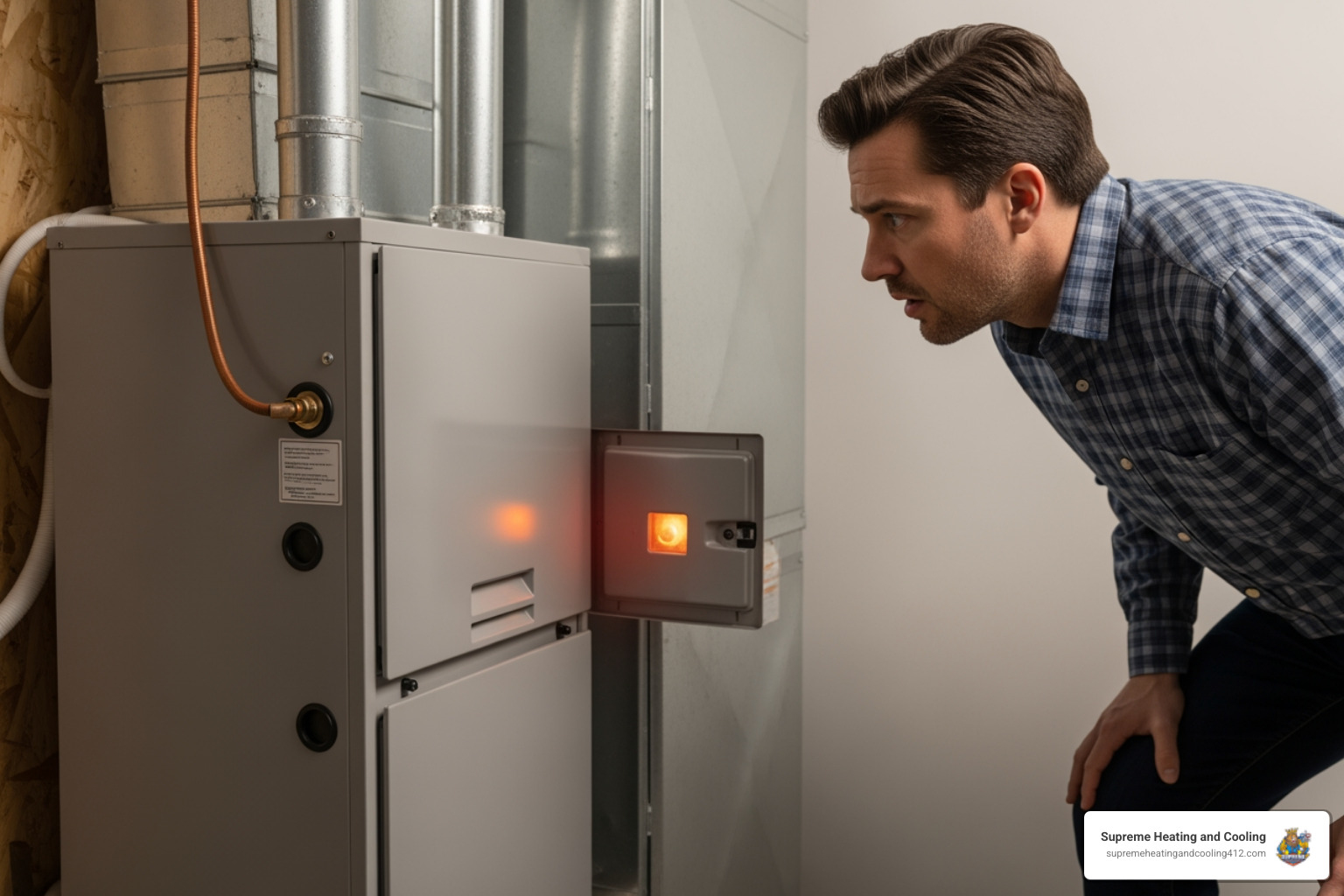
- Yellow Pilot Light: For gas furnaces, the pilot light should burn a steady blue. If you observe a yellow or flickering pilot light, it indicates incomplete combustion, which can produce carbon monoxide. This is a serious safety concern that requires professional attention.
- Poor Air Quality: If you notice a sudden decrease in your home's air quality, such as an increase in dust, soot, or unusual humidity levels, your furnace might be struggling. This can be a sign of a clogged filter or other internal issues affecting efficiency and health.
Understanding these warning signs is crucial for knowing when to call for expert help. For more in-depth information about heating repair services, please visit our page on heating repair services.
Understanding the Dangers of a Malfunctioning Furnace
Ignoring the signs of a failing furnace, especially in the harsh Pittsburgh climate, can lead to serious consequences that extend beyond mere discomfort. We prioritize your safety and want you to be aware of the potential dangers:
- Carbon Monoxide Poisoning: This is arguably the most insidious danger. A cracked heat exchanger, poor ventilation, or lack of maintenance in a gas furnace can lead to incomplete combustion, producing carbon monoxide (CO). CO is a silent killer—colorless, odorless, and tasteless. Symptoms like headaches, dizziness, nausea, and fatigue can easily be mistaken for the flu. A functioning CO detector is vital, but immediate professional inspection is necessary if you suspect a leak.
- Fire Hazards: Electrical issues, frayed wiring, or an overheating furnace can spark a fire. Burning smells, smoke, or unusual sounds like buzzing or popping from your unit are serious warning signs that should prompt immediate action.
- Frozen Pipes: Without adequate heat, especially during freezing temperatures common in our service areas like Monroeville and Greensburg, your home's plumbing is at high risk. Water in pipes can freeze, expand, and cause pipes to burst, leading to extensive and costly water damage.
- Water Damage: As a direct result of frozen and burst pipes, water can flood basements, walls, and ceilings, causing structural damage, promoting mold growth, and destroying personal belongings. The repair costs for water damage can far exceed the cost of a furnace repair or replacement.
- Health Risks from Cold: Prolonged exposure to cold temperatures can lead to hypothermia, especially for infants, the elderly, and those with pre-existing health conditions. A reliable heating system is essential for maintaining a safe and healthy indoor environment during winter.
These dangers underscore why prompt action is so important when your furnace acts up. For more information on how we handle these critical situations, explore our emergency HVAC services.
What to Do When Your Furnace Dies: A Step-by-Step Guide
When your furnace unexpectedly gives up the ghost, it's easy to panic. But before you call for an emergency furnace replacement in Pittsburgh, PA, there are a few safe and simple troubleshooting steps you can take. These checks can sometimes resolve the issue, saving you time and stress.
Here’s what we recommend:
- Safety First: If you smell gas (a rotten egg odor) or your carbon monoxide detector is alarming, prioritize safety above all else. Evacuate your home immediately and call your gas company and then emergency services from a safe location. Do not re-enter until authorities declare it safe.
- Check Your Thermostat Settings: It might sound obvious, but an incorrectly set thermostat is a common culprit. Ensure it's set to "Heat" and that the temperature setting is higher than your current room temperature. Also, check the battery if it's a battery-powered model. Sometimes, a simple adjustment is all it takes.
- Inspect Your Circuit Breakers: Go to your home's electrical panel (often in the basement or utility closet). Look for the circuit breaker labeled for your furnace or HVAC system. If it's in the "Tripped" position (usually halfway between "On" and "Off"), switch it completely "Off" and then back "On." A tripped breaker indicates an electrical overload, but resetting it might restore power. If it trips again immediately, there's a deeper electrical issue that needs professional attention.
- Change the Air Filter: A dirty, clogged air filter is one of the most common causes of furnace breakdowns. A blocked filter restricts airflow, forcing your furnace to work harder, which can lead to overheating and shutdowns. Replacing a dirty filter with a clean one can often resolve minor heating issues and improve efficiency. This is also a great preventative measure.
- Ensure Vents Are Open: Contrary to popular belief, closing unused air vents to save energy can actually hinder your furnace's performance. It can create uneven pressure in your ductwork and cause your system to work inefficiently or even shut down. Make sure all supply vents throughout your home are open to allow for even pressure and proper airflow.
- Do Not Attempt DIY Repairs: While checking basic settings and filters is safe, attempting complex DIY repairs on your furnace, especially gas or electrical components, is extremely dangerous. You could void warranties, cause further damage, or, more importantly, risk fire, gas leaks, or electrocution. Always trust licensed professionals for heating installation services who understand all working parts and components.
- When to Call a Professional: If you've gone through these steps and your furnace still isn't working, or if you suspect a more serious issue like a gas leak, carbon monoxide, or an electrical problem, it's time to call us. Our certified technicians are available 24/7 in communities like Penn Hills, Murrysville, and Monroeville to diagnose the problem and provide a safe, effective solution.
For any issues related to your home's climate control, including thermostat malfunctions, you can find more information on our thermostat services.
The Process for Emergency Furnace Replacement in Pittsburgh, PA
When your furnace unexpectedly fails during a cold snap, especially in Pittsburgh, an emergency furnace replacement in Pittsburgh, PA becomes a top priority. We understand the urgency and are equipped to provide swift, reliable service across our extensive service areas, including Wilkinsburg, Greensburg, and Fox Chapel.
Our process for emergency furnace replacement is designed to get your home warm and safe as quickly as possible:
- 24/7 Availability and Swift Response: We pride ourselves on our swift response times. When you call, our team is available 24/7, ready to dispatch a technician to your location within a few hours. We understand that HVAC problems can't wait, especially during the thick of winter.
- Prompt Diagnosis: Upon arrival, our highly trained technicians, who undergo continuous training to stay updated on the latest HVAC technologies, will perform a thorough diagnostic assessment of your current system. We use advanced diagnostic equipment to accurately identify the problem.
- Repair vs. Replacement Analysis: Our goal is always to provide the most cost-effective and safe solution. We'll carefully evaluate whether a repair is feasible and economical, or if a full emergency furnace replacement in Pittsburgh, PA is the better option. We believe in transparent estimates and clear explanations, ensuring you understand the situation and all available solutions.Here are the key factors that typically favor replacement over repair:
- Age of the Furnace: The average furnace lifespan is 15-20 years. If your furnace is 15+ years old, it's likely losing efficiency and nearing the end of its functional life. An older unit, perhaps 24 years old like one customer's, is often a candidate for replacement rather than continued repair.
- Frequent, Costly Repairs: If your furnace has required multiple expensive repairs in a single season, or if the repair cost approaches more than half the cost of a new unit, replacement often becomes the more economical choice in the long run.
- Decreased Efficiency and High Bills: Older furnaces are significantly less efficient than modern high-efficiency models, some of which offer up to 30% more efficiency. If your heating bills have been steadily climbing without a change in usage, your furnace is likely wasting energy.
- Safety Concerns: Issues like a cracked heat exchanger, persistent gas leaks, or electrical malfunctions that cannot be safely or reliably repaired necessitate immediate replacement to protect your family from carbon monoxide poisoning and fire hazards.
- Uneven Heating or Cold Spots: If your furnace struggles to heat your home uniformly, leaving some rooms cold, it might be undersized or simply too old and inefficient to meet your home's heating demands.
- Availability of Parts: For very old models, replacement parts may become scarce or obsolete, making repairs difficult, expensive, or even impossible.
- System Selection Process: If replacement is necessary, we'll guide you through selecting the right system for your home's specific needs. We install all major brands and focus on high-efficiency options.
- Gas Furnaces: These are a very common and efficient heating solution in Pittsburgh homes with natural gas access. We ensure proper sizing and installation for optimal performance and safety.
- Electric Furnaces: For homes without natural gas, electric furnaces offer a reliable heating option.
- High-Efficiency Models: We often recommend high-efficiency furnaces, which can provide significant energy savings and improved comfort. These units are rated by Annual Fuel Utilization Efficiency (AFUE), with ratings of 95% or 96% indicating excellent fuel efficiency.
- Professional Installation: Once the new system is chosen, our licensed, trained, and knowledgeable technicians will perform the installation. This includes careful removal of the old unit, precise installation of the new furnace, connection to existing ductwork and fuel lines, and thorough testing to ensure everything operates safely and efficiently. We perform load calculations to determine the correct system size for maximum efficiency and comfort, ensuring proper airflow (CFM per ton) and maintaining safe static pressure in the ductwork. We adhere to all manufacturer specifications and industry standards, providing a complete walkthrough of your new system.
For more details on our heating installation services, please visit our dedicated page: heating installation.
Choosing the Right System for an Emergency Furnace Replacement in Pittsburgh, PA
When facing an emergency furnace replacement in Pittsburgh, PA, making an informed decision about your new system is crucial, even under pressure. We help you consider several factors to ensure you get the best fit for your home and long-term comfort.
- Home Size: Proper furnace sizing is paramount. An oversized furnace can short-cycle, leading to inefficiencies, increased wear and tear, and a shortened lifespan. An undersized unit will struggle to heat your home adequately. We perform load calculations based on your home's square footage, insulation levels, and the local Pittsburgh climate to determine the correct system size for maximum efficiency and comfort.
- Energy Efficiency (AFUE): The Annual Fuel Utilization Efficiency (AFUE) rating indicates how efficiently your furnace converts fuel into heat. High-efficiency furnaces, often with AFUE ratings of 95% or 96%, can lead to significant energy savings. While the initial investment might be higher, the long-term savings on your utility bills can be substantial. We can also advise on any available rebates for Energy Star furnaces.
- Fuel Type: Most homes in our service areas use either natural gas or electricity for heating. We work with both gas and electric furnaces, ensuring we can provide a solution that aligns with your home's existing infrastructure and your preferences.
- Long-Term Savings: Investing in a high-efficiency furnace is an investment in long-term savings. Modern furnaces not only consume less fuel but also often provide better air quality through advanced filtration and are compatible with smart thermostats for improved control and efficiency. We are also able to assist with warranty terms (parts, labor) and guarantees to protect your investment and offer more peace of mind.
For information on product warranties, you can SEE WARRANTY DETAILS FOR MORE INFORMATION.
Preventing Future Crises: Proactive Furnace Care
While we're always ready for an emergency furnace replacement in Pittsburgh, PA, our ultimate goal is to help you avoid such stressful situations. Proactive maintenance is the best defense against unexpected breakdowns and ensures your furnace operates safely and efficiently throughout the cold months.
Here are our top tips for preventing future furnace emergencies:
- Annual Professional Maintenance: This is the single most important step you can take. We recommend scheduling routine service inspections at least once a year, ideally before the heating season begins. During these tune-ups, our technicians can identify potential issues early, clean components, lubricate moving parts, and ensure all safety controls are functioning correctly. Regular maintenance extends your furnace's lifespan, maintains efficiency, and significantly reduces the likelihood of an emergency breakdown.
- Regular Filter Changes: A dirty air filter is a leading cause of furnace problems. It restricts airflow, making your furnace work harder, consuming more energy, and increasing wear and tear. We advise checking your furnace filter monthly and replacing it every 1-3 months, or more frequently if you have pets or allergies. A clean filter ensures proper airflow, better indoor air quality, and efficient operation.
- Keeping the Unit Clear: Ensure that the area around your outdoor and indoor furnace units is clear of obstructions. This includes keeping flammable materials away, clearing snow and ice from outdoor units, and ensuring proper ventilation.
- Listening for New Sounds: Pay attention to your furnace's normal operating sounds. Any new or unusual noises—such as grinding, squealing, rattling, or banging—could indicate a developing problem. Addressing these sounds promptly can prevent minor issues from escalating into major emergencies.
- Checking for Yellow Pilot Light: If you have a gas furnace, periodically check the pilot light. It should be a strong, steady blue flame. A yellow or flickering flame indicates incomplete combustion and a potential carbon monoxide hazard.
By following these preventative maintenance tips, you can enjoy consistent warmth, lower energy bills, and greater peace of mind. For comprehensive furnace maintenance services, visit our page on furnace maintenance.
Frequently Asked Questions about Furnace Emergencies
We understand that furnace emergencies can be confusing and stressful. Here, we answer some of the most common questions our customers in Pittsburgh and surrounding areas have.
What constitutes a furnace emergency?
A furnace emergency is any situation where a lack of heat poses a direct threat to your health or property, such as during freezing temperatures, or if the unit presents a safety hazard like a gas leak or electrical problem. Specifically, if your furnace stops working completely during a brutal Pittsburgh cold snap, leaving your home without heat, that's an emergency. Other emergencies include the smell of natural gas (like rotten eggs), a carbon monoxide detector alarm, or any signs of fire or electrical sparking from the unit. These situations require immediate professional attention to ensure the safety of your household and prevent further damage, such as burst pipes.
How quickly can I get an emergency furnace replacement in Pittsburgh, PA?
Reputable HVAC companies, like our team, offer 24/7 services to address emergencies promptly. We pride ourselves on our swift response times, often able to be at your location in Glenshaw, Plum, Oakmont, New Kensington, Forest Hills, Wilkinsburg, Swissvale, Aspinwall, Turtle Creek, Edgewood, Pitcairn, Verona, Cheswick, Pittsburgh, Upper Saint Clair, Greensburg, Monroeville, Murrysville, Fox Chapel, Bethel Park, and Penn Hills within a few hours of your emergency call. After a diagnostic visit to determine if repair or replacement is needed, a replacement can often be scheduled for the same or the next day, depending on equipment and parts availability. Our goal is to restore your home's warmth and safety as quickly as possible.
What types of furnaces can be installed during an emergency?
Emergency services can typically handle the replacement of all common furnace types, ensuring a suitable option is available for your home's needs. This includes natural gas furnaces, which are prevalent in many Pittsburgh homes, as well as electric furnaces. Our technicians are experienced with a wide range of systems and can effectively diagnose and repair issues across different models and brands. Whether you need a like-for-like replacement or an upgrade to a more energy-efficient model, we have the expertise to install the right system for your home's specific requirements.
Your Partner for Warmth and Safety in Pittsburgh
We hope this extensive guide has provided clarity on what to do when facing a furnace emergency, and how to prevent one in the first place. Recognizing the signs of trouble early—like strange noises, unusual smells, or a complete lack of heat—is your first line of defense. Remember the critical importance of safety first, especially when dealing with potential gas leaks or carbon monoxide.
While basic troubleshooting can sometimes resolve minor issues, the expertise of a professional HVAC technician is invaluable for proper diagnosis, safe repairs, and efficient emergency furnace replacement in Pittsburgh, PA. Choosing a reputable company ensures that the job is done right, providing you with long-term peace of mind and comfort.
For trustworthy and prompt service, the team at Supreme Heating and Cooling is ready to help. We are committed to ensuring your home stays warm and safe, even in the dead of winter. Don't hesitate to reach out when you need us most. Contact us for immediate heating services.


.svg)
.webp)
.svg)
