.svg)

.webp)
.jpeg)
When Your AC Won’t Turn On: Quick Diagnosis Steps
When your AC won’t turn on during a hot summer day, you need answers fast. Here are the most common causes and quick fixes you can try before calling a technician:
Immediate Checks (5 minutes):
- Thermostat – Set to “Cool” and 5°F below room temperature
- Circuit Breaker – Check if AC breaker has tripped
- Air Filter – Replace if dirty or clogged
- Outdoor Disconnect Switch – Ensure it’s in “ON” position
- Condensate Drain – Look for water backup triggering safety switch
Power Supply Issues:
- Tripped circuit breakers (most common cause)
- Blown fuses in outdoor disconnect
- Full drain pan activating float switch
When to Call a Professional:
- Capacitor failure (humming but won’t start)
- Motor or compressor problems
- Refrigerant leaks or electrical issues
Nothing is more frustrating than finding your air conditioner has failed when you need it most. Whether your system won’t start at all or is blowing hot air instead of cool relief, this troubleshooting guide will walk you through the most common problems and solutions.
Most AC startup failures stem from simple issues you can check yourself – like thermostat settings, tripped breakers, or dirty filters. However, some problems require professional expertise to diagnose safely.

First Steps: Simple Checks Every Homeowner Can Do
When your AC won’t turn on, don’t panic. Before calling for emergency service, there are several simple checks you can perform yourself. Often, the solution is straightforward and can save you time and money.
How Thermostat Settings Can Cause Your AC to Not Turn On
Your thermostat is the control center for your cooling system. If it’s not sending the right signals, your AC won’t start. First, check that it’s on and set to “Cool” mode, not “Heat” or “Fan Only.” The temperature setting should be at least 5 degrees lower than the current room temperature. For digital thermostats, dead batteries are a common issue; if the display is blank or dim, try replacing them. Also, ensure your thermostat isn’t in direct sunlight or near a heat source, as this can cause inaccurate temperature readings and prevent the AC from kicking on when needed.
Can a Dirty Air Filter Stop Your AC from Working?
Yes, a dirty air filter can definitely stop your AC from working. When clogged with dust and debris, it restricts airflow to the indoor unit. This can cause the evaporator coils to get too cold and freeze into a block of ice. A frozen coil will prevent your AC from cooling and often triggers a safety switch, shutting the system down. Check your filter monthly and replace it every 1-3 months, depending on your home’s conditions (e.g., pets, allergies). If you find frozen coils, turn the AC off at the thermostat to let the ice thaw completely (this can take hours). After it thaws, install a clean filter before turning the system back on.

How to Safely Reset Your Air Conditioner
Power fluctuations or minor electrical glitches can sometimes cause your AC to fail to start. A simple system reset, or “reboot,” can often resolve these issues.
Here’s how to safely give your AC unit a fresh start:
- Turn off your thermostat: Set your thermostat to the “Off” position.
- Head to your electrical panel: This is usually found in your basement, garage, or a utility closet.
- Find the AC breaker: Look for the circuit breaker labeled “AC,” “Furnace,” or “HVAC.”
- Flip the breaker to “Off”: Turn the breaker completely off to cut power to your AC units.
- Wait patiently: Give it at least 5 to 10 minutes. This allows the internal components to reset safely.
- Flip the breaker back to “On”: Restore power to your AC system.
- Return to your thermostat: After a few minutes, set your thermostat back to “Cool” and your desired temperature.
If your AC turns on, you’ve likely solved the problem. If not, it’s time to investigate potential power supply issues.
Why Your AC Won’t Turn On: Investigating Power Supply Issues
If the simple checks don’t solve the problem, the issue may be with the power supply. Your air conditioner requires consistent power, and interruptions—whether from a safety feature or an electrical fault—will prevent it from turning on. Many of these power-related shutdowns are designed to protect your AC system from damage.
The Role of the Tripped Circuit Breaker
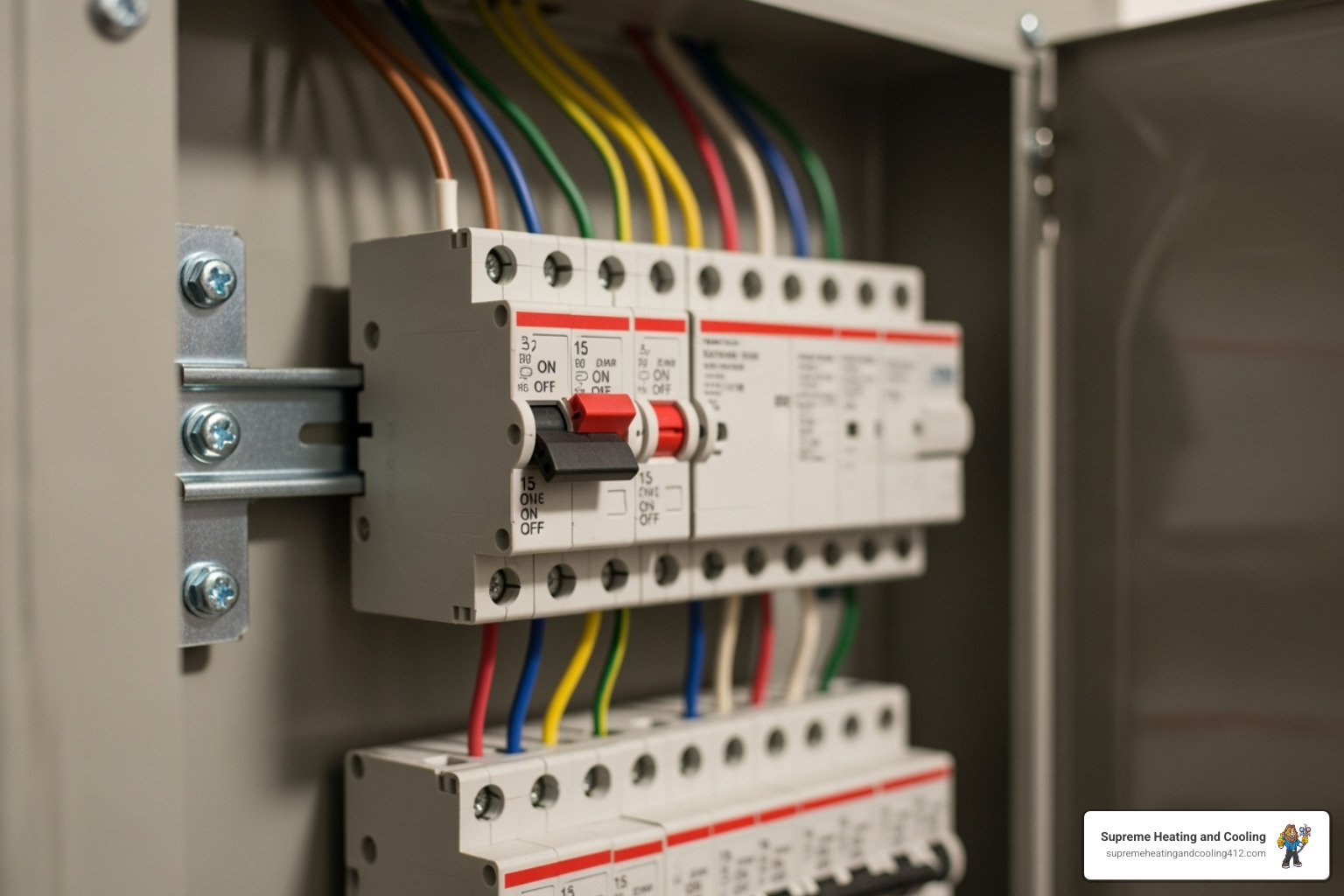
A tripped circuit breaker is a common reason an AC won’t turn on. It’s a safety device that cuts power during an overload or short circuit to prevent electrical fires or equipment damage. To check, find the breaker labeled “AC” or “HVAC” in your electrical panel. A tripped breaker will be in the “Off” position or stuck in the middle. To reset it, push the switch firmly to “Off,” then back to “On.” Important: If the breaker trips again immediately, do not reset it again. This indicates a more serious electrical problem that requires a professional.
Checking the Outdoor Disconnect Switch and Fuses
Near your outdoor condenser unit, you’ll find a disconnect switch in a gray metal box. This switch provides a way to cut power directly to the unit for maintenance. Ensure the switch is in the “On” position and that any pull-out block is seated firmly. Some disconnect boxes also contain fuses that can burn out during a power surge. Safety Warning: Always turn off the corresponding breaker in your main electrical panel before opening the disconnect box. Replacing fuses requires electrical knowledge and a multimeter for testing. If you’re not comfortable with this, or if a new fuse blows immediately, call a professional.
What to Do If Your AC Has a Clogged Condensate Drain Line
A clogged condensate drain line is a common, non-electrical reason your AC won’t turn on. As your AC removes humidity, water collects and flows out through a drain line. If this line gets clogged with algae or debris, water backs up into the drain pan. A safety float switch detects the high water level and shuts off the AC to prevent water damage. You may see standing water around your indoor unit. You can often clear a minor clog by using a wet/dry vacuum on the outdoor end of the drain line. Once the clog is cleared and the pan is empty, the system should be able to start again.

Common Component Failures and When to Call a Professional
Some AC problems involve complex components that require professional diagnosis and repair. Issues with capacitors, motors, compressors, refrigerant, and wiring should always be handled by a qualified technician with the proper tools and safety training.
Faulty Capacitors and Contactors
If your AC won’t turn on but you hear a humming sound from the outdoor unit, or a click followed by silence, the issue is likely a faulty capacitor or contactor. Capacitors provide the electrical jolt needed to start the compressor and fan motors. Contactors are switches that send power to these components.
Why You Need a Pro: Capacitors can hold a dangerous electrical charge even when the power is off. Attempting to replace one yourself carries a severe risk of electric shock. This repair should always be left to a professional.
Signs of a Failed AC Motor or Compressor
The primary components of your AC are the indoor blower motor (circulates air), the outdoor fan motor (expels heat), and the compressor (pressurizes refrigerant). A failure in any of these will prevent your system from working correctly. Signs of a failing motor or compressor include:
- Loud noises: Grinding, screeching, or banging sounds from either unit.
- No sound: The unit receives power but is completely silent.
- Fan not spinning: The outdoor fan blades are not moving, which can lead to overheating.
- Warm air: The system runs but doesn’t cool the air.
Diagnosing and repairing these parts requires professional expertise and specialized tools.
Refrigerant Leaks and Wiring Problems
Refrigerant leaks and wiring problems are serious issues that require a professional.
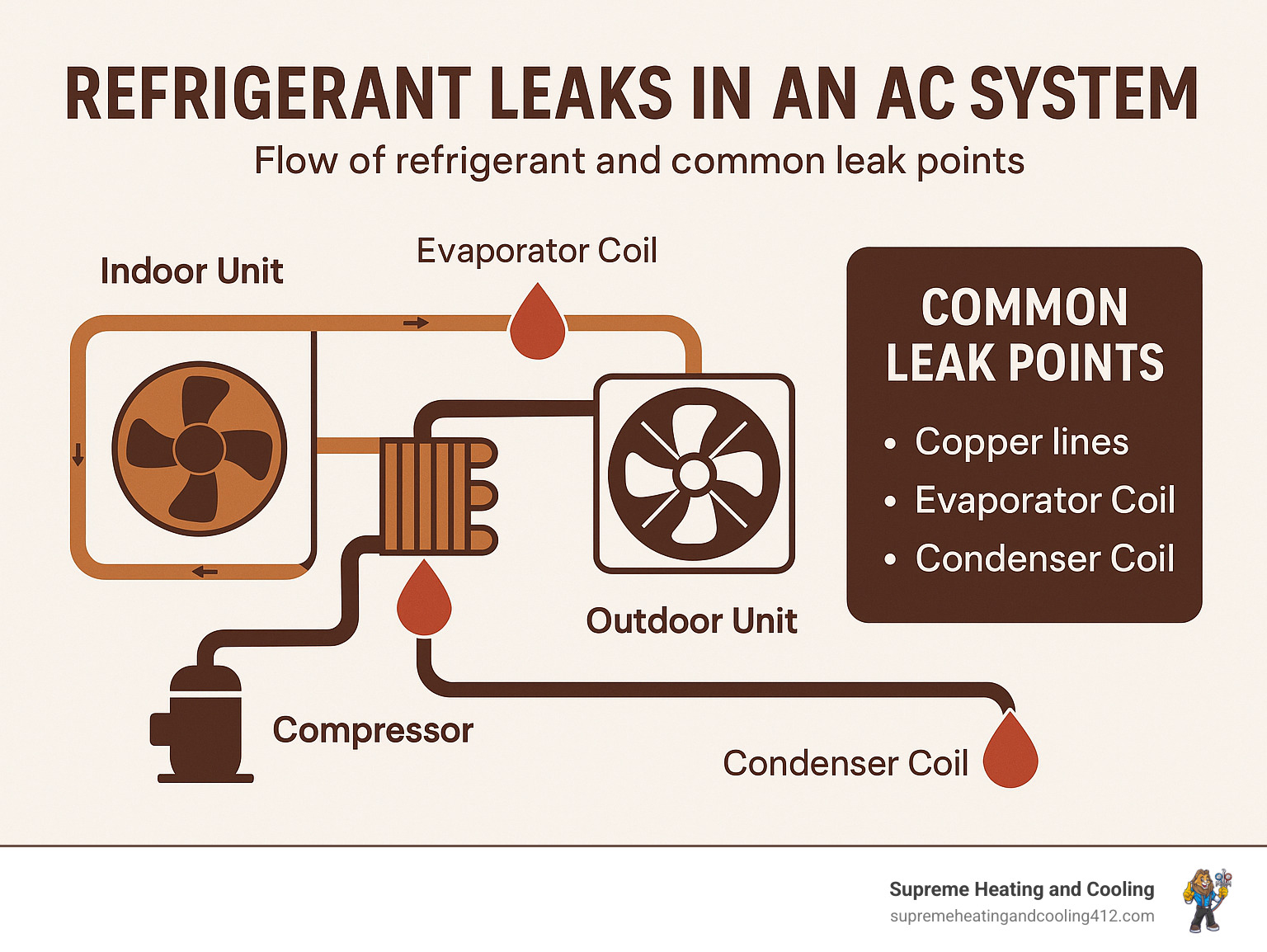
- Refrigerant Leaks: Your AC uses refrigerant to transfer heat. A leak will cause low pressure, often triggering a safety switch that shuts the system down. Signs include frost on copper lines, a hissing sound, or the AC running without cooling. Refrigerant is a controlled substance, and handling it is restricted to certified technicians under federal regulations.
- Wiring Problems: Damaged, loose, or corroded wiring can prevent your AC from getting power. These issues are a significant fire hazard and can be caused by pests, age, or weather. If you see frayed wires or your breaker repeatedly trips, call a professional immediately. Never attempt to repair AC wiring yourself.
Frequently Asked Questions about Why Your AC Won’t Turn On
We understand that a non-working AC unit brings up a lot of questions. Here are some of the most common inquiries we receive when an AC won’t turn on.
Why would my air conditioner suddenly stop working?
An AC can stop suddenly for several reasons, many of which are safety features preventing damage. Common causes include:
- A tripped circuit breaker or blown fuse from a power surge or electrical fault.
- A safety switch being activated, such as the float switch in a full condensate drain pan or a low-pressure switch from a refrigerant leak.
- An abrupt capacitor failure, which prevents the motors from starting.
- A power outage or surge that requires the system to be reset.
While some of these issues are simple fixes, others indicate a problem that needs professional attention.
How do I force my home air conditioner to turn on?
We strongly advise against trying to “force” your home air conditioner to turn on. If your AC won’t turn on after basic troubleshooting (checking the thermostat, filter, and breaker), it has likely shut down to prevent damage or a safety hazard. Forcing it to run could worsen the problem, leading to more expensive repairs or creating a fire risk. If a proper reset doesn’t work, it’s time to call a qualified HVAC technician to diagnose the issue safely. Our team at Supreme Heating and Cooling is always ready to help with trustworthy service.
What are the signs my AC unit is at the end of its lifespan?
Most air conditioners last 15 to 20 years with proper maintenance. If your unit is in this age range and won’t turn on, it may be reaching the end of its lifespan. Other signs include:
- Frequent and Costly Repairs: If repair costs are adding up, replacement may be more economical.
- Rising Energy Bills: Older units lose efficiency, using more power to cool your home.
- Poor Performance: The unit struggles to cool, runs constantly, or provides inconsistent temperatures.
- Loud Noises: Constant grinding, rattling, or screeching can indicate widespread wear.
- Uses R-22 Refrigerant: This older refrigerant is being phased out and is expensive to replace if there’s a leak.
Investing in a new, energy-efficient model can provide better comfort and long-term savings.
Stay Cool in Penn Hills: Your Next Steps
We hope this guide helped you troubleshoot why your AC won’t turn on. While checking the thermostat, filter, and breaker can often solve the problem, your safety is the top priority. If you’ve tried these DIY steps and your air conditioner still isn’t working, it’s time to call in the professionals.
Our friendly team at Supreme Heating and Cooling is here to help. We specialize in professional, knowledgeable, and friendly installation, maintenance, and repair of heating and AC systems. We proudly serve the entire Pittsburgh area, including our neighbors in Penn Hills, Glenshaw, Plum, and many other communities.
We believe in offering trustworthy, non-pushy service to get your home cool and comfortable again. Let us take the guesswork out of your AC problems.


.svg)
.webp)
.svg)
