.svg)

.webp)
Why AC Troubleshooting Tips Before Calling a Pro Can Save You Time and Stress
Before you pick up the phone, knowing the right ac troubleshooting tips before calling a pro can help you solve the problem fast — and possibly avoid a service call altogether. Many of the most common AC failures come down to simple issues any homeowner can check in under 30 minutes.
Here are the first things to check when your AC stops working:
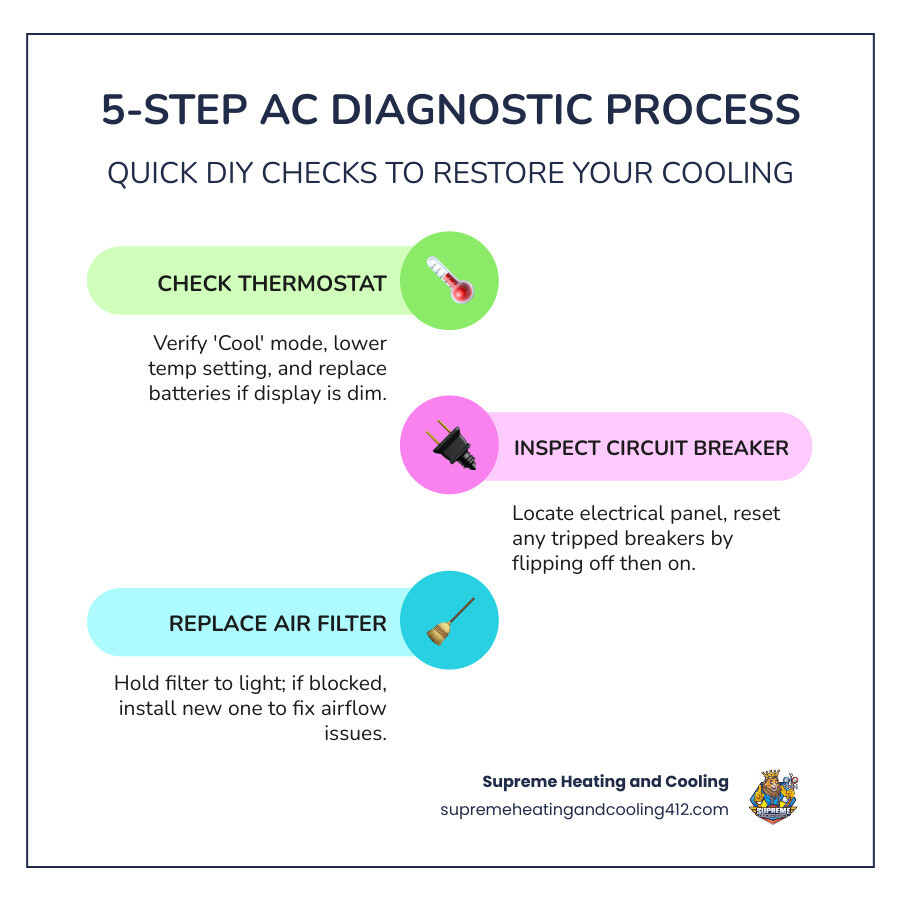
- Thermostat settings - Make sure it's set to "Cool" and the temperature is lower than the current room temp. Replace batteries if the display looks dim or blank.
- Circuit breaker - Head to your electrical panel and look for any tripped breakers. Flip them fully off, then back on.
- Air filter - Pull it out and hold it up to light. If you can't see through it, replace it immediately. A dirty filter is the single most common cause of AC problems.
- Outdoor unit - Check for leaves, grass, or debris blocking the condenser. Clear at least two feet of space around it.
- Condensate drain line - Look for standing water near the indoor unit. A clogged drain can trigger a safety shutoff.
Industry experts note that nine times out of ten, a central AC unit that isn't performing well traces back to a dirty filter. That's a fix that takes two minutes and costs next to nothing.
Still, not every AC problem is a simple fix. Some issues — like refrigerant leaks, compressor failure, or electrical faults — require a licensed HVAC technician. Knowing the difference between what you can handle and what needs professional attention protects both your system and your safety.
This guide walks Pittsburgh-area homeowners through the most important AC troubleshooting steps to try before scheduling a repair call, so you can stay cool and confident no matter what the system throws at you.
Essential AC Troubleshooting Tips Before Calling a Pro
When your cooling system fails in the middle of a humid April 2026 afternoon, the natural reaction is to worry. However, many systems are designed with safety features that shut them down to prevent damage from minor, fixable issues. By adopting a "detective" mindset, you can often restore comfort to your home in Glenshaw or New Kensington without waiting for a technician.

One of the most frequent reasons an AC won't start is a simple power disruption. Your air conditioner actually uses two separate circuits: one for the indoor air handler and one for the outdoor condenser. If either trips, the system won't work.
Start by visiting your electrical panel. Look for a breaker that is in the "middle" position — this indicates it has tripped. To reset it, you must flip it completely to the "Off" position before flipping it back to "On." If you have an older home in areas like Swissvale or Wilkinsburg, you might still have a fuse box. Check for blown fuses and replace them with an identical amperage rating. Additionally, check the outdoor disconnect switch located near your condenser unit. It’s not uncommon for this to be accidentally bumped into the "Off" position during yard work. For more complex electrical concerns, it’s always wise to learn about professional air conditioning services.
Thermostat and Power Checks: AC Troubleshooting Tips Before Calling a Pro
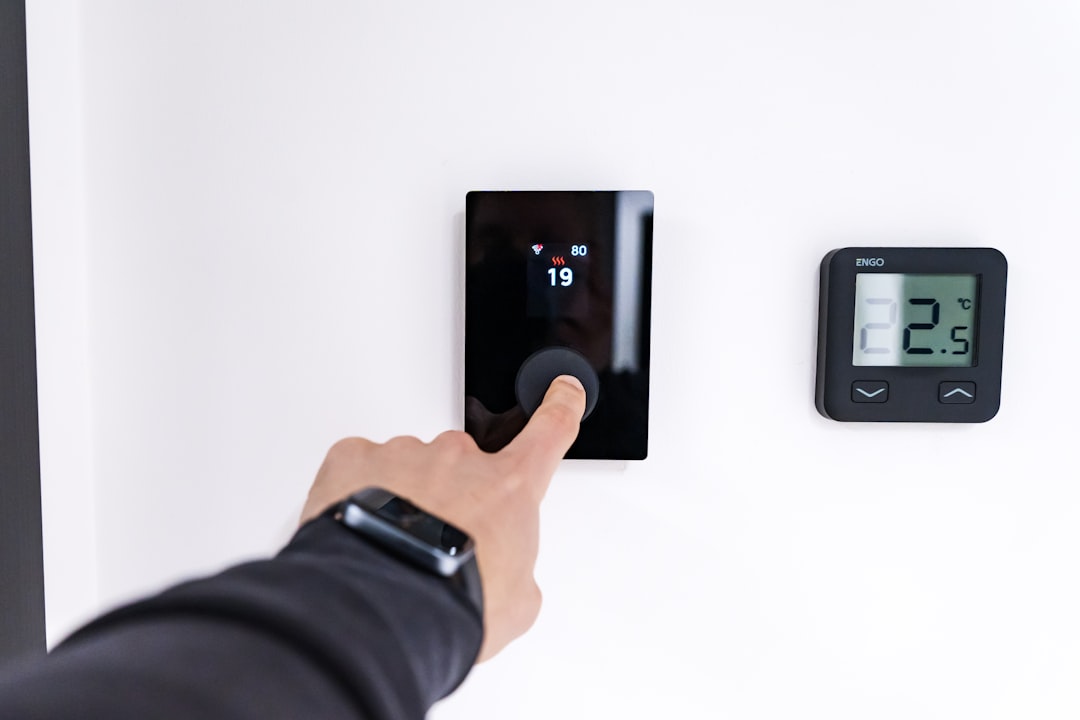
The thermostat is the brain of your HVAC system, and if it loses power or has the wrong settings, the whole system stays silent. First, verify that the thermostat is set to "Cool" and that the fan is set to "Auto." If the fan is set to "On," it will blow air continuously even when the AC isn't cooling, which can make it feel like the system is blowing warm air.
If your display is blank or dim, replace the batteries immediately. Many homeowners in Plum and Oakmont find that a fresh set of AA or AAA batteries is all it takes to get the AC humming again. Furthermore, modern smart thermostats can sometimes experience software "glitches." Try a hard reset by turning the unit off at the wall for a minute or checking the manufacturer’s app for error codes. Most systems have a built-in 5-minute delay to protect the compressor from "short cycling" (turning on and off too rapidly), so wait a few minutes after adjusting settings before you panic.
Air Filter Maintenance: AC Troubleshooting Tips Before Calling a Pro
We cannot emphasize this enough: a dirty air filter is the #1 cause of AC problems. When a filter is clogged with dust and pet dander, it restricts airflow. This forces your system to work significantly harder, leading to overheating or even causing the indoor evaporator coils to freeze.
In our experience serving Pittsburgh and surrounding neighborhoods, a filter should be inspected every month. If you have pets or allergies, you may need to change it more frequently. Use the table below to understand how often you should be swapping yours out:
| Filter Type | Typical Lifespan | Recommended Check |
|---|---|---|
| Basic Fiberglass (1-inch) | 30 days | Every month |
| Pleated Filter (Standard) | 60–90 days | Every 2 months |
| High-Efficiency / Deep Pleat | 6–12 months | Every 6 months |
Clearing Airflow Obstructions and the Outdoor Condenser
Your outdoor unit (the condenser) is responsible for releasing the heat collected from inside your home. If it can't "breathe," your AC will struggle to cool or might shut down entirely.
Maintaining a 2-foot clearance around the unit is essential. Over the winter and early spring, leaves, twigs, and tall grass can accumulate around the base. Trim back any bushes or vegetation that have grown too close.
Inspecting Vents and Registers
Inside your home, take a walk through every room. Ensure that all supply vents are fully open and that return grilles are not blocked by rugs, furniture, or curtains. We often see homeowners in Fox Chapel or Bethel Park accidentally block a return vent with a new piece of furniture, which creates a pressure imbalance. This imbalance can cause the system to work inefficiently and may lead to ductwork leaks over time.
Cleaning the Exterior Unit
If the metal fins on your outdoor unit are covered in dirt or cottonwood seeds, the heat transfer process is hindered. You can safely clean these yourself. First, turn off the power at the outdoor disconnect. Then, using a gentle stream from a garden hose (never a pressure washer, which can bend the delicate fins), rinse the coils from the top down. While you're there, look through the top grille to ensure the fan blade is free of obstructions like bird nests or stray branches.
Managing Condensate Drains and Frozen Evaporator Coils
Your AC doesn't just cool the air; it removes humidity. This moisture collects on the indoor coils and drips into a drain pan, where it should flow outside through a condensate line.
If this line gets clogged with algae or debris, the water backs up. Most modern systems in the Pittsburgh area are equipped with a "float switch." When this switch detects rising water in the pan, it cuts power to the AC to prevent water damage to your floors or ceiling.
Identifying a Frozen System
If you notice ice on the copper refrigerant lines or frost on the indoor unit, your evaporator coil has frozen. This is usually caused by either a very dirty air filter or low refrigerant levels. If you see ice, turn the system off at the thermostat immediately.
Do not try to scrape the ice off, as you could damage the coils. Instead, switch the thermostat to "Fan Only" mode. This keeps the blower running to help thaw the ice, which usually takes 2 to 4 hours. Once the ice is gone and you’ve replaced the filter, you can try restarting the system. If it freezes again, it's time to call in the experts.
Clearing the Drain Line
To prevent clogs, you can perform a simple monthly maintenance task: pour about a quarter-cup of white vinegar down the condensate drain access point. This helps kill algae and prevents sludge from forming. If the line is already clogged and the pan is full of water, you can use a wet/dry vacuum on the exterior end of the pipe to suck out the obstruction. This simple DIY fix can save you a service call and protect your home from mold and water damage.
When to Stop DIY and Call for Expert AC Repair
While we love seeing homeowners in Aspinwall and Turtle Creek save money with DIY fixes, there are times when continuing to tinker can be dangerous or cause more expensive damage.
If you have performed the checks above and the system still won't run, or if you encounter any of the following "red flags," please turn the system off and contact us for professional air conditioning repair:
- Unusual Noises: Grinding, shrieking, or loud banging sounds often indicate a failing motor or a broken compressor component.
- Hissing Sounds: This is a classic sign of a refrigerant leak. Refrigerant is a regulated chemical that requires EPA certification to handle safely.
- Burning Smells: If you smell "electric" burning or smoke, shut the power off at the breaker immediately. This indicates a serious electrical failure.
- Frequent Short Cycling: If the unit turns on and off every few minutes, it could be a failing capacitor, a faulty control board, or an improperly sized system.
- Persistent Breaker Trips: If the breaker trips again immediately after you reset it, do not try a third time. This indicates a high-voltage short or a grounded compressor.
Frequently Asked Questions about AC Troubleshooting
Why is my AC running but not blowing cold air?
The most common culprits are a severely clogged air filter or a dirty outdoor condenser unit. If the airflow feels weak, check the filter. If the airflow is strong but the air is warm, the outdoor unit might not be getting power, or you could be low on refrigerant.
How do I reset my air conditioning unit?
The safest way to reset your system is to turn it off at the thermostat, then flip the AC circuit breaker to "Off" for at least 10 minutes. This allows the internal electronics to discharge. Flip the breaker back on, wait another 5 minutes, and then turn the thermostat back to "Cool."
What is the 20-degree rule for air conditioners?
Most air conditioners are designed to create a 20-degree difference between the outdoor temperature and the indoor air. If it is 95 degrees in Greensburg, your AC might struggle to get the house below 75 degrees. This doesn't necessarily mean the unit is broken; it's simply reaching its mechanical limit. Closing blinds on the sunny side of the house can help your system keep up during extreme heat.
Conclusion
At Supreme Heating and Cooling, we believe in empowering our neighbors across the Pittsburgh region — from Monroeville to Bethel Park and Penn Hills — with the knowledge to keep their homes comfortable. Taking a few minutes to check your filters, breakers, and thermostat can often resolve "emergency" situations without the need for a professional.
However, if your troubleshooting leads to more questions than answers, or if you've spotted one of the warning signs mentioned above, our team is here to help. We pride ourselves on providing trustworthy, non-pushy service to families in Fox Chapel, Greensburg, and throughout our service area. Don't let a minor glitch turn into a major breakdown during the height of summer. Schedule your professional AC tune-up today to ensure your system is ready for whatever the Pennsylvania weather brings.


.svg)
.webp)
.svg)
