.svg)

.webp)
Your AC Does More Than Cool — Here's How It Removes Moisture and Why It Matters
Understanding how your AC removes moisture and why it matters starts with one simple idea: your air conditioner isn't just a cooling machine — it's also your home's primary dehumidifier. Here's a quick breakdown:
How your AC removes moisture:
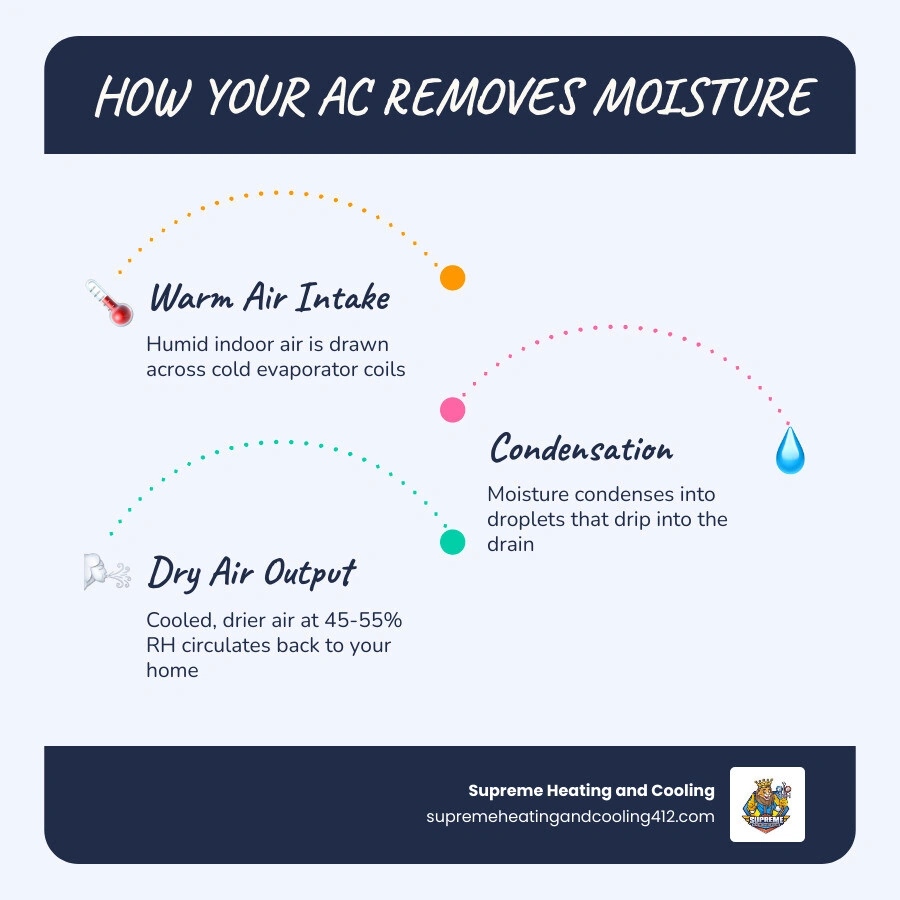
- Warm, humid indoor air is pulled across cold evaporator coils
- Water vapor in the air condenses into liquid droplets on the coil surface
- That water drips into a condensate pan and drains out of your home
- Cooler, drier air is then circulated back into your living spaces
Why it matters:
- High indoor humidity above 60% encourages mold growth and damages wood floors and furniture
- Sticky, humid air feels warmer than it actually is, making your home uncomfortable even when the thermostat reads 72°F
- Poor humidity control puts extra strain on your AC system, driving up energy bills
- The ideal indoor humidity for a Pittsburgh summer is 45–55% relative humidity
Most homeowners focus on temperature and forget about moisture. But in humid Pennsylvania summers, your AC's ability to dehumidify can make or break your indoor comfort. When something goes wrong — an oversized unit, a dirty coil, a refrigerant issue — your home can feel cool and clammy at the same time, which is a frustrating and often misunderstood problem.
This guide walks you through exactly how the dehumidification process works, what can go wrong, and what you can do about it.
The Science of Condensation: How Your AC Removes Moisture and Why It Matters

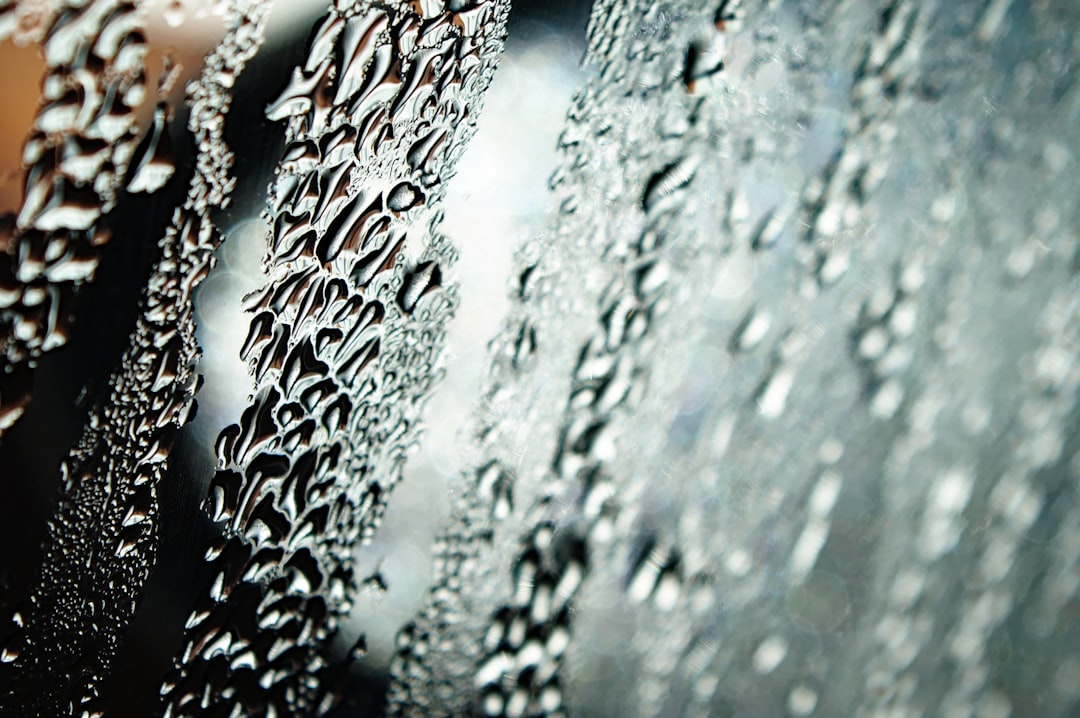
At the heart of the process is condensation. If you've ever seen a cold glass of iced tea "sweat" on a hot day, you've already seen the same basic physics your AC uses.
Inside your system, warm return air from your home passes over the evaporator coil. That coil is filled with cold refrigerant, so its surface temperature is low enough to pull both heat and moisture from the air. As the air cools, it reaches its dew point, which is the temperature where water vapor changes into liquid. That moisture collects on the coil as droplets.
Your AC then sends that water into a condensate pan and out through a drain line, while the cooler, drier air moves back through your ductwork and into your rooms.
This is why air conditioning is doing two jobs at once:
- Sensible cooling: lowering air temperature
- Latent cooling: removing moisture from the air
A modest 12,000 BTU air conditioner can typically remove about 3 to 4 pints of water per hour under the right conditions. That is a lot of moisture leaving your home instead of hanging around in your air, carpets, drywall, and furniture.
Because humidity affects more than comfort, this process also supports better Indoor Air Quality.
Understanding the condensation process
Here is the dehumidification cycle in simple terms:
- Your system pulls in warm, humid indoor air
- That air moves across the cold evaporator coil
- Moisture condenses on the coil surface
- Water drips into the condensate pan
- The condensate drain line carries the water away
- The blower sends cooled, drier air back into your home
A few important details make this work well:
- The coil has to be cold enough
- Air has to move across the coil at the right speed
- The system has to run long enough
- The condensate drain has to stay clear
If any of those pieces are off, your AC may still cool the house but do a poor job removing humidity. That is when a home starts feeling more "cold soup" than comfort zone.
Why Humidity Control is Essential for Your Pittsburgh Home
Humidity is not just a comfort issue. It affects how your home feels, how healthy your indoor environment is, and how well your building materials hold up over time.
Most experts recommend keeping indoor relative humidity between 30% and 50% for overall comfort and health. During summer in the Pittsburgh area, a practical target is usually 45% to 55%. That range helps your home feel cooler without being too dry.
When humidity climbs above 60%, problems start showing up fast.
| Condition | High Humidity | Ideal Humidity |
|---|---|---|
| Comfort | Air feels sticky and warmer than it is | Air feels cooler and more comfortable |
| Health | Can aggravate allergies and respiratory issues | Supports easier breathing and better comfort |
| Mold risk | Mold and mildew are more likely to grow | Mold risk is reduced |
| Dust mites | Thrive in damp environments | Less favorable conditions |
| Home materials | Can affect wood floors, trim, and furniture | Better protection for materials |
| Odors | Musty smells become more common | Home smells fresher |
Humidity affects comfort because sweat evaporates more slowly in damp air. That is why a home can feel clammy even when the thermostat says the temperature is fine. Temperature tells part of the story. Humidity tells the rest.
Protecting your health and property
Too much indoor moisture can create a chain reaction:
- Mold and mildew grow more easily
- Dust mites become more active
- Musty odors develop
- Wood furniture and floors can swell or warp
- Paint and finishes may age faster
- Some indoor pollutants and VOC off-gassing can become more noticeable in damp conditions
For families in Pittsburgh, Penn Hills, Monroeville, Bethel Park, Fox Chapel, Greensburg, and nearby communities, summer humidity can be enough to make a well-cooled home still feel uncomfortable. Basements, older duct systems, and air leaks can make that even worse.
Good humidity control protects more than your comfort. It protects your home itself.
Why Your AC Might Cool Without Effectively Removing Humidity
If your home feels cool but sticky, your AC is likely handling sensible cooling better than latent cooling. In plain English, it is lowering the temperature but not removing enough moisture.
Here are the most common reasons.
- Oversized AC unit
- Fan set to "On" instead of "Auto"
- Blower speed set too high
- Dirty air filter
- Dirty evaporator coil
- Refrigerant problems
- Leaky or poorly insulated ductwork
- Short cycling
- Aging equipment
An oversized system is one of the biggest causes. When an AC is too large for the home, it cools the air quickly and shuts off before it has enough runtime to pull out moisture. That is why oversized units often leave homes cool but clammy.
Fan settings also matter more than many homeowners realize. If the thermostat fan is set to "On," the blower can keep running after the cooling cycle ends. That can re-evaporate moisture sitting on the coil and send it back into the air.
Dirty filters and coils are another major issue. Restricted airflow can reduce the system's ability to treat the full volume of indoor air. Dirty coils also reduce efficiency, and research shows neglected coils or clogged filters can drive energy use up by as much as 40%.
Ductwork can be a hidden problem too. Homes can lose nearly a third of conditioned air through duct leaks, and those leaks may also pull humid air from attics, crawl spaces, or wall cavities into the system.
If your AC is cooling but not drying the air, it may be time for professional AC Repair Pittsburgh PA.
How to Optimize Your AC for Maximum Moisture Removal
You do not always need a major repair to improve humidity control. Sometimes a few smart adjustments make a big difference.
Start with measurement. Use a hygrometer or a smart thermostat that displays relative humidity. Without a reading, humidity is mostly guesswork. If indoor RH is consistently above 55% to 60% in summer, your system may need attention.
Here are some of the best homeowner practices:
- Set the thermostat fan to "Auto," not "On"
- Keep a steady temperature instead of making frequent big changes
- Replace filters regularly
- Keep supply and return vents open and unblocked
- Run bathroom exhaust fans during showers and for 20 to 30 minutes after
- Use kitchen exhaust when cooking
- Seal obvious air leaks around windows and doors
- Make sure dryer vents exhaust outdoors
- Keep the condensate drain clear
- Schedule routine AC Maintenance Pittsburgh PA
Regular maintenance matters because dehumidification depends on clean coils, correct airflow, proper refrigerant charge, and a functioning drain system. If one of those is off, moisture removal suffers.
Understanding how your ac removes moisture and why it matters for fan settings
This is one of the most overlooked humidity-control details in a home.
When the thermostat is set to "Auto":
- The blower runs only during active cooling cycles
- Moisture has time to drip off the coil and drain away
- Less water gets pushed back into your indoor air
When the thermostat is set to "On":
- The fan runs continuously
- Moisture left on the coil can evaporate back into the airstream
- Your home may feel clammy even though the AC is running
Blower speed matters too. Lower fan speeds often improve dehumidification because air spends more time on the cold evaporator coil. Faster airflow can prioritize cooling over moisture removal. The exact setting should be adjusted carefully, since too little airflow can create other problems, including coil icing.
Longer, steadier run times usually remove more moisture than short bursts. That is one reason variable-speed systems often do a better job with humidity than single-stage systems that cycle on and off hard.
Advanced Solutions for Persistent Humidity Issues
If you have already addressed filters, settings, and maintenance but the house still feels damp, it may be time to think beyond basic troubleshooting.
In some homes, the issue is not just operation. It is equipment design or age.
Modern systems with variable-speed blowers or inverter-style operation can improve humidity control because they run longer at lower output. That extended runtime helps the evaporator coil stay cold and continue pulling moisture from the air instead of blasting the house with quick cooling cycles.
In homes with older equipment, chronic short cycling, poor duct design, or repeated comfort complaints, an upgrade may be the best long-term fix. If that sounds familiar, we can help you explore AC Installation Pittsburgh PA or AC Replacement Pittsburgh PA.
A proper replacement should never be based on square footage alone. Correct sizing should consider the home's layout, insulation, air leakage, sun exposure, and duct performance. Bigger is not better when humidity is part of the problem.
The role of whole-house dehumidifiers
Some homes in western Pennsylvania need more moisture removal than the AC alone can provide, especially during mild but damp weather.
That is where a whole-house dehumidifier can help.
These systems:
- Remove moisture even when the AC is not actively cooling
- Reduce the humidity load on your air conditioner
- Improve comfort in basements and lower levels
- Support healthier indoor air year-round
- Help maintain a more stable humidity range
This can be especially useful in homes with:
- Finished basements
- Older construction
- High outdoor moisture infiltration
- Large families generating more indoor humidity
- Persistent musty smells
A dedicated dehumidifier is not a sign your AC has failed. In some homes, it is simply the right tool for the moisture load.
Frequently Asked Questions about AC Dehumidification
How your ac removes moisture and why it matters for your energy bills?
Humidity control and energy use are closely connected. When your AC removes moisture effectively, your home feels comfortable at a more reasonable thermostat setting. When it does not, many homeowners lower the temperature more and more, trying to chase comfort that the system should be delivering through dehumidification.
Poor moisture removal can also make the system work harder. Dirty coils and clogged filters reduce heat transfer and airflow, and research shows they can raise AC energy use by up to 40%. Duct leaks waste conditioned air and can pull humid air into the system, adding even more load.
In short:
- Better dehumidification improves comfort
- Better comfort reduces overcooling
- Better maintenance improves efficiency
- Better efficiency reduces system strain
What is the ideal indoor humidity level for a Pennsylvania summer?
For most homes in Pennsylvania, 45% to 55% relative humidity is a strong summer target. That range usually feels comfortable and helps control mold risk without making the air feel too dry.
A broader year-round healthy range is often 30% to 50%, but in summer, many homes land a little higher while still staying comfortable. If your indoor humidity regularly rises above 60%, that is when moisture-related problems become more likely.
A simple hygrometer can help you track this. They are inexpensive, easy to use, and much more reliable than the "my house feels weird" method.
How your ac removes moisture and why it matters for mold prevention?
Mold needs moisture to grow. When your AC removes humidity properly, it reduces the amount of water available in the air and on surfaces throughout your home.
That matters because excess humidity can lead to:
- Damp drywall
- Condensation on vents or windows
- Musty smells
- Microbial growth near coils, drains, and duct surfaces
Keeping the evaporator coil clean and the condensate drain clear is especially important. Damp coils can become a breeding ground for biological growth if they stay dirty. In some cases, indoor air quality upgrades such as coil-focused UV-C lights may help reduce microbial buildup around wet HVAC components, but they work best as part of a broader maintenance and humidity-control strategy.
If you notice musty odors, visible mold, repeated drain issues, or indoor humidity above 60% despite setting changes, it is time to have the system evaluated.
Conclusion
Understanding how your AC removes moisture and why it matters can help you solve one of the most common summer comfort problems: a home that feels cool on the thermostat but sticky in real life.
Your AC removes moisture by condensing water vapor on cold evaporator coils and draining it away. When everything is working correctly, that process improves comfort, supports healthier indoor air, protects your home, and helps your system run more efficiently. When something is off, like an oversized unit, dirty coil, duct leak, or refrigerant issue, humidity can linger and make your whole house feel off too.
At Supreme Heating and Cooling, we help homeowners across Pittsburgh and surrounding communities get to the root of humidity problems with professional, knowledgeable, and friendly service. Whether you need maintenance, repair, or guidance on a better long-term solution, we focus on honest recommendations and real comfort, not pressure.
If your home feels cool but clammy, or your AC just is not handling humidity the way it should, Schedule your professional AC service today.


.svg)
.webp)
.svg)
