
.svg)

.webp)
Ice Forming on Your AC Unit Causes and What to Do
: Ice Forming on Your AC Unit Causes and What to Do
Ice forming on your AC unit causes and what to do is one of the most common warm-weather headaches homeowners face — and it's more serious than it looks. Here's a quick breakdown:
Common causes of ice on your AC unit:
- Dirty or clogged air filter restricting airflow
- Low refrigerant levels dropping coil pressure and temperature
- Blocked return vents or registers
- Dirty evaporator coil preventing heat absorption
- Malfunctioning blower fan motor
- Running the AC when outdoor temps drop below 60°F
What to do immediately:
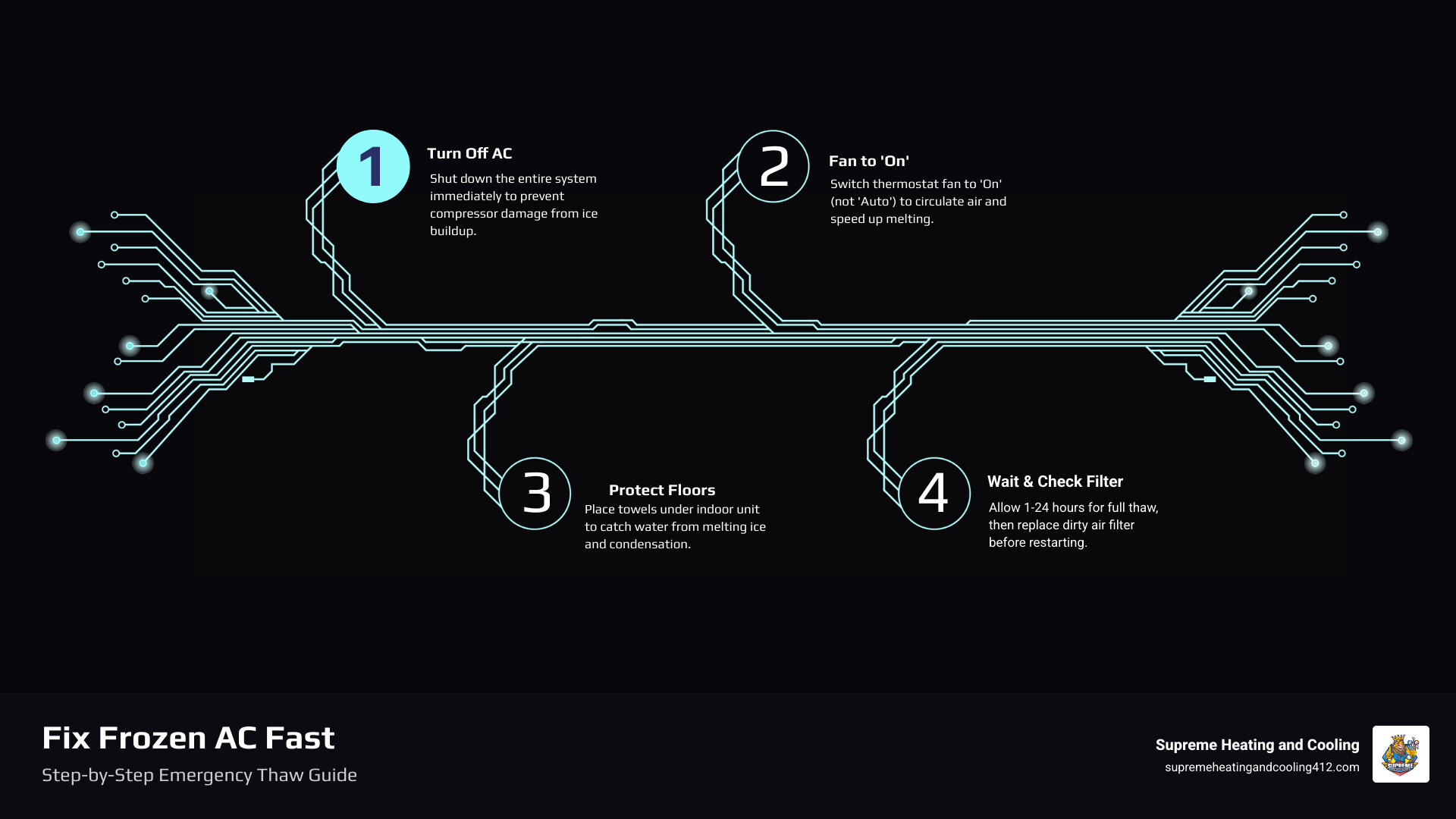
- Turn the AC system off right away
- Switch the thermostat fan to "On" (not "Auto") to help thaw the coil
- Place towels around the indoor unit to catch dripping water
- Check and replace the air filter
- Allow the ice to melt fully — this can take 1 to 24 hours
- Call a licensed HVAC technician if ice returns or you suspect a refrigerant leak
If you spotted frost on your copper lines or a thick sheet of ice coating your indoor coil, your first instinct might be to keep the system running and hope it sorts itself out. That's actually one of the worst things you can do. Ice on an AC unit isn't a sign that it's cooling extra hard — it's a warning that something has broken down in the delicate balance of airflow and refrigerant pressure that keeps your system running safely.
Here in the Pittsburgh area, the cooling season hits fast. When your AC goes down in the middle of a July heat wave, every hour counts. Understanding why ice forms — and what to do about it — can be the difference between a simple filter swap and a costly compressor replacement.
This guide walks you through everything: the root causes, the safe steps to defrost your system, the dangers of ignoring the problem, and how to keep it from happening again.
It might seem like a scientific miracle to see a block of ice sitting in your utility closet when it is 90 degrees outside in Penn Hills, but the physics behind it are actually quite simple. Your air conditioner works based on the Joule-Thomson effect, which describes how gases change temperature when they expand or compress.
In a healthy system, the evaporator coil inside your home is filled with cold refrigerant. As warm air from your house blows over these coils, the refrigerant absorbs the latent heat, cooling the air before it is circulated back into your rooms. This process creates condensation—just like the moisture on a cold soda can. Normally, this water drips into a pan and flows away. However, if the coil temperature drops below the freezing point (32°F), that condensation turns into frost. Once a thin layer of frost forms, it acts as an insulator, making the coil even colder and causing ice to stack up rapidly until the entire unit is encased.
If you are noticing these changes, it is vital to recognize the Signs You Need AC Repair: Don't Ignore These Red Flags before the ice leads to a total system breakdown.
Identifying Ice Forming on Your AC Unit Causes
Finding the "why" is the first step toward getting your home back to a comfortable temperature. In our experience serving homeowners from Fox Chapel to Bethel Park, the culprits usually fall into two categories: airflow or refrigerant.
- Dirty Air Filters: This is the #1 cause. When a filter is clogged with Pittsburgh dust and pet dander, air cannot move over the coils. Without warm air to "warm up" the refrigerant, the coil stays too cold and freezes.
- Restricted Airflow: Even with a clean filter, blocked return vents (often hidden behind a new couch) or collapsed ductwork can choke the system.
- Refrigerant Leaks: An AC Refrigerant Leak in Homes is a major red flag. When refrigerant is low, the pressure inside the system drops. According to the laws of physics, lower pressure leads to lower temperatures, causing the remaining refrigerant to run well below freezing.
- Grimy Evaporator Coils: If dust bypasses your filter and coats the coils, it creates a barrier that prevents heat absorption, leading to ice buildup.
- Mechanical Failures: Sometimes the problem is internal. We often see AC Blower Motor Failure Signs where the fan simply isn't spinning fast enough to move the necessary volume of air.
Immediate Ice Forming on Your AC Unit Causes and What to Do
The moment you see ice, the "cooling" part of your day is officially over. Turn the system off immediately. Running an iced-up unit is like trying to drive a car with no oil; you’re asking for a catastrophic failure.
Once the system is off, switch your thermostat fan setting to "On." This keeps the blower running without the cooling cycle, pushing room-temperature air over the ice to help it melt. This is a critical time for water damage prevention. As that "popsicle" melts, it can produce gallons of water. Place heavy towels around the base of your indoor unit and check the drain pan frequently to ensure it isn't overflowing.
If you suspect the issue isn't just a dirty filter, you may be dealing with AC Refrigerant Pressure Problems. Because refrigerant is a hazardous substance, you should consult an AC Freon Leak Ultimate Guide or call in a pro rather than trying to "top it off" yourself.
How to Safely Defrost a Frozen AC System
Patience is your best friend when defrosting an AC. Depending on how thick the ice is, it can take anywhere from 1 to 24 hours to thaw completely.
The Do's of Defrosting:
- Use Fan-Only Mode: This is the safest way to accelerate the process.
- Check the Filter: While you wait, pull out the air filter. If you can't see light through it, replace it immediately.
- Inspect the Condensate Drain: Ensure the melting ice is actually leaving your home through the drain line and not backing up into your furnace or flooring.
The Don'ts of Defrosting:
- Avoid Sharp Objects: Never, ever try to chip or scrape the ice off the coils with a screwdriver or knife. The copper fins and tubes are incredibly delicate; one slip can puncture the line, leading to an expensive refrigerant leak.
- Hairdryer Caution: While some suggest using a hairdryer, we advise extreme caution. If you must use one, keep it on the lowest heat setting and at least six inches away from the coils. High heat can crack the metal or damage the sensitive AC Capacitor Problems Systems nearby.
The Dangers of Operating a Frozen Air Conditioner
It is tempting to try and "limp" the system along by turning it off for an hour and then back on. However, operating a frozen unit can lead to compressor failure. The compressor is the "heart" of your AC, and it is designed to pump vapor, not liquid. When the coils are frozen, the refrigerant doesn't vaporize properly. This leads to "liquid slugging," where liquid refrigerant enters the compressor, causing instant mechanical damage.
Beyond the risk of a total breakdown, a frozen AC is an energy hog. It will run constantly without actually lowering the temperature, leading to skyrocketing utility bills and uneven cooling throughout your home. If you live in an area like Plum, you might wonder Why AC is Freezing Up in Plum specifically—often, it’s a combination of our high Pennsylvania humidity and neglected maintenance that shortens the system’s lifespan.
Long-Term Prevention and Maintenance Strategies
The best way to handle a frozen AC is to make sure it never freezes in the first place. This requires a mix of DIY diligence and professional expertise.
DIY vs. Professional Maintenance
| Task | Frequency | DIY or Pro? |
|---|---|---|
| Replace Air Filter | Every 30-90 Days | DIY |
| Clear Debris from Outdoor Unit | Monthly | DIY |
| Check Vents for Obstructions | Monthly | DIY |
| Clean Evaporator Coils | Annually | Professional |
| Check Refrigerant Levels | Annually | Professional |
| Inspect Electrical Components | Annually | Professional |
Your Prevention Checklist
- Air Filter Schedule: Mark your calendar. In homes with pets or high activity, check your filter every 30 days. Clean airflow is the lifeblood of your system.
- Outdoor Clearance: Keep a 2-foot radius clear around your outdoor condenser. Trim back bushes, remove tall grass, and clear away autumn leaves that might be choking the unit.
- Humidity Control: High indoor humidity makes your AC work harder and creates more condensation for freezing. Aim for 30-50% indoor humidity. Using a dehumidifier in your basement can take a massive load off your AC.
- Professional Tune-Ups: There is no substitute for Air Conditioner Maintenance. A technician can catch a tiny pinhole leak or a weakening capacitor before it leaves you sweating in the dark. The Benefits of Home AC Maintenance far outweigh the cost of emergency repairs.
Frequently Asked Questions about Frozen AC Units
How long does it take for ice to melt on an AC unit?
The thawing duration depends on the severity of the buildup and the ambient temperature in your home. On average, it takes 1 to 3 hours if you run the fan-only mode. However, if the unit is completely encased in a "block," it can take a full 24 hours. Do not restart the cooling cycle until every trace of frost is gone.
Can I run my AC if I see a little bit of frost?
No. Even a small amount of frost indicates that the coil temperature has dropped below freezing. This frost will quickly restrict airflow further, leading to more ice in a "snowball effect." Shut the system down immediately to prevent compressor strain and permanent damage.
Why does low refrigerant cause the unit to freeze?
It seems counterintuitive—shouldn't less "coolant" make the unit warmer? Actually, the pressure-temperature relationship means that as refrigerant pressure drops (due to a leak), its boiling point also drops. This causes the refrigerant to get much colder than intended, freezing the moisture in the air onto the coil. If you suspect a leak, refer to the AC Freon Leak Ultimate Guide for next steps.
Conclusion
At Supreme Heating and Cooling, we’ve seen it all—from minor frost to units that look like they belong in the Arctic. We are proud to be the trusted residential experts for homeowners in Pittsburgh, Monroeville, Bethel Park, and beyond. Whether you're in Oakmont or Upper Saint Clair, our team is dedicated to providing honest, non-pushy service that keeps your family comfortable all year long.
If your AC has turned into a popsicle, don't wait for the ice to cause permanent damage. We can help diagnose the root cause and get your Air Conditioning system back in top shape. Give us a call today—we’re here to help!


.svg)
.webp)
.svg)
