.svg)

.webp)

Is a Heat Pump Right for Your Home? Here's How to Know Fast
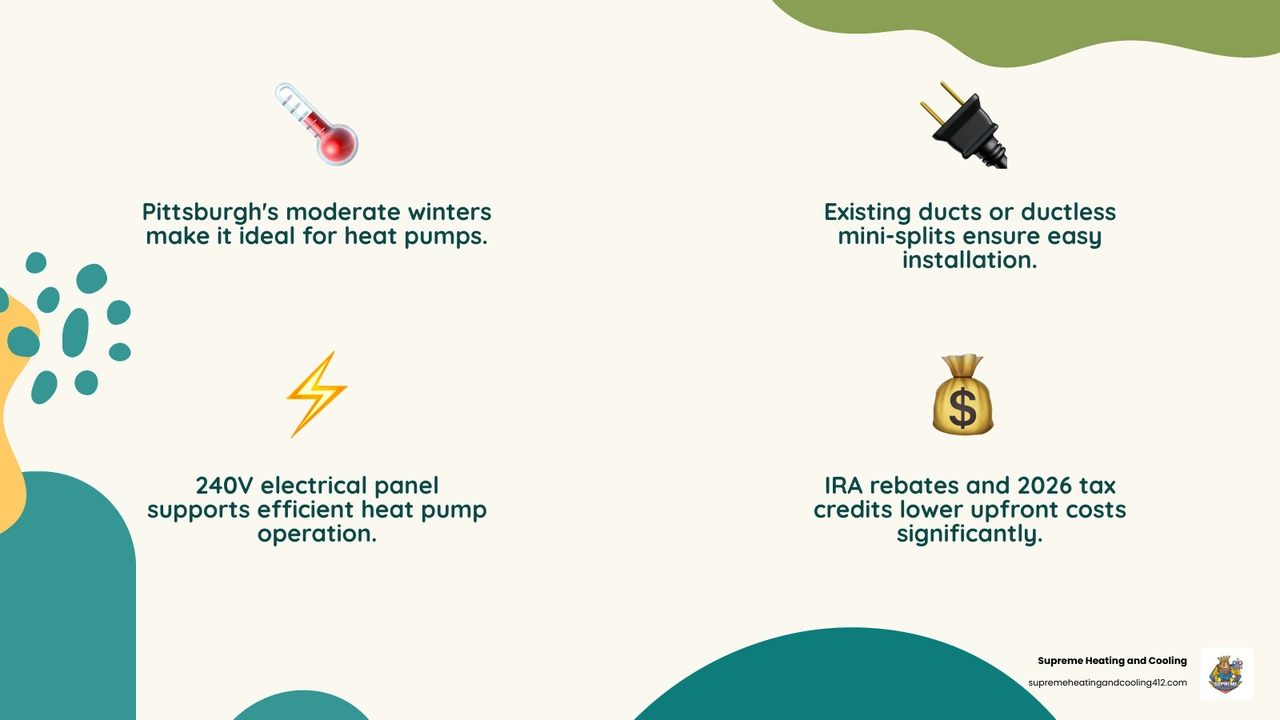
Is a heat pump right for your home? For most Pittsburgh-area homeowners, the answer is yes — but a few key factors determine whether it's the smartest move for your specific situation.
Here's a quick look at the core criteria:
| Factor | Heat Pump Works Well If... |
|---|---|
| Climate | You live in a region with moderate to cold winters (Pittsburgh qualifies) |
| Current system | You use electric resistance, oil, or propane heating |
| Ductwork | You have existing ducts — or are open to ductless mini-splits |
| Electrical panel | Your home can support a 240V system |
| Goals | You want year-round heating and cooling from one unit |
| Incentives | You want to use IRA rebates and tax credits available in 2026 |
Despite heat pumps outselling gas furnaces in 2023 and growing fast in adoption, a 2024 survey found that 27% of homeowners have never heard of them or don't know how they work. That's a big knowledge gap — and it costs homeowners real money in missed savings and comfort.
The reality is simple: today's heat pumps are two-in-one systems. They heat your home in winter and cool it in summer, using electricity to move heat rather than burn fuel to create it. That process makes them 2 to 3 times more efficient than many traditional heating systems. The average U.S. household switching to a heat pump saves around $370 per year — and homeowners coming from oil, propane, or electric resistance heating can save closer to $1,000 annually.
If you're heating a Pittsburgh home with an aging furnace or a central AC that's seen better days, now is a great time to understand your options — before something breaks and you're forced into a rushed decision.
Understanding the Technology: How Heat Pumps Provide Year-Round Comfort
To decide is a heat pump right for your home, it helps to understand that these systems don't actually "create" heat the way a gas furnace or a space heater does. Instead, they are masters of heat transfer. Think of a heat pump like a refrigerator that can run in reverse. While a fridge pulls heat out of the insulated box and pushes it into your kitchen, a heat pump pulls heat from the outdoor air and moves it into your living room.
This magic happens through a refrigeration cycle. The system uses evaporator coils, a compressor, and a condenser to manipulate refrigerant. In the summer, the heat pump acts exactly like a high-efficiency air conditioner, pulling heat from your home and dumping it outside. In the winter, a reversing valve flips the flow, allowing the system to harvest thermal energy from the outdoor air—even when it feels cold to us—and bring it indoors.
Because they move heat rather than generating it through combustion, they are incredibly efficient. Modern compressor technology allows these units to adjust their speed precisely, maintaining a steady temperature without the "blast of hot air followed by a chill" cycle common with older furnaces. If you've been wondering Why You Need Heat Pump Installation, the answer often lies in this superior, steady comfort and the simplicity of having one system handle both seasons.
Is a heat pump right for your home in the Pittsburgh area?
Living in Western Pennsylvania means dealing with humid summers and brisk, snowy winters. For years, the common myth was that heat pumps only worked in the South. In April 2026, we can confidently say that technology has changed the game for our region.
Switching to a heat pump is one of the most impactful ways a Pittsburgh family can reduce their carbon footprint. Air-source heat pumps can trim household carbon dioxide emissions by about 40% compared to gas furnaces. In fact, research shows that 98% of homes in the U.S. would see a reduction in their carbon footprint by making the switch.
Beyond the environmental impact, there are significant practical benefits for local homeowners:
- Lower Energy Bills: If you are currently using electric baseboard heat, propane, or oil, the savings can be massive. Heat pumps can reduce electricity use for heating by up to 75% compared to electric resistance systems.
- Improved Safety: Since there is no combustion of fossil fuels, you eliminate the risk of carbon monoxide leaks from the heating unit itself.
- Zoned Comfort: Many systems allow you to control the temperature of different rooms independently, ensuring the guest room isn't a sauna while the kitchen is an icebox.
For those in Bethel Park or Upper Saint Clair looking to modernize, our Heat Pump Replacement Guide Bethel Park PA offers a deeper dive into how these systems fit into our local neighborhoods.
Key Factors for Suitability: Infrastructure and Climate
Assessing Your Property: Is a heat pump right for your home's layout?
Your home’s physical "bones" play a big role in determining the best setup. If your home currently has a central furnace and air conditioner with a network of vents, a standard ducted heat pump is often a "drop-in" replacement. It uses your existing ductwork to distribute air. However, if your ducts are old or leaking, they may need sealing to ensure you get the full efficiency benefits.
For older homes in areas like Oakmont or Aspinwall that might rely on radiators or have no ductwork at all, ductless mini-splits are a fantastic alternative. These involve a small outdoor unit connected to sleek, wall-mounted air handlers inside. This setup avoids the mess and expense of installing new ducts and provides excellent zoned cooling.
You should also check your electrical panel. Because heat pumps run entirely on electricity, they typically require a 240V circuit. If you live in a historic home with an older 100-amp panel, you might need an electrical upgrade. Fortunately, federal incentives often cover a portion of these panel upgrades when they are part of a heat pump installation. Finally, insulation is the heat pump's best friend. The better your home is insulated and sealed, the less work your system has to do. You can explore our full range of Heat Pump Services to see which configuration fits your specific architecture.
Performance in Cold Climates: Is a heat pump right for your home during Pennsylvania winters?
The most common question we get in Pittsburgh is: "Will it keep me warm when it's 5 degrees outside?" The answer is a resounding yes. Today’s cold-climate heat pumps are engineered to perform in temperatures as low as -20°F.
While older models struggled when the mercury dipped, modern units use variable-speed compressors and advanced refrigerants to squeeze heat out of even the bitterest air. To put this in perspective, heat pumps are now the primary heating source in roughly half the homes in Norway and Sweden—places much colder than Western Pennsylvania!
| Heating System | Efficiency (Approx.) | Performance in Cold |
|---|---|---|
| Cold-Climate Heat Pump | 200% - 400% | Effective down to -20°F |
| Electric Resistance | 100% | Constant but very expensive |
| Standard Heat Pump | 150% - 300% | May need backup below 30°F |
For homeowners who want total peace of mind, a hybrid or dual-fuel system is an excellent option. This pairs a heat pump with a high-efficiency gas furnace. The heat pump handles the heating for the vast majority of the year, and the furnace only kicks in during those rare, extreme "Polar Vortex" events. This ensures you always have the most cost-effective fuel source running. It's also important to understand the Heat Pump Defrost Cycle Issues that can occur in winter; this is a normal part of operation where the unit melts ice off the outdoor coils, and knowing how it works prevents unnecessary "no-heat" calls.
Comparing Heat Pumps to Traditional Furnaces and ACs
When weighing your options, look at the efficiency ratings. For cooling, we look at SEER2 (Seasonal Energy Efficiency Ratio), and for heating, we look at HSPF2 (Heating Seasonal Performance Factor). Modern heat pumps often boast ratings that far exceed standard air conditioners.
One of the "hidden" benefits of a heat pump is superior dehumidification. In the muggy Pittsburgh July, a heat pump’s ability to run at lower speeds for longer periods allows it to pull more moisture out of the air than a standard AC, which often cycles on and off too quickly to dry the air out. This makes your home feel cooler at a higher temperature, saving you even more on your electric bill.
Additionally, heat pumps are generally quieter than older furnaces. There’s no loud combustion "whoosh" when the heat kicks on. If you are experiencing loud noises from your current unit, it might be time for a professional evaluation. You can learn more about local repair options through our Heat Pump Repair Bethel Park PA service page.
Long-Term Maintenance and Reliability for Your New System
A heat pump is a high-performance machine, and like a car, it needs regular check-ups to stay efficient. Because it works year-round (unlike a furnace that sleeps in summer), maintenance is twice as important.
- Keep it Clear: In the winter, ensure snow and ice don't pile up around or on top of the outdoor unit. In the summer, keep weeds and debris at least two feet away to ensure proper airflow.
- Filter Changes: Check your filters every month and replace them at least every three months. Clogged filters are the #1 cause of system strain.
- Professional Tune-ups: We recommend a professional inspection twice a year—once before the cooling season and once before the heating season.
During a professional visit, we check refrigerant levels, clean the coils, and ensure the electrical connections are tight. Catching a small issue during a tune-up is much better than dealing with a breakdown on a freezing January night. If you notice your system is cycling too often or making strange sounds, check out these Indicators for Heat Pump Repair to see if you need to schedule a visit. For a comprehensive look at what we do during a visit, see our guide on Expert Heat Pump Maintenance.
Frequently Asked Questions about Heat Pump Suitability
How do heat pumps perform in extreme Pittsburgh winters?
Modern cold-climate heat pumps are designed specifically for regions like ours. They can maintain high efficiency and keep your home toasty even when temperatures dip to -20°F. For those who are extra cautious, a hybrid system with a gas furnace backup ensures you are never without heat, regardless of the weather.
Can I install a heat pump if my home doesn't have ducts?
Absolutely. Ductless mini-split heat pumps are the perfect solution for homes with boilers, radiant heat, or historic homes where adding ductwork is impossible. They are highly efficient, quiet, and allow for individual temperature control in different rooms.
What financial incentives are available in 2026 for heat pumps?
Under the Inflation Reduction Act (IRA), homeowners can access significant tax credits—up to $2,000 annually—for heat pump installations. Additionally, depending on your household income, there may be state-level rebates available that can cover a substantial portion of the installation cost. Many local utility companies in the Pittsburgh area also offer their own rebates for switching to high-efficiency electric equipment.
Conclusion
Determining is a heat pump right for your home comes down to your goals for comfort, efficiency, and long-term savings. For many in our community—from the quiet streets of Fox Chapel to the bustling neighborhoods of Monroeville—the transition to a heat pump represents a smarter, cleaner, and more comfortable way to live.
At Supreme Heating and Cooling, we pride ourselves on being more than just installers; we are your neighbors. Our team is dedicated to providing trustworthy, non-pushy advice to help you find the system that fits your lifestyle and budget perfectly. Whether you need a quick repair or are ready to explore a full system upgrade, we are here to help you achieve year-round peace of mind.
If you’re ready to see how a heat pump can transform your home comfort, explore our Heat Pump Services or give us a call today. We serve Glenshaw, Plum, Oakmont, Verona, and the entire Greater Pittsburgh area with the expert care your home deserves.


.svg)
.webp)
.svg)
