.svg)

.webp)
Why Pittsburgh Homeowners Need Reliable Heating When Winter Arrives
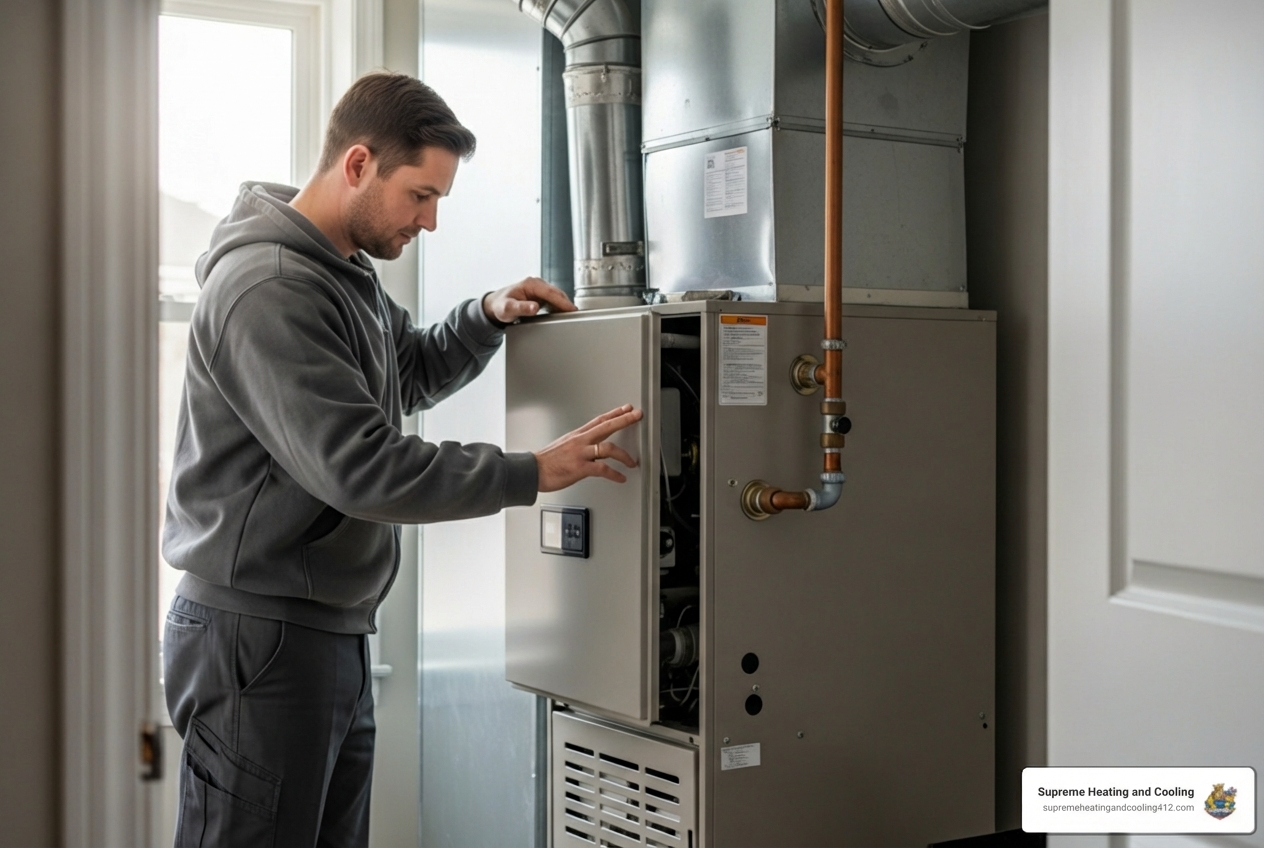
Residential furnace replacement in pittsburgh, pa is a critical home service when your heating system starts showing signs of failure. Pittsburgh winters are unforgiving, and a furnace breakdown in January isn't just uncomfortable—it's a safety concern. Whether your system is over 15 years old, driving up energy bills, or struggling to heat your home evenly, understanding when and how to replace it can save you from costly emergency repairs and uncomfortable nights.
Quick Guide: Signs You Need a New Furnace
- Your furnace is 15-20 years old and requiring frequent repairs
- You're experiencing uneven heating across different rooms
- Your energy bills are rising despite consistent usage
- The system makes strange noises like banging, hissing, or grinding
- You notice dust buildup or declining indoor air quality
- The furnace cycles on and off frequently without maintaining temperature
- Repair costs exceed 50% of replacement cost
For comprehensive heating solutions, explore our heating services in Pittsburgh or request a consultation to discuss your specific needs.
The furnace is the workhorse of your home's heating system, quietly keeping your family comfortable through months of cold weather. When it fails, you're left scrambling for solutions. Most furnaces last 15 to 30 years depending on fuel type, maintenance frequency, and usage patterns. Gas and oil furnaces typically last 15-25 years, while electric models can reach 20-30 years with proper care. But age alone isn't the only factor—efficiency declines over time, and older systems often cost more to operate than they're worth keeping.
Pittsburgh's climate demands a heating system you can depend on. Over a third of the energy used in most homes goes toward heating and cooling, making your furnace choice one of the most important decisions for your home's comfort and your wallet. Modern high-efficiency furnaces offer AFUE ratings of 95% or higher, meaning nearly all the fuel you pay for converts directly into heat for your home, not waste escaping through vents.
Residential furnace replacement in pittsburgh, pa vocabulary:
- affordable furnace replacement in pittsburgh, pa
- best furnace replacement in pittsburgh, pa
- commercial furnace replacement in pittsburgh, pa
When to Consider a Furnace Upgrade: Key Warning Signs
Nobody wants to be left out in the cold, especially not in Pittsburgh! So, how do you know when your trusty furnace is ready for retirement? It often gives you plenty of hints before it completely conks out. Paying attention to these warning signs can save you stress, discomfort, and potentially dangerous situations.
One of the most obvious indicators it's time for residential furnace replacement in pittsburgh, pa is the age of your unit. Furnaces typically last between 15 to 20 years, though some electric models can stretch that to 30 years with meticulous care. However, once a furnace crosses the 15-year mark, its efficiency often declines significantly, and it becomes more prone to needing frequent, costly repairs. If you find yourself calling for service more often than you'd like, or if a repair bill is approaching half the cost of a new system, it's usually a sign that an upgrade is the smarter financial move.
Beyond age and repair frequency, keep an eye (and ear) out for other tell-tale signs. Are your energy bills mysteriously climbing, even when your usage hasn't changed? Is one room a sauna while another feels like a freezer? Are strange noises emanating from your basement, sounding less like a gentle hum and more like a symphony of bangs, rattles, or hisses? These are all cries for help from an overworked or failing furnace. Don't forget about air quality either; excessive dust or dry air can also point to a system struggling to perform optimally.
Your Furnace's Age and Efficiency
As a furnace ages, its efficiency naturally declines. While a unit might have been top-of-the-line 15 or 20 years ago, modern technology has made significant strides. Older furnaces often have lower AFUE (Annual Fuel Utilization Efficiency) ratings, meaning a larger percentage of the fuel they consume is wasted rather than converted into usable heat for your home. If your furnace is pushing past its typical 15-year lifespan, it's likely operating at a much lower efficiency than it once did. This translates directly to higher energy bills for you, making an older furnace a silent money-drainer. Upgrading to a newer, more efficient model can improve your home's comfort and significantly lower those monthly heating costs.
Performance and Comfort Issues
Your furnace's primary job is to keep your home comfortably warm. If it's failing at this, it's a clear sign of trouble. Inconsistent temperatures, where some rooms are hot and others cold, indicate poor heat distribution or an improperly sized system. Short cycling, where the furnace turns on and off frequently without completing a full heating cycle, is another common issue. This not only wastes energy but also puts undue stress on the system, leading to premature wear and tear.
Perhaps your furnace runs constantly but struggles to reach your desired temperature, or it blows lukewarm air instead of toasty warmth. These are all indicators of a system losing its heating capacity. Additionally, pay attention to your indoor air quality. An aging furnace can contribute to excessive dust, dry air, or even unusual odors. And for gas furnaces, a yellow pilot light instead of a clear blue one can signal a potentially dangerous combustion issue, making immediate inspection and potential residential furnace replacement in pittsburgh, pa crucial for your family's safety.
Understanding Your Furnace Options for a Pittsburgh Home
When considering residential furnace replacement in pittsburgh, pa, you're not just replacing a box that heats your home; you're upgrading to a system that will define your comfort and energy bills for years to come. The good news is that modern heating solutions offer a fantastic range of choices, each with unique benefits.
Common Furnace Types: Gas, Electric, and Oil
The first major decision often revolves around the fuel type for your new furnace. Each has its own characteristics:
- Natural Gas Furnaces: These are the most common choice in Pittsburgh and its surrounding communities where natural gas lines are readily available. Gas furnaces are known for providing powerful, fast-acting heat and are generally the most cost-effective to operate, especially if your home is already connected to a gas line. Modern gas furnaces can achieve very high AFUE ratings, making them incredibly efficient.
- Electric Furnaces: If your home doesn't have access to a natural gas line, an electric furnace is a viable option. They are typically less expensive to install and easier to maintain since they don't require venting. Electric furnaces are also known for their long lifespan, often outlasting other types. However, for most homeowners, they tend to be the most expensive to operate due to the higher cost of electricity compared to natural gas.
- Oil Furnaces: While less common than gas in many areas, oil furnaces remain a popular alternative in parts of the Northeast, including some of our service areas where natural gas access might be limited. They provide strong heating power but usually require more maintenance (like regular filter changes and burner cleaning) and can have higher fuel costs.
High-Efficiency Furnaces and AFUE Ratings
When we talk about furnace efficiency, we're usually referring to its AFUE (Annual Fuel Utilization Efficiency) rating. This percentage tells you how much of the fuel your furnace consumes is converted into usable heat for your home, versus how much is lost through the exhaust. For example, a furnace with an 80% AFUE rating means 80% of the fuel becomes heat, while 20% escapes.
Modern furnaces all have AFUE ratings of 80% or higher, but high-efficiency models can boast ratings of 95% or even over 98% for some gas furnaces. Upgrading to a high-efficiency furnace means less wasted energy, lower utility bills, and a smaller carbon footprint. While they might have a higher upfront cost, the long-term savings on energy can be substantial, especially during Pittsburgh's cold winters. It's an investment that pays dividends in comfort and savings.
Advanced Heating Systems: Heat Pumps and Dual-Fuel Technology
Beyond traditional furnaces, advancements in HVAC technology offer even more sophisticated heating solutions for Pittsburgh homes.
- Heat Pumps: These remarkable devices use refrigeration technology to extract heat from the outside air and transfer it indoors to warm your home. The best part? In warmer months, they can reverse the process to provide cooling, acting as an all-in-one heating and cooling solution. Heat pumps are incredibly energy-efficient because they move heat rather than generate it by burning fuel.
- Dual-Fuel Systems: For homeowners who want the best of both worlds, a dual-fuel system combines a high-efficiency heat pump with a gas furnace. This smart system automatically switches between the two, using the heat pump for efficient heating during milder Pittsburgh weather and kicking in the gas furnace for reliable, powerful warmth when temperatures drop to extreme lows. Technologies like Mitsubishi Hyper Heat can even make heat pumps incredibly effective down to -13°F (-25°C), ensuring consistent comfort without constant backup.
- Variable-Speed Furnaces: These are the gold standard for precise comfort. Unlike single-stage furnaces (which are either 100% on or 100% off) or two-stage furnaces (which have two output levels), variable-speed furnaces can adjust their heating output and fan speed in small increments. This allows them to run longer at slower, quieter speeds, maintaining a much more consistent temperature throughout your home, improving indoor air quality by continuously filtering the air, and reducing humidity. The result is superior comfort, fewer hot and cold spots, and often, lower energy bills due to more efficient operation.
The Professional Residential Furnace Replacement Process in Pittsburgh, PA
Undertaking residential furnace replacement in pittsburgh, pa is a significant investment in your home's comfort and efficiency. It’s not a DIY project for a good reason! A professional installation ensures safety, optimal performance, and compliance with local codes. Here at Supreme Heating and Cooling, we pride ourselves on a thorough, seamless process from start to finish.
Step 1: In-Home Assessment and System Sizing
Our process begins with a comprehensive in-home assessment. Our experienced technicians will evaluate your existing furnace, considering its age, current efficiency, and any performance issues you've experienced. We'll also inspect your home's ductwork to ensure it's compatible with a new system and identify any potential areas for improvement.
Crucially, we perform a Manual J load calculation. This isn't just guesswork; it's a precise engineering methodology that determines the exact heating (and cooling) needs of your home. Factors like your home's size, insulation levels, window types, and even the number of occupants are considered. This ensures we recommend a new furnace that is perfectly sized—not too big, not too small—to provide optimal comfort and efficiency without wasting energy. We'll discuss your options, answer all your questions, and provide recommendations without any pushy sales tactics.
Step 2: Key Steps for Residential Furnace Replacement in Pittsburgh, PA
Once you've chosen your ideal system, our skilled team gets to work. The installation process typically takes between 4 to 18 hours, depending on the complexity, but we always strive for efficiency and minimal disruption.
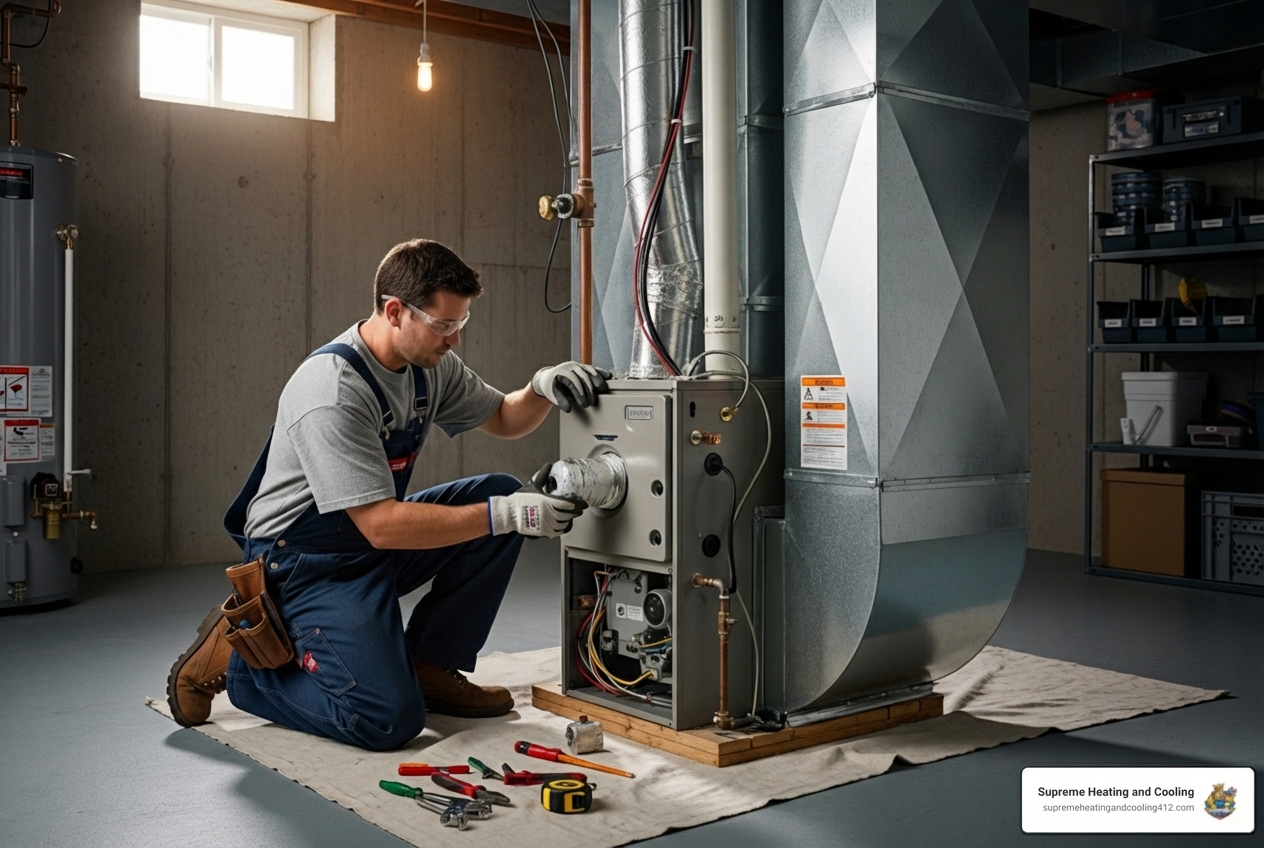
- Safe Removal: We begin by safely shutting off the power and disconnecting the gas or electrical lines to your old unit. The old furnace is then carefully removed and responsibly disposed of.
- New Unit Placement: Your new furnace is precisely positioned. This may involve minor adjustments to the platform or surrounding space to ensure proper clearance and optimal airflow.
- Electrical and Gas Line Connections: Our certified technicians carefully connect the electrical wiring and gas lines (if applicable) to the new furnace, adhering strictly to all local building codes and safety standards. This step is critical for both the functionality and safety of your new system.
- Ductwork Adjustments: We make any necessary modifications or adjustments to your existing ductwork to ensure a perfect, airtight fit with the new furnace, maximizing airflow and efficiency.
- Thermostat Integration: Finally, we connect and integrate your thermostat, ensuring it communicates seamlessly with your new heating system for precise temperature control.
Step 3: Final Testing and Homeowner Walkthrough
Our job isn't done until we're certain your new furnace is operating perfectly and you're comfortable using it.
- System Testing: We conduct a comprehensive series of tests, checking everything from proper ignition and heating cycles to airflow, fan operation, and thermostat communication. We'll listen for any unusual sounds or vibrations to ensure smooth, quiet operation.
- Safety Checks: For gas furnaces, we perform thorough safety checks to confirm there are no leaks and that all combustion processes are occurring correctly. Your safety is our top priority.
- Homeowner Education: Before we leave, our technicians will walk you through the operation of your new system. We'll explain its features, demonstrate how to use the thermostat, and provide essential maintenance tips, such as how often to change your air filter.
- Warranty Information: We'll review your new furnace's warranty coverage, ensuring you understand the terms and conditions for both parts and labor.
How to Choose a Reputable Furnace Installer in Pittsburgh
Choosing the right partner for your residential furnace replacement in pittsburgh, pa is just as important as choosing the right furnace itself. A proper installation ensures your system performs efficiently, lasts its full lifespan, and keeps your home comfortable. We believe in building trust with our community, which is why we emphasize transparency and quality in all we do.
What to Look for in an HVAC Contractor
When you're searching for an HVAC contractor in Pittsburgh, here's what we recommend you look for:
- Licensed and Insured: This is non-negotiable. Ensure the company and its technicians are fully licensed and insured to protect yourself from any liabilities.
- Positive Customer Reviews: Check online reviews on platforms like Google. Look for consistent praise regarding professionalism, communication, promptness, and quality of work.
- Upfront Communication: A reputable company will offer clear, upfront, flat-rate pricing with no hidden fees or overtime charges. They should keep you informed every step of the way, from assessment to installation.
- Years of Experience: Look for companies with a long-standing history in the Pittsburgh area. Our team, for example, brings years of experience to every job, ensuring knowledgeable and skilled service.
- Home Protection Measures: A professional crew will treat your home with respect, using shoe covers and floor mats to keep your space clean during the installation process.
- Certifications: Ask if their technicians hold certifications like NATE (North American Technician Excellence), which indicates a high level of industry knowledge and skill.
Key Questions to Ask Your Potential Installer
Don't be shy! Asking the right questions can help you gauge a contractor's expertise and commitment to customer service:
- How many furnace installations have you completed in the Pittsburgh area?
- Can you provide references from local customers?
- What is the efficiency rating (AFUE) of the furnace you're recommending, and why is it suitable for my home?
- Are there any federal tax credits or local utility rebates I might be eligible for?
- Will the new furnace be compatible with my existing ductwork and thermostat?
- What are the warranty details for both the furnace and the installation labor?
- What is the estimated timeline for the project from start to finish?
- What is your cleanup process once the installation is complete?
- Do you offer ongoing maintenance plans for the new system?
- Do you use a Manual J load calculation to size the furnace?
- Are all fees (labor, materials, old furnace disposal, cleanup) included in the estimate?
- Will you need to modify my ductwork, electrical, or gas lines?
- Do you subcontract any electrical or gas work?
- Will you test my ductwork for leaks?
- What are my financing options?
- How do you ensure compliance with local building codes?
Serving Communities Across the Pittsburgh Area
We are proud to serve homeowners across Pittsburgh and many surrounding communities. Our commitment extends to Glenshaw, Plum, Oakmont, New Kensington, Forest Hills, Wilkinsburg, Swissvale, Aspinwall, Turtle Creek, Edgewood, Pitcairn, Verona, Cheswick, Upper Saint Clair, Greensburg, Monroeville, Murrysville, Fox Chapel, Bethel Park, and Penn Hills. Our local presence means we understand the unique heating challenges of the region and are dedicated to providing responsive, reliable support to our neighbors.
Frequently Asked Questions about Furnace Replacement
How long does a furnace typically last?
The lifespan of a furnace varies depending on its type, usage, and how well it's maintained. On average:
- Gas furnaces: Typically last 15 to 25 years.
- Oil furnaces: Also tend to last 15 to 25 years.
- Electric furnaces: Often have the longest lifespan, ranging from 20 to 30 years.
- Propane furnaces: Generally last 15 to 20 years.
Regular, professional maintenance is key to extending your furnace's life and ensuring it operates efficiently throughout its tenure. Skipping annual tune-ups can significantly shorten its lifespan.
What are the benefits of upgrading to a high-efficiency furnace?
Upgrading to a high-efficiency furnace offers a multitude of benefits for homeowners in Pittsburgh:
- Significant Energy Savings: With AFUE ratings often exceeding 95%, high-efficiency models convert more fuel into heat, drastically lowering your monthly energy bills.
- Improved Home Comfort: More consistent heating, fewer hot and cold spots, and better humidity control (especially with variable-speed models) lead to a more comfortable living environment.
- Better Indoor Air Quality: Modern furnaces often incorporate advanced filtration systems, reducing dust, allergens, and pollutants in your home.
- Reduced Environmental Impact: Burning less fuel means fewer greenhouse gas emissions, contributing to a healthier planet.
- Quieter Operation: Many high-efficiency units, particularly variable-speed models, operate much more quietly than older, less efficient systems.
- Fewer Repairs: New systems come with fresh warranties and are less prone to breakdowns, offering peace of mind.
- Increased Home Value: An updated, efficient HVAC system can be an attractive feature for potential buyers if you decide to sell your home.
Are there any rebates or financing options available?
Yes! We understand that residential furnace replacement in pittsburgh, pa is a significant investment, and we want to make it as accessible as possible for our customers. Homeowners may be eligible for:
- Federal Tax Credits: The federal government often offers tax credits for installing energy-efficient home improvements, including certain high-efficiency furnaces and heat pumps.
- Local Utility Rebates: Check with your local utility providers, as they sometimes offer rebates or incentives for upgrading to more energy-efficient heating systems.
- Manufacturer Promotions: Furnace manufacturers frequently run promotions or rebates on their latest models.
- Financing Options: We also offer flexible financing options to help spread the cost of a new furnace over time, making it easier to manage your budget. Our team can help you explore what options might be available to you.
Your Trusted Partner for Residential Furnace Replacement in Pittsburgh, PA
As Pittsburgh homeowners, we know the importance of a warm, comfortable home when winter's chill sets in. Residential furnace replacement in pittsburgh, pa is more than just a home repair; it's a long-term investment in your family's comfort, safety, and your home's energy efficiency.
Choosing Supreme Heating and Cooling means partnering with a team dedicated to providing professional, knowledgeable, and friendly service. Our trustworthy, non-pushy approach, competitive pricing, and personable team ensure you get the right heating solution for your home without any hassle. We're committed to keeping our communities in Glenshaw, Plum, Oakmont, New Kensington, Forest Hills, Wilkinsburg, Swissvale, Aspinwall, Turtle Creek, Edgewood, Pitcairn, Verona, Cheswick, Pittsburgh, Upper Saint Clair, Greensburg, Monroeville, Murrysville, Fox Chapel, Bethel Park, and Penn Hills warm and comfortable.
Let us help you steer your furnace replacement with expertise and care. Learn more about our heating replacement services in Pittsburgh.


.svg)
.webp)
.svg)
