
.svg)

.webp)
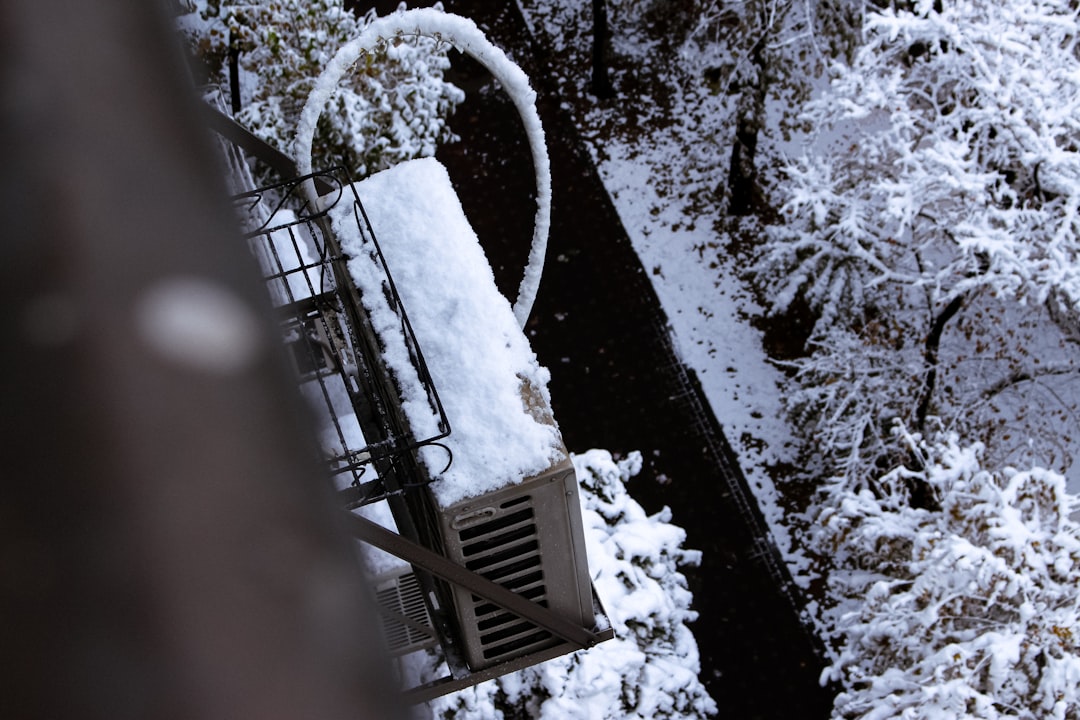
What Freeze-Thaw Cycles Actually Do to Your Outdoor AC Unit
How freeze-thaw cycles affect your outdoor AC unit is something most Pittsburgh-area homeowners never think about — until spring arrives and the system won't start.
Here is a quick summary of the main ways winter freeze-thaw damage shows up:
- Bent or crushed condenser fins — ice expands inside the tight gaps between aluminum fins, warping them and blocking airflow
- Cracked refrigerant line joints — water freezes inside or around copper connections, causing small cracks and eventual leaks
- Tilting or uneven unit — the ground beneath the pad expands and contracts with each freeze-thaw cycle, slowly shifting the unit out of level
- Electrical faults — moisture freezes around wiring and contactors, corroding connections and causing short circuits
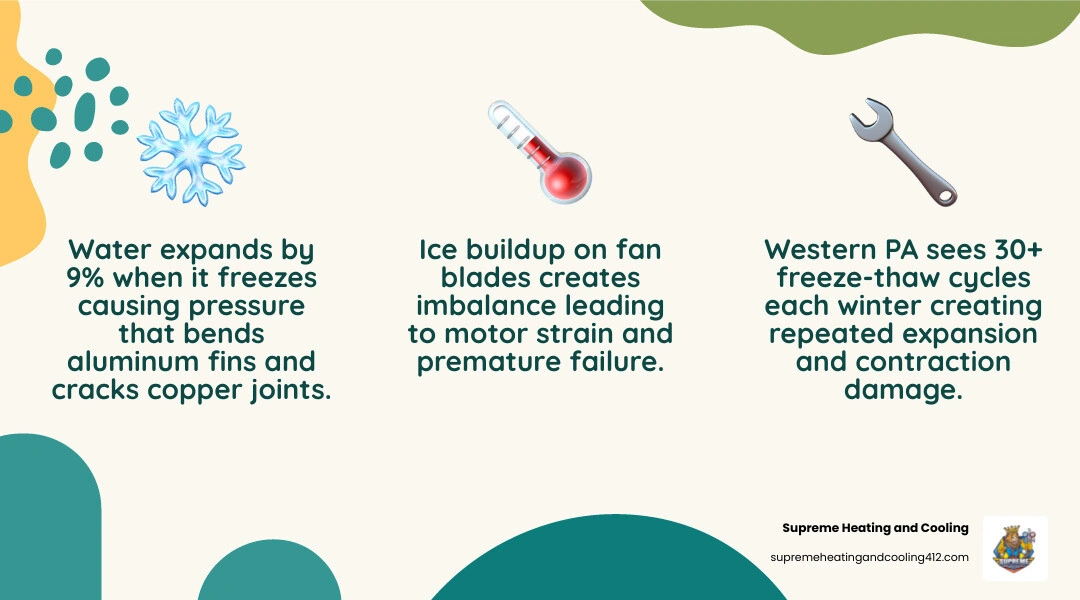
- Fan blade imbalance — ice buildup on blades creates uneven weight, leading to wobbling and motor strain
Western Pennsylvania winters are especially hard on outdoor HVAC equipment. Unlike regions that stay consistently frozen all winter, the Pittsburgh area regularly swings above and below the freezing mark in the same week. That back-and-forth — water freezing, expanding, thawing, and refreezing — is what causes the most damage. Outdoor AC units are built to handle weather, but repeated thermal stress adds up quietly over months.
The damage often goes unnoticed until you flip the system on for the first time in spring and something isn't right.
How freeze thaw cycles affect your outdoor ac unit terms made easy:
- how long does an ac unit last in western pennsylvania
- how to extend the life of your ac in the northeast
The Physics Behind How Freeze Thaw Cycles Affect Your Outdoor AC Unit
To understand the mechanical toll winter takes on your cooling system, we have to look at the basic physics of water. Most substances shrink when they get cold, but water is a rare exception. When water freezes into ice, its volume expands by approximately 9%.

This expansion is incredibly powerful. If liquid water seeps into a microscopic crevice in your AC unit and the temperature drops below 32°F, that expanding ice acts like a tiny, slow-motion hydraulic jack. It pushes outward with thousands of pounds of pressure per square inch.
When the temperature rises above freezing, the ice melts back into water, sliding deeper into the newly widened space. When the next freeze hits, the expansion process repeats, pushing the metal even further apart. This constant back-and-forth is known as thermal cycling. Over a single winter in Fox Chapel, Monroeville, or Bethel Park, your unit can undergo dozens of these cycles, resulting in severe metal fatigue and structural stress.
How freeze thaw cycles affect your outdoor ac unit condenser coils and fins
The condenser coils and aluminum fins are the most vulnerable parts of your outdoor unit. The aluminum fins are incredibly thin—often only 0.006 to 0.008 inches thick—and are packed tightly together to maximize surface area for heat transfer.
When melting snow or freezing rain gets trapped in the minuscule gaps between these fins and then freezes, the expansion easily crushes and bends the delicate aluminum. Bent fins restrict the critical airflow your system needs to release heat during the summer. If more than 25% of your coil's surface area becomes crushed or flattened, your system's efficiency drops dramatically, forcing your compressor to work much harder and shortening its overall lifespan.
When preparing your system for the warm months, checking for this exact type of damage is a vital part of any Spring Home AC Tune Up Checklist.
How freeze thaw cycles affect your outdoor ac unit refrigerant lines and joints
Your air conditioner relies on a closed loop of copper tubing to transport refrigerant between the indoor evaporator coil and the outdoor condenser. Copper is a relatively soft metal, and the joints where these copper lines meet are particularly vulnerable to thermal expansion and contraction.
As water pools around the service valves and freeze-thaw cycles occur, the physical shifting of ice can put immense strain on these connections. This pressure can result in microscopic joint cracks and copper line shifts, leading to slow, hard-to-detect refrigerant leaks. Because refrigerant is a high-pressure chemical that does not get "consumed" during normal operation, any drop in refrigerant levels points directly to a physical leak.
If you notice ice forming on these lines during the spring or summer, you may be dealing with Freezing AC Refrigerant Lines caused by a winter-induced leak.
Hidden Structural and Electrical Threats of Winter Weather
While coil and fin damage are easy to see, freeze-thaw cycles also present hidden threats that lurk beneath the unit and inside its electrical control panel. Ground shifting and moisture intrusion can quietly set your system up for a major breakdown before the cooling season even starts.
| Type of Damage | Primary Cause | Common Symptoms | Long-Term Impact |
|---|---|---|---|
| Physical / Structural | Soil frost heaving, ice expansion in coils | Bent fins, tilting pad, cracked copper joints | Reduced airflow, refrigerant leaks, compressor failure |
| Electrical | Moisture intrusion, condensation, corrosion | Tripped breakers, contactor failure, short circuits | System won't start, fried control boards, wire damage |
Soil Expansion and Pad Tilting
The soil in Western Pennsylvania contains a high concentration of clay, which holds onto water. When this wet soil freezes, it undergoes "frost heaving," lifting the ground upward. When it thaws, the ground sinks back down.
If the concrete or plastic pad beneath your outdoor AC unit does not have proper drainage, this uneven expansion and contraction will cause the pad to tilt. A tilting unit is more than just an eyesore; it creates major internal issues. The compressor inside your AC is mounted on delicate rubber grommets and relies on a specific oil level at the bottom of its housing to stay lubricated. If the unit sits at an angle, oil can migrate away from the compressor's moving parts, leading to friction, overheating, and premature mechanical failure. Keeping the unit level is one of the most important AC Compressor Maintenance Tips for long-term reliability.
Moisture Intrusion in Electrical Cabinets
Your outdoor unit has a dedicated electrical cabinet containing the contactor, capacitor, and control wiring. While these cabinets are designed to be rain-resistant, they are not completely airtight.
During rapid freeze-thaw transitions, warm and humid air can enter the cabinet and condense into water droplets on the cold metal surfaces. When the temperature drops again, this condensation freezes. Over time, this cycle of freezing and melting corrodes electrical terminals, loosens wire connections, and can cause the contactor to stick or short circuit.
Additionally, small pests like mice often view these cozy, sheltered electrical boxes as the perfect winter nesting spots, chewing through weakened wires and causing immediate electrical shorts when you try to turn the system on in the spring.
To Cover or Not to Cover: Protecting Your AC in the Off-Season
One of the most common questions we hear from homeowners in Plum, Greensburg, and Penn Hills is whether they should cover their outdoor AC unit for the winter. The answer isn't a simple yes or no, as improper covering can actually cause far more damage than leaving the unit completely exposed.
The Risks of Improper Full Covers
It is incredibly tempting to buy a cheap, heavy plastic tarp, wrap it tightly around your AC unit, and secure it with bungee cords. However, this is one of the worst things you can do to your system.
A non-breathable plastic cover traps rising moisture from the ground inside the unit. When the sun warms the cover during the day, it creates a highly humid greenhouse effect inside. When the temperature drops at night, this trapped moisture condenses and freezes directly onto the coils, accelerating rust and mold growth.
Furthermore, a fully enclosed, wind-protected space is an open invitation for field mice and other rodents to move in, build nests, and chew through your unit’s wiring and insulation to keep warm.
Best Practices for Partial and Breathable Covers
If you want to protect your AC from falling icicles, heavy snow buildup, and autumn leaves, a partial cover is the ideal solution.
A partial cover consists of a durable, breathable top cover—often made of PVC-coated polyester mesh—that shields only the top 6 to 12 inches of the unit. This design protects the fan motor and prevents heavy debris from falling into the top of the cabinet while leaving the sides completely open. This ensures that air can circulate freely, preventing moisture from pooling and keeping the internal components dry.
Note: If you operate a heat pump rather than a standard central air conditioner, you must never cover the unit during the winter. Heat pumps run year-round to heat your home and require completely unobstructed airflow to function safely.
How to Inspect Your Unit for Winter Freeze-Thaw Damage
As the winter weather clears and spring temperatures begin to rise in Oakmont, Swissvale, or Wilkinsburg, it is time to perform a visual inspection of your outdoor AC unit. Catching freeze-thaw damage early can save you from a hot, uncomfortable house—and more extensive repairs—later in the season. Understanding The Importance of Air Conditioner Maintenance What You Need to Know is the first step toward protecting your investment.
Step-by-Step Visual Audit
Before you turn your thermostat to "cool" for the first time, take ten minutes to perform this simple outdoor inspection:
- Check the Level: Stand back and look at the unit from a few angles. Does the pad look flat, or has soil shifting caused the unit to tilt?
- Inspect the Coils and Fins: Look closely through the outer grille. Are the delicate aluminum fins straight, or do you see large areas that have been bent, crushed, or flattened by ice?
- Examine the Refrigerant Line Insulation: Check the thick black foam insulation wrapping the copper lines. Has it been torn, degraded, or chewed away by pests over the winter?
- Look for Rust and Corrosion: Check the base pan and the outer casing for signs of bubbling paint, rust, or standing water.
- Clear Debris: Ensure there are at least two feet of clear space around the entire unit. Clear away any dead leaves, twigs, or weeds that accumulated over the winter.
Signs of Damage at Spring Startup
Once you have completed your visual audit, it is time to test the system. Turn your thermostat to cool and listen to the outdoor unit as it starts up. Watch out for these common warning signs:
- Loud Grinding or Rattling Noises: This often indicates that ice buildup has unbalanced the fan blades or that the fan motor bearings have worn out.
- Blowing Warm Air: If the system runs but only blows warm air from your vents, you may have lost refrigerant through a copper joint crack caused by winter shifting.
- Short Cycling: If the system turns on and off every few minutes, it could be struggling with restricted airflow from bent fins or an electrical fault in the control panel. If your system exhibits these issues, you can learn more about Why AC is Freezing Up in Plum to help troubleshoot.
Frequently Asked Questions About Winter AC Damage
Can I pour hot water on my frozen outdoor AC unit to melt ice?
No, you should never pour hot water on a frozen AC unit. While it might seem like a quick way to clear away a thick block of ice, the extreme, sudden change in temperature causes "thermal shock."
Pouring hot water onto freezing cold metal can cause the copper refrigerant lines to crack instantly and can permanently warp the aluminum fins. The safest way to thaw an outdoor unit is to turn the system completely off at the thermostat and set the fan mode to "ON." This runs the indoor blower motor to circulate ambient air, allowing the ice to melt naturally without damaging your equipment.
Will winter freeze-thaw damage void my manufacturer warranty?
It absolutely can. Most major HVAC manufacturers include strict "neglect" clauses in their warranty agreements. If a technician discovers that your system failed because you allowed heavy ice and snow to accumulate on it without clearing it, or because you wrapped the unit in a non-breathable plastic tarp that trapped moisture, the manufacturer may deny your warranty claim.
Keeping detailed records of annual professional maintenance is the best way to prove you have cared for your system and preserve your warranty coverage.
How does ice buildup on fan blades cause motor failure?
When ice accumulates unevenly on the blades of your outdoor condenser fan, it creates a severe weight imbalance. As the fan spins, this imbalance causes the entire assembly to wobble violently.
This wobbling puts immense physical stress on the fan motor's bearings and shaft. Over time, the extra friction causes the motor to overheat, leading to electrical shorts or complete mechanical seizure. Clearing heavy snow and ice from the top of your unit before running it is essential to prevent this type of motor failure.
Conclusion
Your outdoor AC unit is a rugged piece of machinery designed to withstand the elements, but the relentless freeze-thaw cycles of Western Pennsylvania winters can take a quiet, destructive toll. From crushed aluminum fins and cracked copper joints to shifting pads and corroded electrical panels, winter weather can easily compromise your system's efficiency and lifespan.
Taking proactive steps to inspect and maintain your system in the spring is the best way to ensure reliable, energy-efficient comfort all summer long. For homeowners in Glenshaw, Plum, Oakmont, and throughout the greater Pittsburgh area, our friendly, professional team at Supreme Heating and Cooling is here to help. Whether you need a quick system check or want to learn more about AC Maintenance Plum PA Homes, we are committed to providing honest, non-pushy service that keeps your family comfortable.
Don't wait for the first hot day of summer to find out if winter weather damaged your air conditioner. Schedule your professional spring AC tune-up with Supreme Heating and Cooling today and enjoy peace of mind all season long!


.svg)
.webp)
.svg)
