.svg)

.webp)

Why Pittsburgh's Humidity Hits Your AC Harder Than You Think
How Pittsburgh area humidity makes your AC work harder is one of the most overlooked reasons why local homeowners deal with high energy bills, uncomfortable homes, and AC systems that seem to run nonstop all summer long. Pittsburgh summers average relative humidity between 72% and 74% — well above the 60% threshold where indoor comfort drops and mold growth accelerates. That sticky, heavy air isn't just unpleasant. It forces your air conditioner to fight two battles at once: lowering the temperature and pulling moisture out of the air.
Here's a quick look at the key ways Pittsburgh humidity strains your AC system:
- Dual cooling load - Up to 30-40% of your AC's total capacity goes toward removing moisture instead of actually cooling your home
- Longer run times - Your system runs in extended cycles trying to manage both heat and humidity, wearing down components faster
- Frozen evaporator coils - Excess moisture buildup on coils, combined with restricted airflow, can cause the coil to ice over and shut down cooling entirely
- Condensate drain overflows - High humidity produces more condensation than drain lines can always handle, risking water damage
- Thermostat chasing - Homeowners crank the thermostat down to 68°F trying to feel comfortable, pushing the system even harder and driving up energy use
- Short-cycling from oversized units - An oversized AC cools the air quickly but shuts off before finishing a full dehumidification cycle, leaving the air cold but clammy
The result? A home that feels cool but still damp, an AC that never quite gets ahead, and energy bills that don't match the comfort you're getting.
The Science Behind How Pittsburgh Area Humidity Makes Your AC Work Harder
To truly understand why your cooling system works so hard in June 2026, we have to look at the physics of air conditioning. Most people think of an air conditioner as a giant refrigerator for their house. While that is true, it is also a powerful dehumidifier.
When your air conditioner runs, it deals with two very different types of heat:
- Sensible Heat: This is the heat you can actually measure with a thermometer. When the temperature outside drops from 90°F to 80°F, your AC is removing sensible heat.
- Latent Heat: This is the heat energy stored in airborne moisture vapor. You can't measure it on a standard thermometer, but you can certainly feel it. It is what makes the air feel "heavy" and "thick."
Because your air conditioner must remove both types of heat simultaneously, high humidity levels fundamentally alter how your system operates. Warm, moist indoor air is pulled across a freezing cold evaporator coil inside your indoor unit. As the air cools, it loses its ability to hold water vapor. That moisture condenses onto the cold metal of the coil—much like water droplets forming on a cold glass of iced tea on a muggy July afternoon.
This condensation process releases latent heat energy, which the refrigerant inside the coil must absorb and carry outside. If your home has high humidity, your system spends a massive amount of its cooling capacity simply turning water vapor into liquid water, leaving less power available to actually lower the indoor temperature. Implementing proper Humidity Control for Homes is essential to balance this load and keep your system running efficiently.
Why 75°F Feels Like 85°F in Western Pennsylvania
Have you ever noticed that a 75°F day in Arizona feels completely comfortable, while a 75°F day in Pittsburgh can leave you feeling sticky and miserable? The culprit is evaporative cooling—or rather, the lack of it.
Your body cools itself by sweating. As sweat evaporates from your skin, it carries heat away with it. However, when the relative humidity in your home climbs above 60%, the surrounding air is already saturated with water vapor. It simply cannot accept more moisture. As a result, your sweat cannot evaporate efficiently, and heat remains trapped against your skin.
This phenomenon is known as the heat index. In a humid Western Pennsylvania summer, high moisture levels make the indoor air feel up to 10 degrees warmer than the actual thermostat reading. This discomfort often leads homeowners to "chase" comfort by cranking their thermostats down to 68°F or lower. This adjustment does not actually solve the humidity problem; it simply forces the AC to run longer, skyrocketing energy bills while leaving the home feeling cold and clammy.
The Invisible Load: How Pittsburgh Area Humidity Makes Your AC Work Harder Every Summer
We like to refer to humidity as the "invisible load" on your HVAC system. Imagine going for a run while carrying a heavy, waterlogged backpack. That is exactly what your air conditioner does every single day during a humid Pittsburgh summer.
In dry climates, nearly 100% of an AC's energy goes toward lowering the sensible air temperature. But in our humid climate, as much as 30–40% of total cooling capacity goes toward moisture removal instead of temperature drop.
Because your air conditioner has to work twice as hard to carry this invisible load, it cannot cool your home in short, efficient cycles. Instead, it must run for extended, marathon cycles—sometimes up to an hour straight on muggy afternoons. These long run times consume significant amounts of electricity, reduce overall energy efficiency, and place incredible wear and tear on your equipment's mechanical parts.
The Mechanical Toll and Compounding Factors of High Humidity
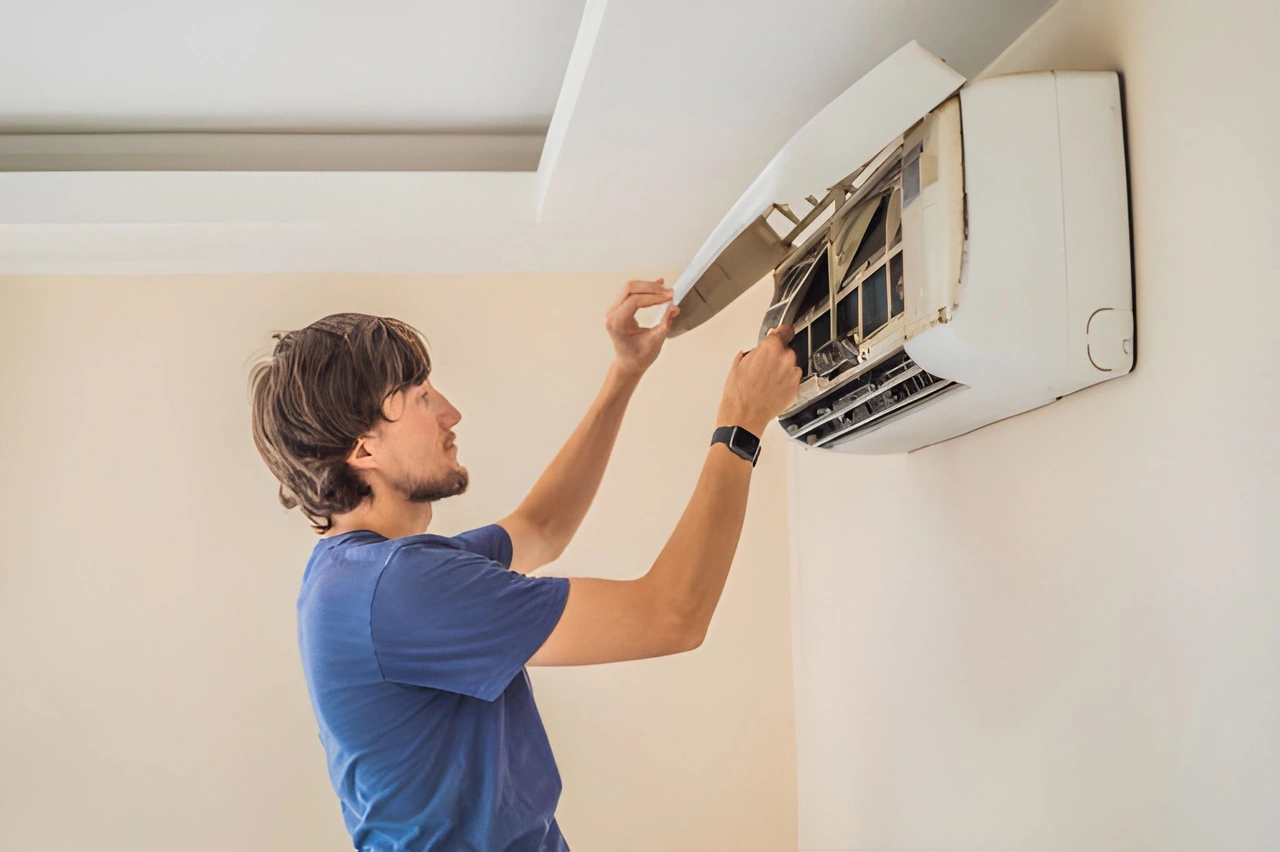
The physical strain of carrying this invisible load year after year takes a serious toll on your air conditioner's internal components. When your system is forced to run constantly in wet conditions, minor mechanical vulnerabilities quickly escalate into major system failures. Staying on top of routine care is vital; understanding How AC Maintenance Impacts Indoor Air Quality and Health can help you protect both your equipment and your family's well-being.
Mechanical Warning Signs of How Pittsburgh Area Humidity Makes Your AC Work Harder
When humidity levels spike, several specific mechanical issues can emerge:
- Frozen Evaporator Coils: It seems counterintuitive that an air conditioner could freeze up on a hot, humid summer day, but it happens frequently. When your AC runs continuously to combat humidity, the evaporator coil stays incredibly cold. If there is any restriction in airflow (such as a dirty filter), the thick layer of condensation forming on the coil will drop below freezing and turn to ice. Once ice forms, it acts as an insulator, completely blocking heat transfer and halting the cooling process.
- Condensate Drain Overflows: On a highly humid day, your AC can pull gallons of water out of your indoor air. All of this water drains into a condensate pan and out through a narrow PVC drain line. If this line is restricted by algae, dust, or mold, the massive volume of water will quickly back up. This can trigger automatic safety switches that shut down your system, or worse, cause water to overflow, leading to expensive ceiling and floor damage in your home.
- Increased Compressor Cycle Times: The compressor is the heart of your outdoor unit. High humidity forces the compressor to work at peak capacity for longer periods. This extended run time generates extreme heat within the motor, leading to premature wear and significantly shortening the overall lifespan of your system.
The Danger of Short-Cycling and Oversized AC Units
One of the most common mistakes made during HVAC installations in older Pittsburgh homes is installing an oversized air conditioner. Many assume that a larger unit will cool the house faster and better. In reality, oversized systems make humidity problems much worse.
An oversized AC unit will quickly blast your home with cold air, rapidly reaching the thermostat's target temperature and shutting off. This rapid cycling is called "short-cycling." While the air temperature drops quickly, the system doesn't run long enough to pull moisture out of the air.
To effectively dehumidify, an AC needs to run for steady, continuous cycles of at least 15 to 20 minutes. Short-cycling leaves your home feeling like a cold, damp cave. To prevent this, professional HVAC technicians use precise Manual J load calculations to size systems based on your home's unique layout, insulation, and local climate. You can read more about this common issue in our detailed guide on How Oversized AC Units Make Humidity Problems Worse.
How Duct Leaks, Dirty Filters, and Low Refrigerant Compound the Problem
When your system is already struggling with local humidity, secondary maintenance issues will compound the problem exponentially:
- Duct Leaks: According to research, homes can lose up to 30% of conditioned air through duct leaks. If your ductwork runs through unconditioned spaces like attics, crawlspaces, or unfinished basements, leaky ducts create pressure imbalances. This pressure difference actively pulls hot, humid, unconditioned air directly into your home, forcing your AC to work even harder.
- Dirty Air Filters: A clogged filter restricts airflow across your evaporator coil. Without sufficient warm air blowing over it, the coil cannot transfer heat effectively, leading to frozen coils and poor moisture removal.
- Low Refrigerant Levels: Refrigerant is the lifeblood of the cooling process. If your system has a minor leak and refrigerant levels drop, the coil's temperature will fluctuate incorrectly. This prevents proper condensation and stops the system from dehumidifying your living space.
Scheduling timely Air Conditioning Maintenance in Pittsburgh, PA is the best way to catch these compounding issues before they lead to a complete system breakdown on a humid August afternoon.
Strategic Solutions: Winning the War Against Western PA Humidity
Fortunately, you do not have to accept a damp, uncomfortable home. By combining smart usage habits with modern HVAC technology, you can take the pressure off your air conditioner and enjoy crisp, comfortable indoor air all summer.
Thermostat Best Practices: 'ON' vs. 'AUTO'
One of the simplest and most effective changes you can make today is adjusting your thermostat's fan setting.
Many homeowners set their thermostat fan to "ON" so that air circulates continuously, even when the outdoor compressor isn't actively cooling. In humid climates, this is a major mistake.
When your AC cycle ends, the evaporator coil is still dripping wet with condensed moisture. If the fan remains "ON," it will continue to blow air across that wet coil, re-evaporating all that collected water and blowing it right back into your living spaces.
By setting your fan to "AUTO", the blower motor stops running shortly after the cooling cycle ends. This allows the accumulated water to safely drain out of your home through the condensate line rather than being reintroduced into your air.
Additionally, upgrading to a smart thermostat with built-in humidity sensors allows you to monitor your indoor climate in real time and can even adjust cooling cycles based on moisture levels rather than temperature alone.
Whole-Home Dehumidifiers vs. Variable-Speed Upgrades
If you are looking for a long-term solution to heavy summer humidity, you have two highly effective options:
| Feature | Single-Stage AC | Variable-Speed AC | Whole-Home Dehumidifier |
|---|---|---|---|
| Operation | Runs at 100% capacity or is completely off. | Adjusts speed incrementally to match real-time cooling needs. | Operates independently of the AC to pull moisture from the air. |
| Humidity Control | Poor; often short-cycles on moderately warm, humid days. | Excellent; runs long, low-speed cycles to maximize moisture removal. | Outstanding; maintains precise, target humidity levels year-round. |
| Energy Efficiency | Low to Moderate | High; uses less energy by running at lower speeds. | High; reduces the overall cooling load on your primary AC. |
| System Wear | High due to frequent starting and stopping. | Low; experiences fewer start/stop cycles. | Low; takes the moisture-removal burden off the AC system. |
Upgrading to a variable-speed AC system is an excellent choice if your current air conditioner is nearing the end of its lifespan (typically 15 to 20 years in Pennsylvania). Because variable-speed compressors can run at lower, highly efficient capacities for longer periods, they provide superior, continuous dehumidification.
On the other hand, if your current AC is still relatively new but struggling with moisture, installing a dedicated whole-home dehumidifier is a fantastic investment. These units integrate directly into your existing ductwork, pulling moisture out of the air before it circulates through your home. This allows your AC to focus entirely on lowering the sensible temperature, significantly reducing system strain and extending its overall lifespan. Explore our full range of AC Services in Pittsburgh to find the perfect fit for your home.
Frequently Asked Questions About Pittsburgh Humidity and AC Performance
What is the ideal indoor humidity level for a Pittsburgh home?
For optimal comfort, health, and home preservation, you should target an indoor relative humidity level between 30% and 50%. According to the EPA, keeping indoor humidity below 50% is critical for preventing mold growth, reducing dust mite populations, and minimizing airborne allergens. Once indoor humidity climbs above 60%, mold growth accelerates rapidly, and the air begins to feel sticky and uncomfortable.
Why is my AC running constantly but the house still feels damp?
If your air conditioner is running nonstop but your home still feels like a swamp, it is usually a sign of one of four issues:
- The system is oversized and short-cycling, preventing it from running long enough to remove moisture.
- The refrigerant levels are low, which reduces the evaporator coil's ability to condense moisture.
- The evaporator coils are dirty, restricting heat transfer.
- There are significant leaks in your ductwork pulling humid air from your attic or basement into your living areas.
Will a whole-home dehumidifier help lower my energy bills?
Yes. When a whole-home dehumidifier manages the moisture load, your indoor air feels significantly cooler because your body can evaporate sweat naturally. This allows you to set your thermostat several degrees higher without sacrificing comfort. Because your air conditioner doesn't have to run as often or as hard to keep you cool, you will see a noticeable reduction in your monthly energy bills and less wear on your cooling equipment.
Conclusion
Managing the heavy summer moisture in Western Pennsylvania is about more than just staying comfortable—it is about protecting your home, improving your indoor air quality, and saving your air conditioner from premature wear and tear. When you understand how Pittsburgh area humidity makes your AC work harder, you can take proactive steps to support your system, from adjusting your thermostat settings to investing in targeted humidity solutions.
At Supreme Heating and Cooling, we are proud to be the trusted, local HVAC experts serving families across the greater Pittsburgh area, including Monroeville, Bethel Park, Fox Chapel, Greensburg, Penn Hills, and surrounding communities. Our knowledgeable, friendly, and non-pushy team is always here to help you find the most efficient and cost-effective ways to keep your home comfortable and healthy all year long.
Don't let the invisible load of humidity wear down your cooling system this summer. Schedule professional AC service with Supreme Heating and Cooling today to ensure your air conditioner is ready to handle whatever the Pittsburgh summer throws its way!


.svg)
.webp)
.svg)
