
.svg)

.webp)
Is a Mini Split Better Than Central Air for Older Homes? What Pittsburgh Homeowners Need to Know
Is a mini split better than central air for older homes — and the short answer is: for most older homes without existing ductwork, yes. Here's a quick breakdown to help you decide:
Quick Answer: Mini Split vs. Central Air for Older Homes
| Factor | Mini Split | Central Air |
|---|---|---|
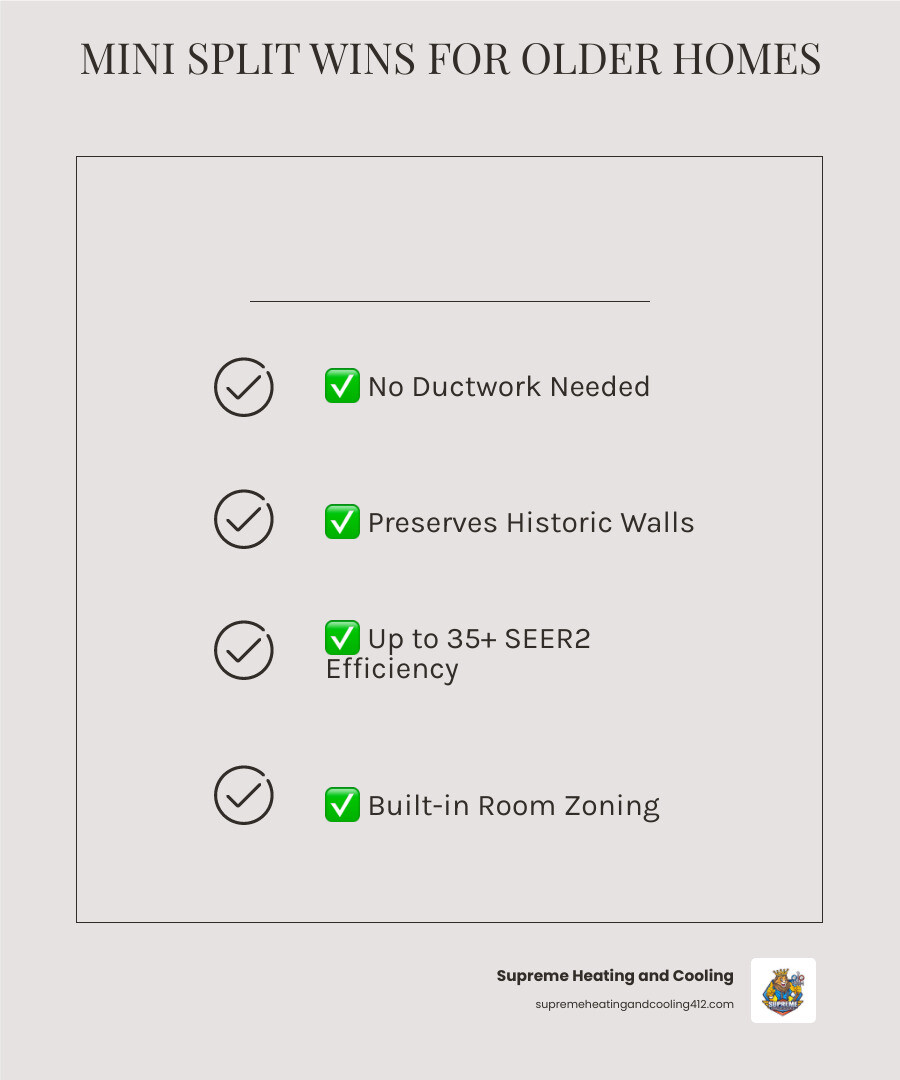
| No existing ductwork | ✅ Ideal choice | ❌ Requires costly retrofit |
| Preserves historic walls and trim | ✅ Only a 3-inch hole needed | ❌ Major construction required |
| Energy efficiency | ✅ Up to 35+ SEER2, zero duct loss | ⚠️ Up to 26 SEER2, 20-30% duct loss |
| Zoned room-by-room comfort | ✅ Built-in zoning | ⚠️ Possible but costly to add |
| Heating and cooling in one system | ✅ Heat pump included | ❌ Typically cooling only |
| Best for additions, attics, sunrooms | ✅ Perfect fit | ❌ Ductwork extension required |
| Existing ductwork in good condition | ⚠️ May not be necessary | ✅ Cost-effective option |
Older homes in Pittsburgh carry something newer builds simply can't replicate — original hardwood floors, plaster walls, crown molding, and the kind of craftsmanship that tells a story. But those same features that make historic homes so appealing can make heating and cooling them a genuine headache.
Most homes built before the 1950s were designed long before central air conditioning existed. That means no ductwork, no hollow wall cavities sized for modern HVAC equipment, and no easy path to run the large pipes a central system requires. Retrofitting traditional ductwork often means dropping ceilings, cutting into original floors, or building bulky soffits — all of which chip away at the character you're trying to preserve.
That tension between comfort and preservation is exactly why so many Pittsburgh homeowners are asking whether a mini split is the smarter path forward. The answer depends on your home's layout, your existing infrastructure, and how you use your space — and this guide walks you through all of it.
Comparing Installation: Is a Mini Split Better Than Central Air for Older Homes?
When we look at the logistics of bringing cooling into a 100-year-old home in Aspinwall or Fox Chapel, the biggest hurdle is the infrastructure. Traditional central air is like a whole-house audio system where one source pipes music through the walls to every room. If the "veins" (the ductwork) aren't already there, you have to perform surgery on the house to install them.

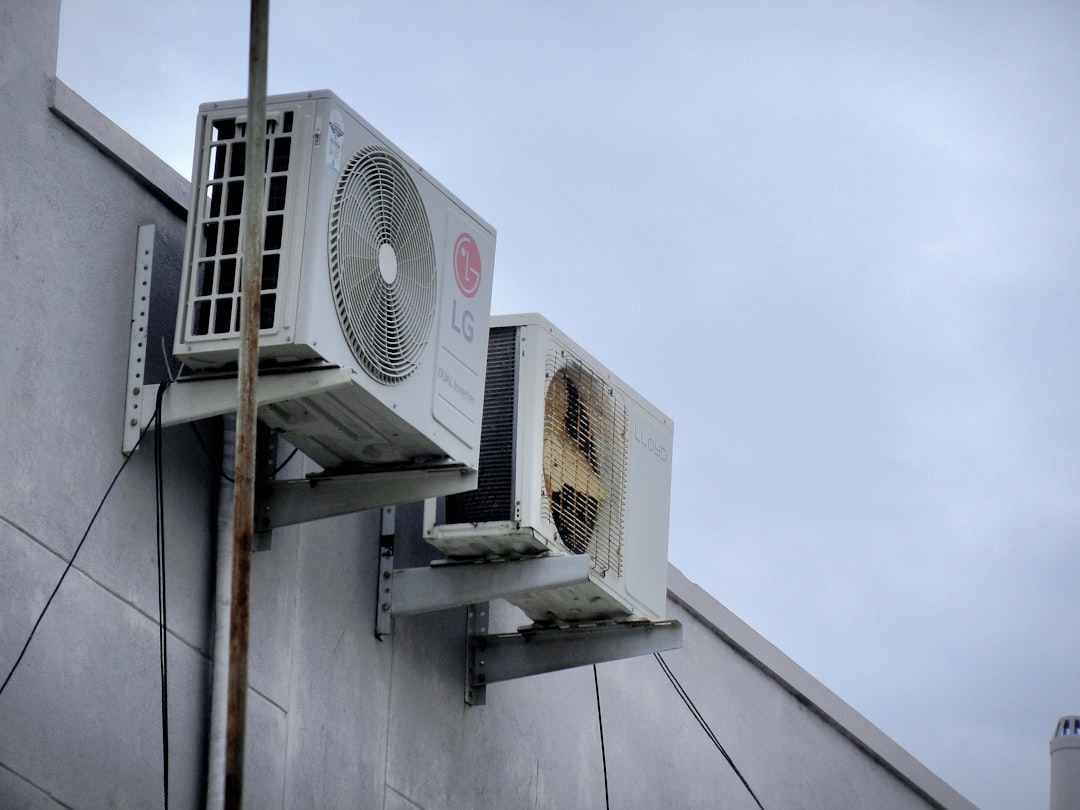
A ductless mini split, on the other hand, is a far less invasive procedure. Instead of tearing through plaster walls to fit 10-inch metal pipes, we only need to drill a small, three-inch hole through an exterior wall. This conduit houses the refrigerant lines, electrical wiring, and a condensate drain line, connecting the indoor air handler to the outdoor condenser.
This approach preserves the structural integrity of your home. You won't have to worry about sacrificing closet space or lowering ceiling heights just to stay cool. For many residents, especially those looking at AC Replacement in Older Homes: Strategies for Success, the "mini" in mini split refers as much to the disruption as it does to the size of the unit. If you are in an area like Penn Hills, choosing a Mini Split Installation Penn Hills PA specialist ensures that these delicate historic structures are handled with the care they deserve.
Why a mini split is better than central air for older homes with additions
Many historic Pittsburgh homes have grown over the decades. Maybe you’ve added a sunroom, finished an attic for a home office, or converted a garage into a guest suite. Extending central ductwork to these areas is often architecturally impossible or prohibitively expensive.
Mini splits excel here because they provide independent cooling. You don't have to overwork your main furnace or AC to push air into a distant addition. Each unit operates on its own thermostat, allowing you to cool the sunroom during the day and the bedrooms at night without wasting energy on empty spaces. When considering Mini Split Air Conditioner vs Central HVAC: Which is Better for Your Home, the flexibility of adding "zones" as your home expands is a massive advantage.
Preserving historic aesthetics with modern technology
We often hear homeowners worry that a white plastic box on the wall will ruin the "vibe" of their Victorian parlor. Fortunately, 2026 technology offers much more than standard wall-mounts.
- Floor-Mounted Units: These look remarkably like traditional radiators and sit low to the ground, blending into the room's existing footprint.
- Ceiling Cassettes: These units sit flush with the ceiling, with only a small decorative grille visible.
- Slim-Duct Systems: These are hidden behind a wall or in a crawlspace, with only a tiny, discreet vent showing.
- Line Hides: On the outside of your home, we use "line hides" — decorative covers that match your siding or trim — to conceal the conduit, keeping the exterior as beautiful as the day it was built.
Understanding these options is part of Upgrading HVAC System: Key Considerations for AC Installation for anyone who values their home's historic charm.
Efficiency and Comfort: Zoning vs. Duct Loss
In the HVAC world, efficiency is measured by SEER2 (Seasonal Energy Efficiency Ratio). While modern central air systems are quite efficient, mini splits are the undisputed champions of energy savings.
| System Type | Typical SEER2 Range | Energy Loss from Ducts |
|---|---|---|
| Ductless Mini Split | 18 to 35+ | 0% |
| Central Air (New) | 14 to 26 | 20% to 30% |
| Old Central AC (Pre-2010) | 8 to 10 | 30%+ |
Mini splits utilize inverter technology, which acts like a dimmer switch for your cooling. Instead of a traditional compressor that is either 100% "on" or "off," an inverter compressor adjusts its speed to maintain a steady temperature. This results in fewer fluctuations and lower utility bills. You can find more details on how this works in our guide on the Benefits of Ductless Mini Splits.
Eliminating the 30% duct loss waste
One of the most compelling reasons why is a mini split better than central air for older homes comes down to what the Department of Energy calls the "duct tax." In a traditional system, air has to travel through a maze of metal or flexible ducts. If those ducts are leaky, uninsulated, or run through a hot attic, you can lose up to 30% of your cooling energy before it ever reaches your living room.
Ductless systems eliminate this waste entirely. Because the cooling happens right at the indoor unit, there is no energy lost in transit. For homeowners in Pittsburgh, where summer humidity can make Air Conditioning run nearly non-stop, that 30% savings adds up quickly over the 15-to-20-year lifespan of the system.
Solving "Hot Upstairs" syndrome with zoned control
If you live in a multi-story home in Bethel Park or Monroeville, you know the struggle: the first floor feels like a walk-in freezer while the master bedroom upstairs is a sauna. Heat rises, and traditional central systems with a single thermostat simply can't keep up with the temperature variance between floors.
Mini splits solve this through "zoning." Each indoor unit has its own thermostat. If you want the nursery at 70 degrees and the guest room at 74, you can set them independently. This personalized comfort is a hallmark of modern HVAC design, ensuring that every family member is happy, regardless of which floor they are on.
Year-Round Performance and Air Quality
Modern mini splits are not just for the summer. Most units we install today are air-source heat pumps, meaning they can reverse the cooling process to provide heat in the winter.
Deciding if a mini split is better than central air for older homes in Pittsburgh
Pittsburgh winters are no joke. In the past, heat pumps struggled when the mercury dropped below freezing. However, 2026 technology — such as cold-climate "Hyper Heat" — allows these systems to provide efficient warmth even when it's -13°F outside.
For many older homes that rely on expensive oil heat or aging boilers, a mini split can serve as a primary or supplemental heat source. It’s an excellent way to take the chill off a drafty room without firing up the whole-house furnace. If you are looking for AC Installation Pittsburgh PA, asking about heat pump capabilities is a must for year-round value.
Improving indoor air quality without old ductwork
Older ductwork can be a haven for dust, pet dander, and even mold. When a central system kicks on, it can circulate these allergens throughout your entire home. Ductless systems bypass this issue.
Mini splits feature multi-stage filtration that traps particulates right at the source. Because there are no ducts to collect dust or moisture, the air in your home stays cleaner and more sanitary. This is especially beneficial for families in areas like Greensburg or Murrysville who struggle with seasonal allergies or have pets.
Frequently Asked Questions
Can I use a hybrid approach with both systems?
Absolutely! We often recommend a hybrid approach for larger homes. If your first floor has a functional furnace and ductwork, you might keep a central system there but install a mini split to handle a "problem zone" like a finished attic or a newly added sunroom. This allows you to address specific comfort issues without the massive expense of re-ducting the entire house.
How do these systems impact the resale value of a historic home?
In the 2026 real estate market, buyers are looking for "smart" and "efficient." An older home that has been upgraded with high-SEER2 ductless cooling is highly attractive. It shows that the home has been modernized for comfort without sacrificing its historic appeal. Real estate estimates suggest that adding modern climate control can significantly increase a home's resale value and marketability.
What are the maintenance requirements for each system?
Both systems require an annual professional tune-up to ensure long-term reliability. For central air, you’ll need to change the main filter every 1-3 months. For mini splits, the maintenance is even simpler: you just need to rinse the reusable filters every 2-4 weeks. Keeping the outdoor unit clear of snow, leaves, and debris is also essential for both systems to maintain peak performance.
Conclusion
At Supreme Heating and Cooling, we understand that your home is your sanctuary. Whether you live in a historic bungalow in Oakmont or a mid-century gem in Fox Chapel, you deserve a home that is comfortable in every season.
Deciding if a mini split is better than central air for older homes doesn't have to be a guessing game. Our team of friendly, non-pushy experts is here to provide a trustworthy assessment of your home's unique needs. We’ve spent years serving the Pittsburgh community, from Penn Hills to Upper Saint Clair, ensuring that families stay cool in the summer and warm in the winter without losing the charm of their historic properties.
Discover how a mini split can transform your older home and bring modern comfort to your classic Pittsburgh residence. Contact us today to schedule a consultation and let us help you find the perfect fit for your lifestyle.


.svg)
.webp)
.svg)
