.svg)

.webp)

Why Understanding How a Failed Blower Motor Affects Your Cooling Could Save Your AC This Summer
How a failed blower motor affects your cooling is something every homeowner should understand before the hottest days of summer arrive — because when this one component breaks down, your entire AC system can stop delivering cold air, even while the outdoor unit keeps running.
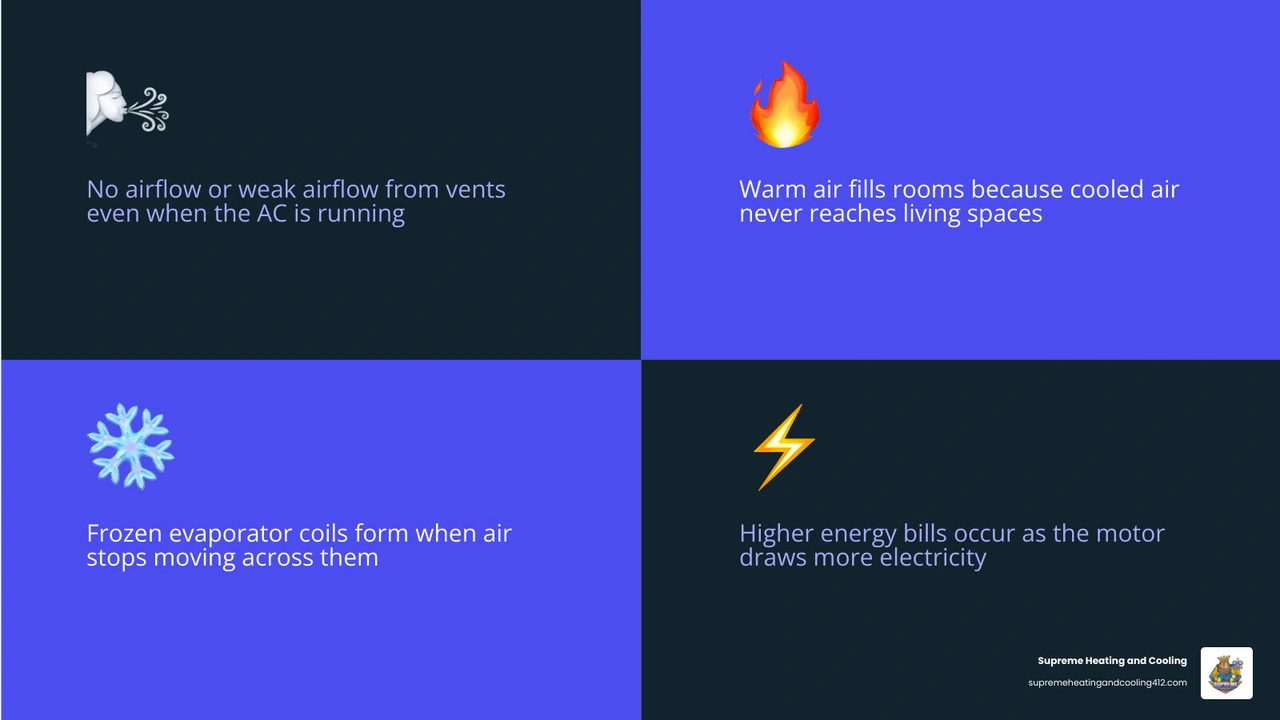
Here is a quick summary of the main effects:
- No airflow or weak airflow from vents, even though the AC appears to be on
- Warm air throughout the home because cooled air never reaches your living spaces
- Uneven temperatures where some rooms stay comfortable while others stay hot
- Frozen evaporator coils caused by air no longer moving across them
- Compressor damage if the system keeps running without proper airflow
- Higher energy bills as the struggling motor draws more electricity
- Poor indoor air quality from stagnant, uncirculated air
Many homeowners in Pittsburgh and surrounding Pennsylvania communities assume a warm home means a refrigerant leak or a broken compressor. In reality, the blower motor — the component responsible for physically moving conditioned air through your home — is often the hidden culprit. It does not make headlines the way a failed compressor does, but without it, your AC is essentially cooling an empty metal box while your family sweats indoors.
The good news is that catching the warning signs early makes a real difference. Understanding what the blower motor does, why it fails, and what happens when it does can help you act quickly and avoid a much more expensive repair down the road.
Quick look at how a failed blower motor affects your cooling:
Understanding the Role of the Blower Motor in Your HVAC System
To grasp how a failed blower motor affects your cooling, it helps to look at the blower motor as the "heart" of your heating and cooling system. While other components like the compressor and refrigerant perform the heavy lifting of heat transfer, the blower motor is the sole vehicle for air circulation.
Your air conditioner works in a continuous loop. The process begins inside your home's living spaces, where warm air is drawn into the return ducts. The blower motor spins a heavy fan wheel (often called a blower wheel) that pulls this warm air into the indoor unit, also known as the air handler.
Once inside the air handler, this air is pushed directly across the freezing-cold evaporator coil. The refrigerant flowing through the evaporator coil absorbs heat and moisture from the air. Now that the air is chilled and dehumidified, the blower motor pushes it forward, forcing it through your supply vents and back into your rooms.
Without a perfectly functioning blower motor, this entire cycle grinds to a halt. The air conditioner might continue to run outside, but that chilled air will remain trapped inside your ductwork. Investing in professional AC Repair Optimal Performance ensures that this delicate balance of airflow and heat transfer is maintained all year long.
PSC vs. ECM: How Different Motors Power Your Airflow
Not all blower motors are built the same way. If you live in an older home in Penn Hills, Swissvale, or Wilkinsburg, your system might use a different type of motor than a newly installed system in Fox Chapel or Upper Saint Clair.
There are two primary types of blower motors used in residential HVAC systems today:
- Permanent Split Capacitor (PSC) Motors: These are traditional, single-speed motors. When your thermostat calls for cooling, a PSC motor turns on at 100% capacity and runs at that single speed until the cycle ends. They are simple and reliable but highly inefficient because they cannot adjust their output.
- Electronically Commutated Motors (ECM): These are modern, variable-speed motors. Instead of running at full blast all the time, an ECM can adjust its speed dynamically based on your home's real-time cooling demands.
Because ECM motors can run at lower, quieter speeds for longer periods, they are incredibly efficient, often using up to 80% less electricity than traditional PSC models.
| Feature | PSC Blower Motors | ECM Blower Motors |
|---|---|---|
| Operation Speed | Single-speed (On/Off) | Variable-speed (Dynamic adjustments) |
| Energy Efficiency | Standard | High (Uses up to 80% less electricity) |
| Failure Pattern | Tends to fail suddenly | Gradual performance decline |
| Humidity Control | Basic | Exceptional (Longer, low-speed cycles) |
| Air Filtration | Intermittent | Continuous (When run in "Fan" mode) |
When a PSC motor fails, it usually quits all at once, leaving you with complete silence from your vents. An ECM motor, however, may show gradual signs of failure, such as slowly reducing its airflow over several weeks before finally shutting down completely.
How a Failed Blower Motor Affects Your Cooling
When your blower motor fails, the most immediate and obvious symptom is an absolute lack of cooling. However, the way this failure impacts your comfort is often progressive.
At first, you might notice a subtle airflow restriction. The air coming out of your registers might feel like a soft whisper rather than a strong, steady breeze. As the motor struggles to spin the blower wheel, it can no longer push air to the furthest corners of your home. This leads to uneven temperatures, where rooms closest to the indoor air handler feel slightly cool, while upstairs bedrooms or distant living areas become unbearably hot.
Eventually, the motor stops spinning entirely. When this happens, your indoor unit will fall completely silent, and you will feel nothing but warm air radiating from your vents. To understand why this happens, you can read more about Why AC Is Blowing Warm Air.
The Domino Effect: Frozen Evaporator Coils and Compressor Damage
Many homeowners think that if the fan stops blowing, the only consequence is a warm house. Unfortunately, running an air conditioner with a failed blower motor triggers a dangerous domino effect that can destroy your entire system.
Your AC relies on a continuous flow of warm indoor air to keep the indoor evaporator coil from getting too cold. The warm air blowing across the coil transfers its heat to the cold refrigerant inside. If the blower motor fails, there is no warm air moving across the coil.
Without that heat transfer, the temperature of the evaporator coil drops rapidly below freezing. Any moisture that condensed on the coil from your home's air will instantly freeze, leading to massive ice buildup.
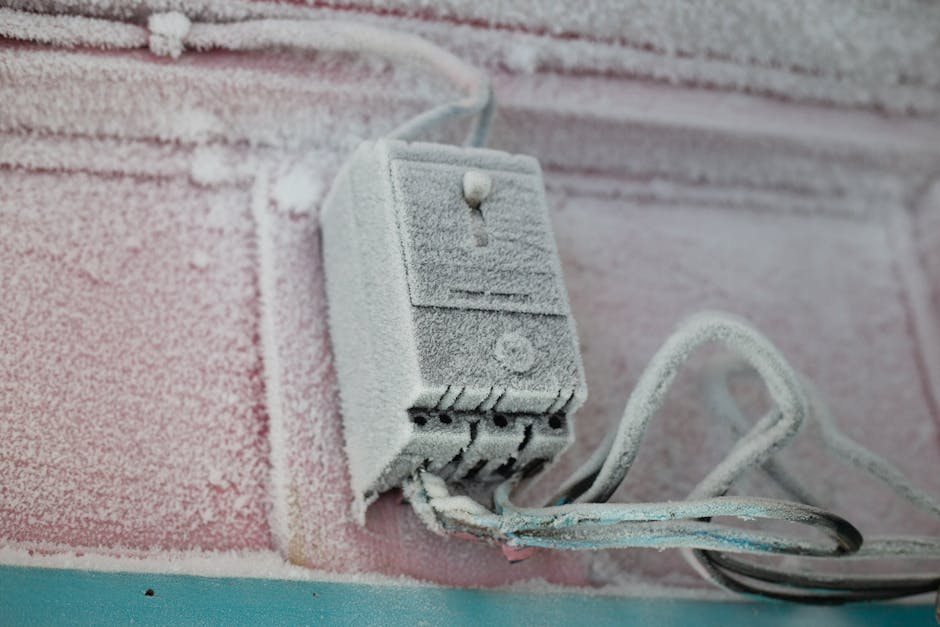
This ice block completely chokes off any remaining airflow, but the danger does not stop there. The refrigerant inside the frozen coil cannot evaporate into a gas because there is no heat to warm it up. As a result, liquid refrigerant travels back down the copper lines directly to your outdoor unit.
Your outdoor compressor is designed strictly to compress gas, not liquid. When liquid refrigerant enters the compressor, a destructive phenomenon known as liquid slugging occurs. Liquid slugging can easily shatter valves, destroy pistons, and cause complete compressor failure. Replacing a compressor is one of the most expensive repairs in the HVAC industry, and a failed blower motor can cause this catastrophic system breakdown in just a matter of hours.
How a Failed Blower Motor Affects Your Cooling and Indoor Air Quality
Beyond temperature control, the blower motor is also the gatekeeper of your home's air quality and humidity levels.
When your air conditioner runs, it doesn't just cool the air; it also removes moisture. As warm, humid air passes over the cold evaporator coil, the moisture condenses onto the coil and drains away. When a blower motor begins to fail and slows down, it cannot circulate air quickly enough to manage humidity. Your home will quickly start to feel sticky, muggy, and stale.
Furthermore, stagnant air is a breeding ground for dust accumulation and allergen buildup. Without the blower motor actively pushing air through your high-efficiency air filter, airborne particles like pet dander, pollen, and mold spores remain suspended in your living spaces. You can learn more about how these systems interact by reading about How AC Maintenance Impacts Indoor Air Quality and Health.
Warning Signs: Is Your Blower Motor Failing?
Fortunately, blower motors rarely fail without warning. By keeping an eye—and an ear—out for these common indicators, you can catch a problem before it leaves you stranded in a hot house:
- Weak Airflow From Vents: If you hold your hand up to a register and can barely feel the air moving, your motor is likely struggling to reach its designated RPMs.
- Strange Noises From the Indoor Unit: A failing motor will often let you know it is in trouble. Listen for a loud squealing or screeching sound, which usually points to worn-out bearings. A rattling or clunking noise can indicate a loose blower wheel or a broken fan blade.
- A Burning Smell From the Vents: If the motor is overheating or drawing too much electrical current, you may notice a distinct, metallic burning odor coming through your ductwork. This is a sign that the motor's internal wiring insulation is melting.
- The System Shuts Off Repeatedly: Modern blower motors have internal thermal overload switches. If the motor gets too hot, it will temporarily shut itself down to prevent a fire, causing your AC to short cycle.
- Complete Silence: If your outdoor condenser unit is humming loudly but your indoor unit is dead silent, the blower motor or its run capacitor has likely failed completely.
If you are noticing any of these warning signs in your home, check out our guide on AC Blower Motor Failure Signs for a deeper look at what to do next.
How a Failed Blower Motor Affects Your Cooling Efficiency and Energy Bills
A failing blower motor is incredibly inefficient. As dirt builds up on the motor bearings or the blower wheel itself, the physical resistance increases. To overcome this friction and keep spinning, the motor must pull significantly more electrical draw from your home's electrical panel.
This extra electrical strain doesn't just wear out the motor's internal components; it also causes your utility bills to skyrocket. You might notice a sudden, unexplained spike in your monthly electricity costs, even though you haven't changed your thermostat habits.
When a motor is struggling, the entire system has to run much longer cycles to cool your home, multiplying the energy waste. To understand the financial consequences of letting these issues linger, read about The Impact of Neglected AC Maintenance on Energy Bills.
Common Causes of Blower Motor Failure in Pennsylvania Homes
While blower motors are built to last quite a long time, several environmental and mechanical factors can cut their lifespan short. Here in Western Pennsylvania, our homes experience cold winters and humid summers, meaning our HVAC systems are working hard throughout the year.
- A Clogged Air Filter: This is the absolute leading cause of premature blower motor failure. When an air filter is caked in dust, pet hair, and debris, it acts as a solid wall. The blower motor has to work twice as hard to pull air through this restriction, causing it to run incredibly hot and eventually burn out its windings.
- Dirt and Grime Buildup: Dust that slips past a cheap or neglected filter will settle directly on the blower wheel blades. A dirty blower wheel can reduce airflow efficiency by as much as 20%, throwing the wheel out of balance and putting immense strain on the motor bearings.
- Ductwork Problems: Roughly 15-20% of U.S. homes have significant duct problems, such as crushed ducts, disconnected runs, or poorly designed ductwork. This creates high static pressure, forcing the motor to fight against extreme resistance just to circulate air.
- Worn Motor Bearings: Over time, the factory lubrication inside the motor bearings will dry out. Without lubrication, the metal-on-metal friction creates extreme heat, eventually seizing the motor entirely.
- Electrical Surges and Failed Capacitors: A weak or failing run capacitor cannot provide the electrical boost the motor needs to start spinning. If the motor tries to start but cannot, it will sit there and hum, drawing high current until it overheats.
Troubleshooting and Preventing Blower Motor Issues
Before you call in the professionals, there are a few simple troubleshooting steps you can perform to rule out minor issues:
- Check the Thermostat Settings: Make sure your thermostat is set to "Cool" and the temperature setting is lower than the current indoor temperature. To test the motor specifically, switch the fan setting from "Auto" to "On." If the fan starts blowing, the motor itself is receiving power.
- Inspect Your Air Filter: Pull out your furnace or air handler filter. If you cannot see light through it, replace it immediately. A fresh filter can instantly restore airflow and relieve strain on the motor.
- Check the Circuit Breaker: Go to your home's main electrical panel and check the breaker labeled for your indoor unit or furnace. If it has tripped, reset it once. If it trips again immediately, do not attempt to reset it a second time—this indicates a serious electrical short.
- Look for Ice: Check the copper refrigerant lines entering your indoor unit. If you see ice or frost buildup, turn your AC completely off at the thermostat and switch the fan to "On" to help thaw the system. Do not run the cooling mode while ice is present.
While these troubleshooting steps can help you identify simple fixes, the best way to avoid a system breakdown is through regular preventative maintenance. Scheduling an annual professional inspection allows a technician to check the motor's amperage draw, test the run capacitor, lubricate older motor bearings, and perform a thorough blower wheel cleaning to keep your system running smoothly.
Frequently Asked Questions about Blower Motors
Can I run my AC if the blower motor is making noise?
We strongly recommend shutting your AC system down immediately if you hear grinding, heavy squealing, or loud rattling coming from your indoor unit. Running a noisy motor can quickly lead to complete motor seizure, permanent bearing damage, or an electrical short that could pose a safety risk to your home. Catching a noisy motor early often means a simple bearing lubrication or a minor adjustment can save the motor from total failure.
Why is my blower motor running but no air is coming out?
If you can hear the blower motor humming or spinning but feel zero airflow from your vents, you are likely dealing with a frozen evaporator coil that has completely blocked the airflow. Other potential causes include a disconnected main duct trunk in your basement or attic, a heavily clogged air filter that has choked off the air supply, or a stuck zoning damper that is preventing air from reaching specific parts of your home.
How often should I have my blower wheel cleaned?
We recommend having a professional perform a visual inspection of your blower wheel every 2 to 4 years. A full, professional blower wheel cleaning is typically needed every 3 to 5 years, though homes with shedding pets, dusty basements, or residents who suffer from severe allergies may require more frequent cleanings to prevent dust buildup and maintain peak airflow efficiency.
Conclusion
Your blower motor is the unsung hero of your home comfort system, working tirelessly behind the scenes to keep air moving through your living spaces. Knowing how a failed blower motor affects your cooling is the key to preventing minor issues from turning into major, expensive system failures. From weak airflow and uneven temperatures to frozen coils and compressor damage, ignoring a struggling blower motor is a dangerous game for your air conditioner.
At Supreme Heating and Cooling, we believe in keeping our neighbors throughout Pittsburgh, Monroeville, Bethel Park, Penn Hills, and surrounding communities safe and comfortable all year long. Our team of experienced, personable technicians is committed to providing trustworthy, non-pushy service and honest communication. Whether you need a simple blower motor tune-up, a capacitor replacement, or a complete system check, we are here to help.
If you have noticed weak airflow, strange noises, or uneven cooling in your home, do not wait for your system to break down completely in the middle of a summer heatwave. Schedule your professional AC service with Supreme Heating and Cooling today and let our family take care of yours!


.svg)
.webp)
.svg)
