.svg)

.webp)
Why Electrical Problems Are the Hidden Cause Behind Most AC Breakdowns
How electrical connection problems cause AC breakdowns is something every homeowner in Pittsburgh, PA should understand before the summer heat hits its peak. Electrical issues account for approximately 30% of all residential air conditioning failures — yet most people assume a dead AC means a dead compressor or a refrigerant problem. In reality, a loose wire, a corroded terminal, or a failing capacitor is often the true culprit behind a system that suddenly stops cooling your home.
Here is a quick breakdown of the most common ways electrical faults take down an AC system:
- Loose or corroded wiring — creates resistance, generates heat, and melts insulation
- Failing capacitors — prevent motors from starting or running properly, leading to compressor damage
- Pitted or worn contactors — cause arcing, erratic operation, or complete system shutdown
- Tripped circuit breakers — signal overloads or short circuits that need professional diagnosis
- Power surges — damage sensitive control boards and electrical components instantly
- Mechanical neglect (dirty filters, clogged coils) — forces motors to draw excess current, overloading electrical components
The frustrating part? Many of these failures develop silently over months before the system finally gives out — usually on the hottest afternoon of the year. Electrical connection problems don't announce themselves until the damage is already done.
This guide walks you through exactly how these failures happen, what warning signs to watch for, and what you can do to protect your AC system before a small electrical fault turns into an expensive breakdown.

How electrical connection problems cause ac breakdowns terms made easy:
The Silent Killers: How Electrical Connection Problems Cause AC Breakdowns
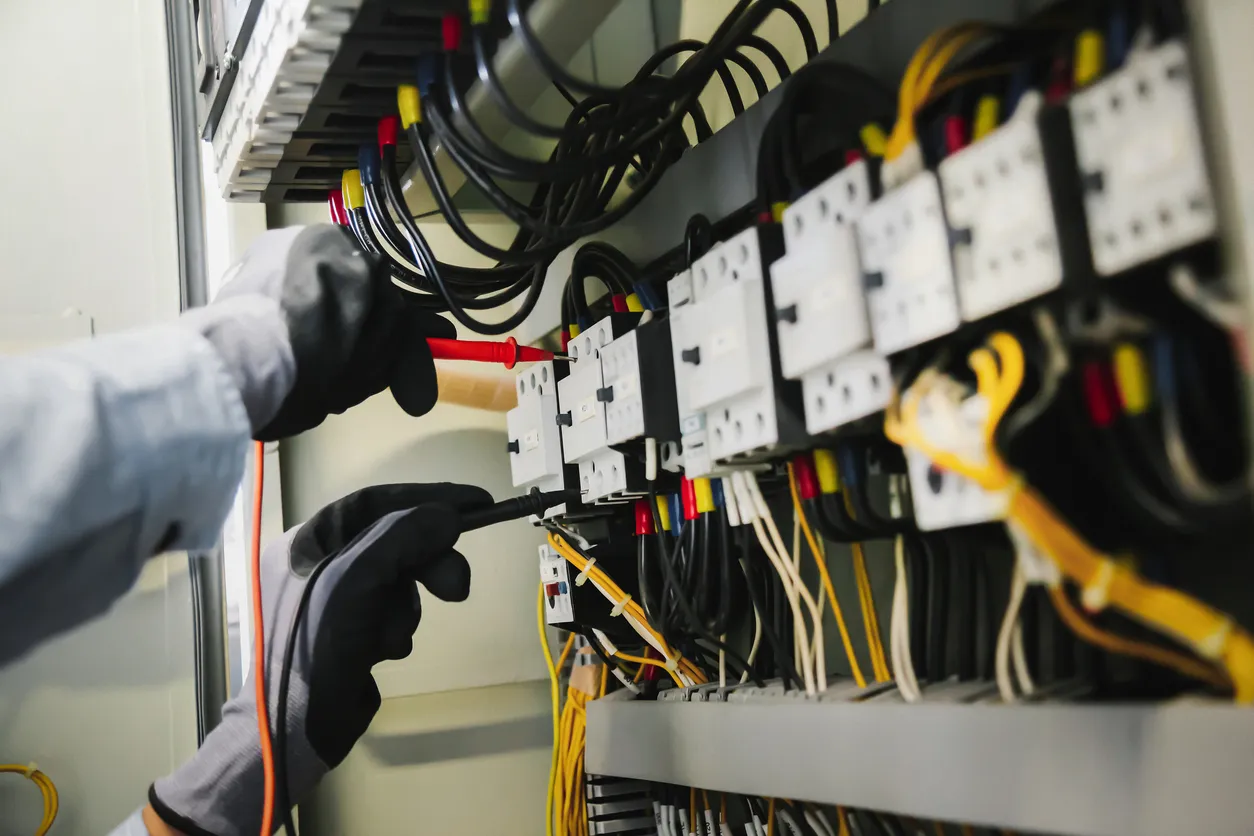
Your air conditioning system is a complex machine that relies on a steady, uninterrupted flow of electricity to power the compressor, condenser fan, and indoor blower motor. When everything is working correctly, electricity flows smoothly along dedicated paths. However, when connections degrade, the physics of electricity changes.
In the HVAC world, loose wires, corroded terminals, and pitted contactors are often referred to as "silent killers." They slowly starve your system of the power it needs while generating dangerous levels of heat. If you need assistance with these components, our team offers professional Electrical Services to keep your home running safely.
When an electrical connection becomes loose or corroded, it creates electrical resistance. Resistance acts like a bottleneck, forcing the electrical current to work much harder to pass through the connection. This bottleneck produces extreme heat. Over time, this localized heat can melt the plastic insulation surrounding the wires, exposing bare copper. When bare wires touch each other or the metal chassis of the unit, it causes a short circuit, immediately shutting down the system and posing severe Electrical Fire Risks in Homes.
Understanding how electrical connection problems cause ac breakdowns in capacitors
Capacitors are small, cylindrical devices that act like temporary storage batteries for your AC. They store up electrical energy and release it in a high-voltage burst to give the compressor and fan motors the torque they need to spin up. Once the motors are running, run capacitors provide continuous, stable voltage to keep them spinning efficiently.
When electrical connection problems occur, they directly impact capacitor health:
- Voltage Drops: Loose or corroded connections leading to the capacitor cause voltage fluctuations. This forces the capacitor to work harder to maintain its stored charge.
- Overheating: The extra stress of uneven electrical flow causes the internal oils of the capacitor to expand. This leads to the characteristic "swollen" or bulging top of a failing capacitor.
- Compressor Strain: If the capacitor fails, the compressor cannot start. It will sit and hum, drawing massive amounts of electricity (known as locked rotor amps) until its internal thermal overload switch trips. If left unaddressed, this repeated strain results in permanent compressor damage and eventual burnout.
If your system is struggling with power delivery, it may trace back to your home's electrical panel or disconnect box. Our technicians can perform comprehensive Electrical Fuse Box Repair to ensure your high-voltage lines are secure.
Why loose wiring and how electrical connection problems cause ac breakdowns
Air conditioners are highly physical machines. The outdoor condenser unit houses a heavy compressor and a powerful fan motor, both of which vibrate continuously during operation. Over months and years of daily use, this vibration can gradually loosen terminal screws, wire nuts, and electrical lugs.
Additionally, thermal expansion and contraction play a major role. As the unit cycles on and off, the wires heat up and expand, then cool down and contract. This constant physical movement can slowly wiggle wires out of their terminals.
When a wire becomes loose, the electricity is forced to "jump" across the gap, creating a microscopic electrical arc. This arcing generates temperatures hot enough to vaporize copper, melt wire insulation, and destroy control boards. This degradation doesn't just affect the outdoor unit; it can also impact your indoor controls, leading to complex AC Thermostat Wiring Problems that prevent your thermostat from communicating with your cooling system.
Early Warning Signs of AC Electrical Issues
Fortunately, your air conditioner will usually try to warn you before a complete electrical breakdown occurs. Recognizing these sensory indicators early can save you from a sweltering summer day with a broken system.
- Buzzing or Clicking Sounds: A loud buzzing sound from the outdoor unit often indicates a failing contactor that is vibrating rather than pulling in cleanly, or a compressor that is attempting to start with a weak capacitor. A rapid clicking sound usually points to a relay or control board struggling to send electrical signals. If you notice similar noises inside your home, listen closely to your breaker panel. Electric Panel Buzzing Sounds or other Strange Noises from Electric Panel are clear indicators of loose connections or overloaded breakers that require immediate professional attention.
- Flickering Lights: It is normal for your home's lights to dim for a fraction of a second when the AC starts up, as the compressor draws a brief surge of power. However, if your lights flicker persistently while the air conditioner is running, it indicates a severe voltage drop. This means your electrical system is struggling to supply the necessary amperage, often due to loose main connections or an overloaded electrical panel.
- Burning Odors: If you smell burning plastic, ozone, or a distinct "fishy" odor (which is the smell of melting Bakelite and plastic wire insulation) near your indoor vents or the outdoor unit, turn off the system immediately. This is a clear sign that an electrical component is actively overheating or melting.
- Warm Air and Short Cycling: If your indoor blower is running but the outdoor compressor fails to start due to a bad electrical connection, your vents will blow warm air. Alternatively, if the system turns on, runs for a few minutes, and abruptly shuts down before completing a cooling cycle (short cycling), a failing electrical component is likely tripping the system's safety switches.
The Role of Circuit Breakers, Fuses, and Power Surges
Your home's electrical panel and the outdoor disconnect box serve as the frontline defenders of your air conditioning system. Circuit breakers and fuses are designed to cut power instantly when electricity behaves abnormally, protecting both your expensive HVAC equipment and your home from electrical fires.
Circuit breakers trip for two distinct reasons, utilizing different internal mechanisms:
- Thermal Trips (Overload Protection): This occurs when a bimetallic strip inside the breaker heats up over time due to slightly excessive current draw. If your AC runs for 10 to 30 minutes and then trips the breaker, it is usually a thermal trip. This indicates the system is drawing too many amps, often caused by a dirty filter, clogged coils, or a weakening motor.
- Magnetic Trips (Short Circuit Protection): This occurs instantaneously using an internal electromagnet. If the breaker trips the exact millisecond the AC attempts to start, it is a magnetic trip. This signals a direct short circuit, a grounded wire, or a seized compressor.
| Trip Type | Trigger Mechanism | Common AC Culprit | Timing | Action Required |
|---|---|---|---|---|
| Thermal Trip | Bimetallic strip heats up from gradual overcurrent | Dirty coils, clogged filter, aging motor drawing high amps | Trips after 10–30 minutes of runtime | Clean system, check airflow, measure amp draw |
| Magnetic Trip | Electromagnet detects instantaneous surge | Direct short circuit, bare wire touching metal, grounded compressor | Trips instantly upon startup | Do not reset; call a professional immediately |
If you live in an older home in Swissvale, PA or Wilkinsburg, PA, you might still have a traditional fuse box protecting your AC. Knowing the Signs You Need Fuse Box Repair and understanding common Fuse Box Issues can help you avoid sudden cooling losses. In many cases, upgrading your electrical system is the safest path forward. There are several reasons Why Electric Panel Upgrade is highly beneficial, especially when installing a modern, high-efficiency AC system that requires dedicated, stable voltage.
How Mechanical Neglect Triggers Electrical Failures
Many homeowners do not realize that mechanical neglect is one of the leading causes of electrical failures in an AC system. Your air conditioner's mechanical parts and electrical components work in a delicate balance. When mechanical maintenance is ignored, the electrical system pays the price.
- Dirty Air Filters: A clogged air filter restricts airflow across the indoor evaporator coil. This forces the blower motor to work significantly harder to pull air through the home. To compensate for the restricted airflow, the blower motor must draw more electrical current (amperage). Running at a high amp draw generates excessive heat within the motor windings, eventually melting the wire insulation and causing the motor to burn out. This elevated heat and resistance can even travel back through the circuit, making it crucial to Prevent Electrical Outlet Overheating and ensure your home's wiring is up to the task.
- Clogged Condenser Coils: The outdoor unit's job is to release the heat collected from inside your home. If the condenser coils are coated in dirt, pollen, or grass clippings, the system cannot shed heat efficiently. This causes the refrigerant temperature and pressure to soar. To compress this high-pressure refrigerant, the compressor must work twice as hard, drawing massive amounts of electricity. This sustained overcurrent rapidly degrades the run capacitor, pits the contactor points, and can cause the compressor's electrical terminals to burn out completely.
By simply changing your filters and keeping your outdoor unit clean, you directly reduce the electrical strain on your system, preventing costly component failures.
Safety Risks and Prevention Strategies for Homeowners
Ignoring electrical issues in an air conditioner is highly dangerous. AC units run on high-voltage electricity (typically 240 volts) and carry continuous currents of 30 amps or more.
One of the most extreme risks of prolonged, undetected electrical resistance is a process called pyrophoric carbonization. When a loose electrical connection generates continuous, low-level heat against wood or drywall over several months, it chemically alters the wood, lowering its ignition temperature. Eventually, the wood can catch fire at temperatures well below its normal combustion point, starting an electrical fire inside your walls.
To protect your home and your family, implement these key prevention strategies:
- Schedule Annual Professional Maintenance: Studies show that homes with annual HVAC electrical inspections experience 35% fewer system breakdowns. During a tune-up, a technician will physically tighten all terminal screws, measure capacitor capacitance, and check contactor points for pitting.
- Install Surge Protection: Power surges from summer lightning storms in Fox Chapel, PA or grid fluctuations in Bethel Park, PA can instantly fry your AC's sensitive control boards. Installing a unit-specific surge protector at the outdoor disconnect box provides robust protection.
- Inspect for Pest Damage: Mice, squirrels, and other pests love to chew on the colorful, low-voltage thermostat wires running to your outdoor unit. Chewed wires lead to direct short circuits that can blow fuses or destroy your system's main control board. Keep vegetation cleared at least two feet around your outdoor condenser to deter pests.
Investing in Electrical Services for a Safe Home and staying informed on Home Electrical Code Updates are the best ways to ensure your cooling and electrical systems remain completely safe and reliable year-round.
Frequently Asked Questions about AC Electrical Issues
Why does my AC trip the breaker as soon as it starts?
If your breaker trips the exact millisecond your AC kicks on, do not attempt to reset it. This instant trip is a magnetic trip designed to protect your home from a severe electrical fault. It usually indicates a direct short circuit (where a hot wire has touched a ground wire or the metal frame), a completely failed run capacitor, or a grounded compressor (where the internal motor windings have broken and made direct contact with the compressor's metal shell).
Attempting to repeatedly reset the breaker under these conditions can cause severe damage to your home's electrical panel or lead to an electrical fire. This situation requires immediate Emergency Electrical Service to diagnose and isolate the short circuit safely.
Can a bad capacitor damage my AC compressor?
Yes, absolutely. A weak or failing capacitor is the leading cause of AC compressor breakdowns, accounting for up to 40% of all compressor replacements. If the start capacitor fails, the compressor motor will struggle to start, drawing massive amounts of electrical current and generating extreme heat.
If the run capacitor is weak, the compressor will run at sub-optimal speeds, causing it to overheat and run inefficiently. Over time, this excessive heat cooks the compressor's internal electrical insulation, leading to compressor burnout. Replacing a capacitor is a quick and straightforward task, but replacing a burned-out compressor is one of the most expensive repairs in the HVAC industry. Keeping these components tested regularly by utilizing Expert Electrical Services can save you from a catastrophic system failure.
Is it safe to reset my AC breaker more than once?
No, it is not safe. If your AC breaker trips, you may reset it once after letting the system cool down for a few minutes. If the breaker trips a second time, turn off the system at the thermostat and leave the breaker off.
A breaker that trips repeatedly is doing its job — it is warning you that there is a legitimate, dangerous electrical fault in your system. Repeatedly resetting the breaker heats up the wiring inside your walls, degrades the breaker itself, and significantly increases the risk of an electrical fire or permanent damage to your AC's control boards. Always call for Comprehensive Electrical Services to have a professional locate and repair the root cause of the trip.
Conclusion
At Supreme Heating & Cooling, we have spent years helping families throughout Pittsburgh, PA and surrounding areas like Monroeville, Penn Hills, Greensburg, and Upper Saint Clair stay comfortable and safe. We pride ourselves on our trustworthy, non-pushy service, competitive pricing, and our highly knowledgeable team of local experts.
Electrical connection problems are the hidden cause behind many sudden AC breakdowns, but they don't have to catch you off guard. By scheduling regular, professional maintenance, you can catch loose wires, weak capacitors, and corroded terminals before they leave you stranded in the summer heat.
Don't wait for an electrical fault to take down your cooling system. Schedule professional air conditioning services today with Supreme Heating & Cooling, and enjoy the peace of mind that comes with a safe, reliable, and highly efficient home comfort system.


.svg)
.webp)
.svg)
