.svg)

.webp)
Why Humid Summers Are So Hard on Your AC System in Western Pennsylvania
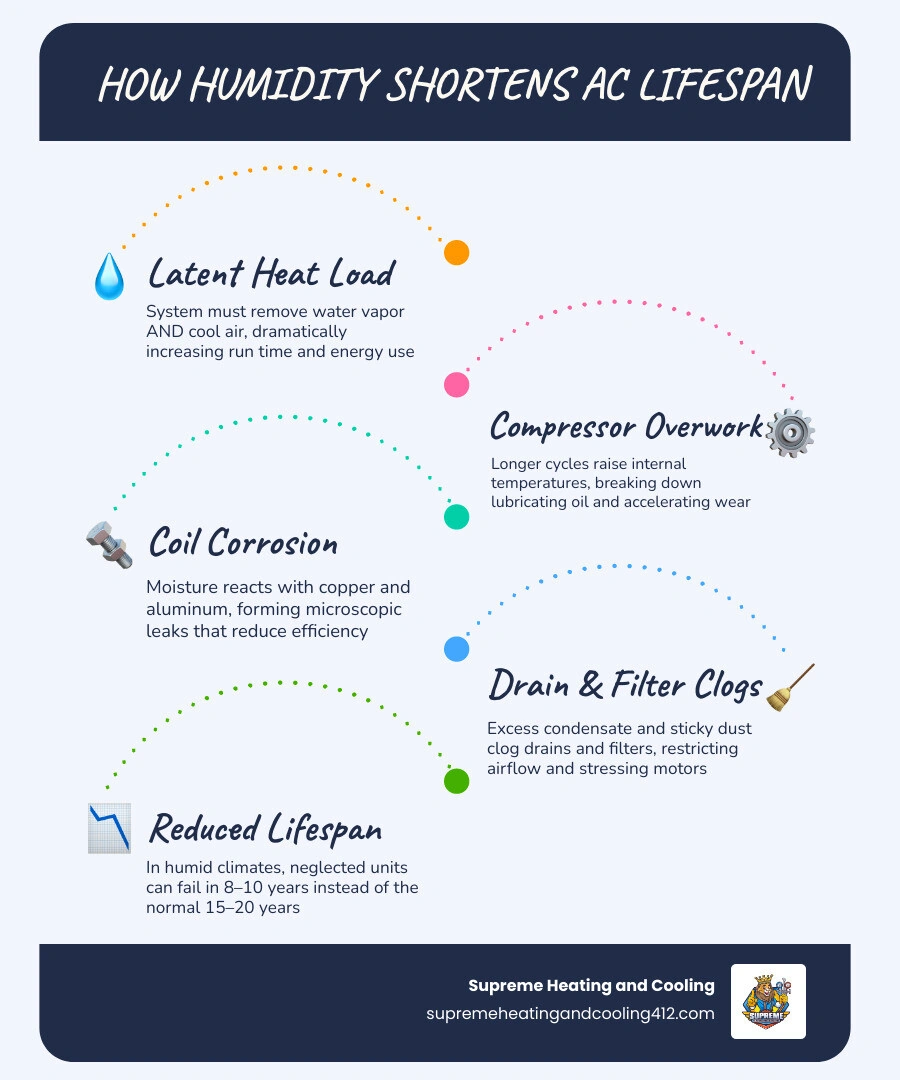
What shortens your AC lifespan in humid summers is one of the most important things Pittsburgh-area homeowners can understand — because the damage often starts long before a breakdown occurs.
Here is a quick breakdown of the main culprits:
| Factor | How It Harms Your AC |
|---|---|
| Latent heat load | Forces your system to remove water vapor AND cool air simultaneously, increasing run time |
| Compressor overwork | Longer cycles cause internal temperatures to rise, breaking down lubricating oil |
| Coil corrosion | Moisture reacts with copper and aluminum parts, creating microscopic leaks over time |
| Condensate drain overload | Excess moisture can clog drain lines, causing water damage and biological growth |
| Clogged air filters | Humidity makes dust sticky, restricting airflow and straining the blower motor |
| Poor sizing or installation | Oversized units short-cycle and fail to dehumidify, accelerating wear |
The national average lifespan for a central AC unit is 15 to 20 years. But in hot, humid climates, that number drops to 10 to 15 years — and neglected systems can start breaking down in as few as 8 to 10 years. Western Pennsylvania summers bring genuine humidity stress, with relative humidity regularly climbing above 70%, pushing your system to work harder than it was ever designed to.
The core problem is simple: in humid conditions, your AC is doing two jobs at once. It has to lower the air temperature and pull moisture out of the air. That dual workload puts every major component — the compressor, evaporator coil, fan motors, and electrical parts — under strain that compounds with every passing summer.
What shortens your ac lifespan in humid summers word list:
- how long does an ac unit last in western pennsylvania
- how to extend the life of your ac in the northeast
Understanding What Shortens Your AC Lifespan in Humid Summers
To truly understand how summer moisture compromises your cooling system, we have to look past the temperature on your thermostat. When we talk about cooling, we are looking at two very different types of heat: sensible heat (which you feel as temperature) and latent heat (which is stored in water vapor).
When our local weather turns muggy, your air conditioner cannot simply focus on lowering the temperature. It must first remove the heavy blanket of moisture suspended in your indoor air. This extraction process is what prevents that heavy, sticky feeling indoors. To learn more about this phenomenon, check out our guide on Why Home Air Feels Sticky.
Because removing moisture requires the system to run longer, more intense cycles, every single component experiences heightened mechanical stress. This continuous operation under high-pressure conditions is the primary engine behind accelerated wear. The compressor runs hotter, the fan motors spin for hours on end without a break, and the electrical contactors cycle under heavy loads. Over time, this constant run cycle degrades the system's internal lubrication and physical integrity, cutting years off its operational life.
The Science of Latent Heat Load and What Shortens Your AC Lifespan in Humid Summers
At the heart of this issue is a thermodynamic reality: water has an incredibly high capacity for holding heat. The energy required to condense water vapor into liquid water on your AC’s cold evaporator coil is known as the latent heat load. In a dry climate, nearly 100% of your system's British Thermal Unit (BTU) capacity goes toward sensible cooling (lowering the actual air temperature). However, in a humid Western Pennsylvania July, up to 30% or more of your air conditioner's BTU capacity is redirected entirely to condensing and draining away water vapor.
This shift in workload means your system must run much longer to achieve the same indoor temperature. The thermodynamic stress of managing this constant condensation creates a highly demanding operating environment. If you want to dive deeper into how this moisture balance works, explore our resources on Humidity Control for Homes.
How High Humidity Damages Your Compressor and Coils
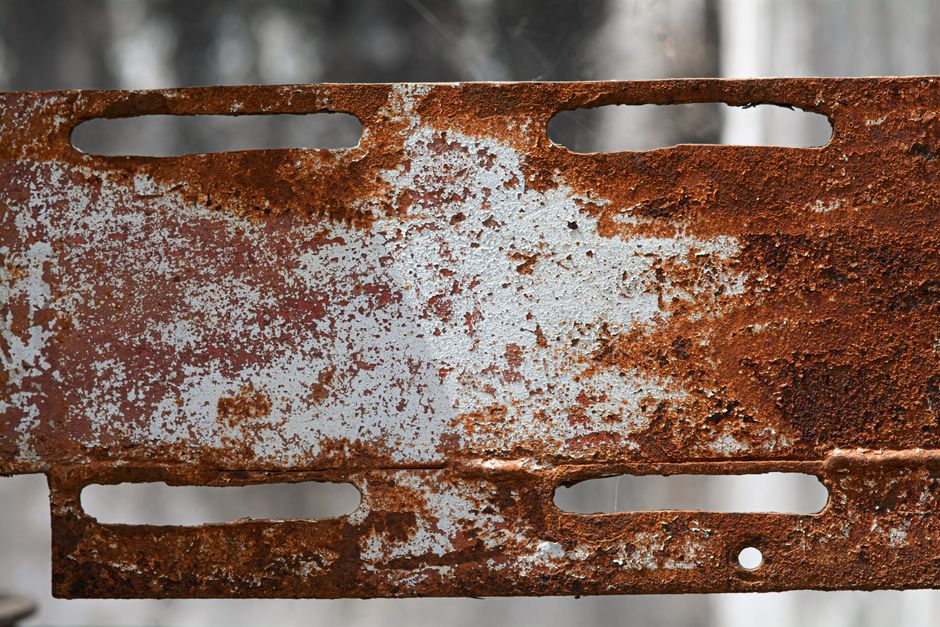
The damage isn't just mechanical; it is chemical as well. As moisture constantly condenses on your indoor evaporator coil, it creates a perfect breeding ground for corrosion. Two specific chemical processes are highly destructive in humid climates:
- Formicary Corrosion: This occurs when moisture on the copper tubing mixes with trace organic acids found in household air (from cleaning products, building materials, and cosmetics). This mixture creates microscopic, tunnel-like pits in the copper coils. Over time, these tiny tunnels turn into hard-to-detect refrigerant leaks that slowly starve your system of its cooling medium.
- Galvanic Corrosion: When aluminum cooling fins and copper tubing touch in the presence of moisture (which acts as an electrolyte), a natural electrochemical reaction occurs. This degrades the contact between the fins and the tubes, severely reducing heat transfer efficiency and forcing the system to work even harder.
Furthermore, when the compressor is forced to run extended cycles under high pressure to combat latent heat, it runs extremely hot. If internal compressor temperatures exceed safe limits, the vital lubricating oil inside begins to break down. This degraded oil can turn acidic, causing internal friction, motor winding damage, and eventual compressor burnout.
Regional Climate Factors and AC Longevity
Western Pennsylvania has a unique climate profile that subjects HVAC systems to a distinct set of stressors. Unlike Southern states that experience long, flat periods of heat, our region experiences dramatic seasonal swings. We transition from sub-zero winter temperatures to summer heatwaves with relative humidity levels exceeding 70% to 80%.
| Climate Region | Average Summer Relative Humidity | Typical Annual AC Operating Hours | Average Central AC Lifespan |
|---|---|---|---|
| Western Pennsylvania (Pittsburgh, Monroeville, Bethel Park) | 65% – 80% | 800 – 1,500 hours | 12 – 15 years (15+ with strict maintenance) |
| Southern/Gulf Coast States (Coastal Texas, Florida) | 75% – 90%+ | 3,000 – 4,000 hours | 10 – 14 years |
| Milder/Drier Northern States | 30% – 50% | 500 – 800 hours | 15 – 20 years |
This extreme thermal cycling—where metals violently expand in the summer heat and contract in the freezing winter—creates structural fatigue. Copper joints and aluminum connections are prone to developing micro-fractures over time due to these temperature swings. Additionally, communities near our local rivers or low-lying areas experience pocketed "lake effect" style humidity, where heavy, moisture-laden air settles over neighborhoods, keeping outdoor condenser units damp for extended periods. To understand how these regional factors play out across our broader geographic zone, you can read more about How to Extend the Life of Your AC in the Northeast.
Critical Warning Signs Your AC is Struggling with Humidity
Because humidity-related wear happens silently inside your system, it is vital to recognize the early warning signs before a catastrophic component failure occurs. If you notice any of the following symptoms in your home, your AC is likely struggling under a heavy moisture load:
- Clammy Indoor Air: If your home feels cool but has a sticky, drafty, or cave-like quality, your system is failing to dehumidify effectively. This often points to short-cycling or airflow issues.
- Musty Odors: A damp, earthy smell coming from your vents indicates that water is pooling somewhere in your system. This is usually caused by a clogged condensate drain line or organic growth on a dirty evaporator coil.
- Short Cycling: If your air conditioner turns on and off every few minutes without completing a full 10-to-15-minute cooling cycle, it cannot run long enough to remove moisture. This leaves your home humid and places immense electrical strain on the compressor.
- Frozen Evaporator Coils: When airflow is restricted or refrigerant levels are low, the moisture condensing on your indoor coil can quickly turn to ice. If you see ice forming on the brass valves of your outdoor unit or notice ice buildup on the indoor coil, turn the system off immediately to prevent compressor damage.
- Weak Airflow: If the air coming out of your registers feels weak or barely cool, your system is working overtime to push air through a clogged filter or a dirty coil. This is a primary driver of AC Age and Efficiency Issues.
Proactive Steps to Protect Your System and Extend Its Lifespan
Fortunately, you do not have to let summer humidity claim your air conditioner early. By taking a few proactive, strategic steps, you can significantly reduce the wear on your system and keep it running efficiently for years to come.
First, make a habit of checking your air filter every 30 days during peak summer months. When humidity is high, the dust and pet dander in your home become sticky, clinging to the filter fibers and clogging them much faster than in dry winter months. A clogged filter starves the system of air, causing the blower motor to run hot and potentially freezing the evaporator coil.
Second, ensure your condensate drain line is clear. You can flush your drain line with a cup of simple household vinegar once a month to prevent algae and mold from clogging the pipe. If the line clogs, the condensate pan will overflow, which can shut down your system or cause expensive water damage to your home.
Third, keep the area around your outdoor condenser unit completely clear. Maintain at least two feet of open space on all sides and clear away any weeds, grass clippings, or fallen leaves. This ensures the outdoor coil can release heat efficiently.
Finally, consider upgrading to a variable-speed air conditioning system. Unlike traditional single-stage systems that blast on and off at 100% capacity, variable-speed systems run at lower, steadier speeds. This allows them to run longer, gentler cycles that remove up to three times more moisture from the air while using a fraction of the energy. To see how this technology works, check out How Variable Speed AC Reduces Humidity Better.
Sizing, Airflow, and What Shortens Your AC Lifespan in Humid Summers
One of the most common mistakes in home cooling is installing an oversized air conditioner. Many homeowners assume that "bigger is always better" when it comes to keeping a house cool. However, in humid climates, an oversized AC is a recipe for premature system failure.
An oversized system will quickly blast your home with cold air and shut off before it has run long enough to pull moisture out of the air. This results in a home that feels cold and clammy, forcing you to lower the thermostat even further to find comfort. This constant cycle of rapid starting and stopping (short cycling) draws massive electrical currents, wearing out contactors, capacitors, and the compressor motor. To understand this dynamic in detail, read our article on How Oversized AC Units Make Humidity Problems Worse.
At Supreme Heating and Cooling, we use precise Manual J Load Calculations to ensure every system we install is perfectly sized for your home's unique layout, insulation, and regional climate.
Off-Season Protection and Winterization
In Western Pennsylvania, protecting your AC doesn't stop when the summer ends. Our brutal winters can cause physical damage to outdoor units that are left completely unprotected.
When snow and ice accumulate on top of your condenser, the weight can warp the fan grille or damage the fan blades. Furthermore, during our frequent winter freeze-thaw cycles, melting snow can seep into the delicate aluminum fins, freeze again, and expand, bending the fins and restricting summer airflow.
We recommend using a breathable, weather-resistant cover designed specifically for air conditioners during the winter. Avoid using cheap plastic tarps, which trap moisture inside the unit and accelerate rust, corrosion, and electrical damage.
Repair vs. Replace: Navigating the 5,000 Rule
When a major component fails on an aging air conditioner, homeowners are often left wondering whether it is smarter to pay for a repair or invest in a brand-new system. To make this decision easier, we recommend using a simple industry standard known as The 5,000 Rule.
To apply the rule, multiply the age of your air conditioning unit by the estimated cost of the repair:
$$\text{Age of Unit (Years)} \times \text{Repair Cost} = \text{Score}$$
- If the resulting score is under 5,000, a repair is generally the most cost-effective path.
- If the score is over 5,000, your money is usually better spent on a new, high-efficiency system.
For example, if you have an 8-year-old system facing a $300 capacitor repair, your score is 2,400. In this case, repairing the unit is a smart choice. However, if you have a 12-year-old system facing a $450 repair (or a much more expensive compressor replacement), your score is 5,400. At this stage, investing in a modern, energy-efficient system with a high SEER2 rating will save you more money in the long run through lower energy bills and avoided future repairs.
Frequently Asked Questions about AC Lifespan in Humid Summers
How does high humidity damage an AC compressor?
High humidity increases the latent heat load, forcing the compressor to run much longer cycles under high-pressure conditions. This constant operation causes the compressor to run incredibly hot. When internal temperatures exceed safe limits, the lubricating oil inside the compressor breaks down and can turn acidic. This leads to mechanical friction, motor winding degradation, electrical short circuits, and eventual compressor burnout.
Can a whole-home dehumidifier extend my AC's lifespan?
Yes, absolutely! A whole-home dehumidifier works alongside your central air conditioner to handle the latent heat load independently. By pulling moisture out of the air before it reaches your AC coils, the dehumidifier allows your cooling system to focus solely on lowering the air temperature. This results in significantly shorter run times, fewer start-stop cycles, and reduced wear on your compressor, blower motor, and electrical components.
How often should I change my AC filter during a humid Pennsylvania summer?
During peak humid months (typically June through September in Western Pennsylvania), you should check your air filter every 30 days and replace it within 30 to 45 days. High humidity makes airborne dust, pet dander, and pollen sticky, causing them to cling to and clog filter media much faster than during drier seasons. A clean filter ensures optimal airflow, protecting your blower motor and preventing frozen coils.
Conclusion
Managing humidity is the single most important factor in determining how long your air conditioner will keep your home comfortable. From managing latent heat loads to preventing formicary corrosion, keeping your system clean, well-maintained, and properly sized is key to protecting your investment.
At Supreme Heating and Cooling, we are proud to serve homeowners across Pittsburgh, Monroeville, Bethel Park, Fox Chapel, Greensburg, Penn Hills, and surrounding areas. Our friendly, knowledgeable, and non-pushy team is always here to help you maximize your home comfort, lower your energy bills, and enjoy complete peace of mind.
Ready to protect your system before the next heatwave hits? Contact us today to schedule your professional maintenance or explore our Supreme Heating & Cooling AC Services.


.svg)
.webp)
.svg)
